Author: flyagaric23

  • Amanita symbiosis system

     As Mushrooms Evolve to Live With Trees, They Give Up DNA Associated With Decomposing Cellulose
    ScienceDaily (July 18, 2012)
    “…if you’re going to actively form a cooperative relationship with a tree, you probably shouldn’t simultaneously be trying to break it apart and eat it. But it’s a very tricky dance to form these kinds of tight, cooperative interactions, and I think this work shows there is a cost associated with that. You have to change, you have to commit, and it can become a sort of gilded cage — these mushrooms are very successful…” —http://www.sciencedaily.com/releases/2012/07/120718192047.htm

  • RAWIllumination.net: Talking with Steve "Fly Agaric 23" Pratt

    RAWIllumination.net: Talking with Steve “Fly Agaric 23” Pratt: Few, if any, people have been more energetic in setting up Internet sites to promote the works and though of Robert Anton Wilson than Steve …

  • DEE: The Arch-conjuror of England. BRUNO: The arch-conjuror of Europe?

    Who could resist a new book about the celebrated, notorious “arch-conjuror of England,” Dr. John Dee (1527-1609)? A contemporary of Queen Elizabeth I, Dee possessed what was probably the finest private library in the country. He lived near the Thames in a house with a name that any Gothic novelist would steal in a minute: Mortlake. As a young man, he was a pupil of Gerard Mercator (whose maps are still famous) and studied the works of all the most notable alchemists and natural philosophers of Europe, including Paracelsus, Raymond Lull, Johannes Trithemius and Henry Cornelius Agrippa. Dee might even have met Giordano Bruno, who, during a visit to England, joined the circle of their mutual friend, the occult-minded poet Sir Philip Sidney. (In 1600, Bruno was burned at the stake, ostensibly for his heretical beliefs about the nature of the universe.) In 1584, this English wizard even made a laborious journey to Rudolf II’s Prague, the center for astrological and hermetic research in the 16th century — in essence, the capital of magic. http://www.washingtonpost.com/entertainment/books/the-arch-conjuror-of-england-john-dee-by-glyn-parry/2012/06/06/gJQAOGOUJV_story.html

    Galileo was only placed under house arrest because of his “repentance,” but others such as Michael Servetus (1511-1553) and Giordano Bruno (1548-1600) were burnt at the stake. http://www.thenews.com.pk/Todays-News-9-113602-Lessons-from-the-Galileo-affair

  • Fly Agaric in Ireland and Muscarine as asthma treatment

    Everyone is charmed when we chance upon our first Fly Agaric, the iconic red and white seat of many a storybook fairy or elf. Just then the sky darkens, the mother and father of all downpours leaving no shelter. Waterproofs are useless, we can only head back to the hotel? http://www.irishexaminer.com/lifestyle/grow-wild-in-the-country-195283.html

    Go to: Muscarinic receptors in the lung In the lungs, anticholinergic compounds block muscarinic receptors on airway smooth muscle, glands and nerves to prevent muscle contraction, gland secretion and enhance neurotransmitter release. There are five muscarinic receptor subtypes [designated M1 through M5 by the IUPHAR (Caulfield and Birdsall, 1998)] all belonging to the large family of seven transmembrane G-protein coupled receptors. In human lung (and in all animal species tested), acetylcholine induces bronchoconstriction by stimulating M3 (Figure 1) receptors on smooth muscle (Roffel et al., 1990). Although airway smooth muscle contraction is mediated by M3 receptors, the majority of muscarinic receptors on airway smooth muscle are actually M2 (Barnes, 1993). These M2 receptors contribute indirectly to airway smooth muscle contraction by limiting β-adrenoceptor-medicated relaxation through inhibition of adenylate cyclase (Fernandes et al., 1992). Glandular secretion is also mediated predominantly by M3 muscarinic receptors on submucosal cells (Marin et al., 1976; Borson et al., 1980; Phillips et al., 2002). Figure 1 Muscarinic receptors in lungs. Muscarinic receptors (MR) are present throughout the lungs and control smooth muscle contraction, gland secretion, acetylcholine (ACh) release from parasympathetic nerves and probably also inflammatory cells. Only receptors (more …) Muscarinic receptors are also present on parasympathetic nerves supplying the lungs (Fryer and Maclagan, 1984). M2 muscarinic receptors on postganglionic parasympathetic nerves (Faulkner et al., 1986; Fryer et al., 1996) limit acetylcholine release, thus providing a physiologically relevant, negative feedback control over acetylcholine release (Fryer and Maclagan, 1984; Baker et al., 1992). Blocking M2 receptors with mmuscarinic antagonists including atropine and ipratropium or using selective M2 receptor antagonists such as gallamine, significantly potentiates vagally induced bronchoconstriction (Fryer and Maclagan, 1984; 1987; Blaber et al., 1985; Faulkner et al., 1986). Neuronal M2 receptors are vulnerable, and thus their function is significantly decreased after respiratory viral infection, antigen challenge, or exposure to organophosphates or ozone (Empey et al., 1976; Aquilina et al., 1980; Fryer and Jacoby, 1991; Schultheis, 1992; Schultheis et al., 1994; Sorkness et al., 1994). They are also less functional in humans with asthma (Minette et al., 1989). Decreased function of the neuronal M2 receptors is mediated by various mechanisms including blockade by endogenous antagonists and down-regulation of receptor expression. The resulting increase in acetylcholine release is thought to be an important mechanism of airway hyperreactivity. Clinically, anticholinergic drugs are used as bronchodilators in combination with anti-inflammatory steroids in the treatment of asthma and chronic obstructive pulmonary disease (COPD). Asthma is characterized by variable airflow limitation that is partially reversible spontaneously or with treatment. Underlying this airflow limitation is chronic inflammation that increases airway hyperresponsiveness to various stimuli (EPR-3, 2007). COPD is characterized by chronic airflow limitation that is not fully reversible. Patients with COPD can experience acute worsening in symptoms. These exacerbations are characterized by increased sputum production and shortness of breath (Rabe et al., 2007). COPD and asthma symptoms overlap; however, the most distinguishing difference between conditions is airflow limitation reversibility. This review covers the history of clinically relevant anticholinergic drugs in asthma and COPD. http://www.ncbi.nlm.nih.gov/pmc/articles/PMC3085867/

  • Joyce’s Voices by Bogus Magus (from Only Maybe blog)

    Friday, June 01, 2012

    Joyce’s Voices

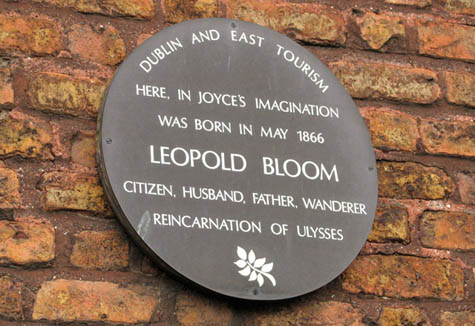
    For Bloomsday this year (16 June 2012) the BBC will be handing Radio 4 over to Ulysses. Throughout the day there will be readings of a special adaptation of the text, along with live broadcasts from Dublin (where fans re-enact moments from this complex book. Sadly, this may not prove accessible to all countries.

    This will be an edited version, not the ‘complete’ text which was broadcast in 1982 (which took nearly 30 hours).

    The details below are from the BBC Media Centre (without permission) which contains further information.

    Here, at a glance, are the main Bloomsday broadcasts on Radio 4:

    Part 1 09.00 – 10.30: Saturday Live From the Martello Tower to School
    Sian and Richard present a special Bloomsday edition of the show, which will include the first three extracts from the drama as well as discussion and location reports, with input from Mark Lawson in Dublin.

    Part 2 10.30 – 11.00 From Bloom’s House, through the Morning Streets, to a Funeral

    Part 3 12.00 – 12.30 From the Beach, to a Newspaper Office, into Davy Byrne’s Pub

    Part 4 14.30 – 15.30 The Library, Through the Lunchtime Streets, to the Ormond Hotel

    Part 5 17.30 – 18.00 In Barney Kiernan’s Pub

    Part 6 20.00 – 22.00 From Sandymount Beach at Evening, to the Maternity Hospital, and into Nighttown

    22.15 – 23.00: Ulysses Today Mark Lawson chairs a discussion about the abiding popularity of Ulysses and its relevance today, with Declan Kiberd, author of Ulysses And Us – The Art Of Everyday Living; Professor Anne Fogarty, Director of the Dublin James Joyce Summer School; and others.

    Part 7 23.00 – 00.00 From a Cab-man’s Shelter, to Eccles Street and Home

    In the week before the Bloomsday broadcasts, Radio 4 and Radio 4 Extra will be broadcasting a number of programmes on the theme of Ulysses:

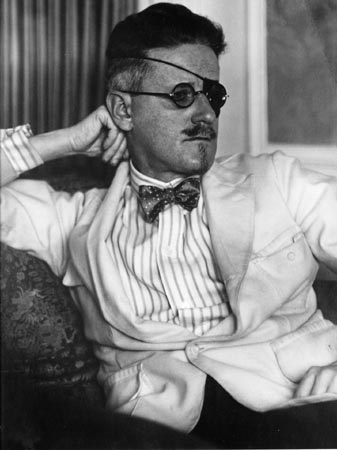
    James Joyce had a fine singing voice and sang professionally as a young man. In James Joyce’s Playlist, David Owen Norris and guests will listen to some of Joyce’s favourite songs in the Martello Tower in Dublin where he lived for a time. This will be broadcast on Saturday, June 9th.

    On Thursday, June 14th In Our Time will discuss the background to Ulysses, considering its historical and literary context, its themes, contents and style, and the impact it has had since publication. Melvyn Bragg will be joined by Steven Connor, Professor of Modern Literature and Theory at Birkbeck College, London; Jeri Johnson, Fellow and Tutor in English at Exeter College, Oxford; and Richard Brown, Reader in Modern Literature at the University of Leeds.

    4Extra: Blind Date With Bloomsday – another chance to join Peter White on his Bloomsday visit to Dublin, during which he meets some enthusiastic celebrants. Friday, June 15th.

  • Some great nation of cannabis ceteceans

    Some great nation of cannabis cetaceans
    by Steven ‘fly agaric 23’ Pratt.

    In following the trajectory of the war on some people who use some drugs, over the last 20 years, I recently noticed a similar situation to that of the (WOSPWUSD) in the plight of those who wish to recognise a cetacean nation, or some rights and freedoms that humans enjoy.

    The strategy for aquiring  a kind of nationhood for Dolphins and Whales reflects, to my mind, the on-going battle between medical Marijuana activists and recognition, officially, of the benefits and culture surrounding Marijuana, effectively reversing the current laws and punishments for members of the cannabis community so that they become endowed with a kind of spirit-hood thing, and enjoy protected freedoms to live a proud and fearless life like other minorities or previously oppressed groups such as women, people of colour, homosexuals and a growing list of animals, vegetables and plants, cannabis people strive for at least equal rights and the pursuit of happiness as a Gorilla would!

    Jane Goddard seems to me to have kickstarted the quest for individual sovereignty through her work with the United Nations (dometicated primates) and her work with Apes (primates). And, as mentioned above, Dr John Lilly with a host of other scientists, thinkers and imaginative activists have outlined what a sovereign nation for cetaceans might look like, why we should have such a thing, and what we can do, collectively to work towards building and maintaining it.

    The cannabis nation also has such outlines and plans, research projects and evidence to put forward their case, but, (rising organ music please) with cannabis there are hundreds of thousands of such data sets pointing towards changes in the forever biased and bloody bigoted laws and punishments handed out to any member of the cannabis nation participating in their non-violent lifestyle e.g; ingesting cannabis in one form or another.

    In both cases, however, I come across a similar set of problems and in my humble opinion– misunderstandings–on behalf of those who fight for such equal rights and government recognition, in the same way other diverse groups are now protected, legalised and left up to their own devices, to the extent that humans are supposed to have irreducible rights based upon finding oneself in a lucky incarnation: that of a sentient human being.

    There are many different angles to the cannabis nation argument, and billions of Angels, based upon the wide strata of human culture, not least coming from the artistic and innovative music community world-wide. Whereas, the cetacean nation arguments usually come from a somewhat small and specialised area of scholarly research, although cargo cults often get on board the Dolphin and Whale boat to nationhood, adding a sometimes humorous, sometimes frustrating glossing to the concept of a cetacean nation. In my opinion, it is the definition and evidence amassed by Dr John Lilly in particular that best describes the case for cetacean rights and nationhood on par with that of human beings. Read him!

    As any reader of Dr John Lilly may know, he also wrote extensively on altered states of consciousness, cognitive liberty and the therapeutic, neuro-psychological uses of some drugs (in particular Ketamine and LSD). As a scientist, however, John did not follow the slightly more popular legalise cannabis, and other drugs battle in the streets, he rebelled through his research and feedback, both amplifying his brilliance and genius. John made tools and maps to help us navigate psychedelic space that maybe more important today than before based on the similarity between navigating psychedelic space (as defined by Lilly) and navigating cyberspace (as defined by Norbert Weiner and Tim Berners Lee). Cyber = to steer, remember?

    Techniques for navigating non-ordinary states of consciousness are very helpful in navigating through the Internet and our hyper-connected futures or science fiction futures as I like to call our multi-dimensional futures.

    I imagine a situation where inner space–the world behind our eyelids and the private space of one’s thoughts–spills out and over into outer-space or the human perceived space-time world, via Internet, social networks, web sites, games, movies, music and cyber-culture: the digital universe.

    Although this may seem a slight digression from the similarities in the process of recognition of both a cetacean nation and a cannabis people’s nation, the result of some carfeul investigation and a little research into non-ordinary states, reflects the descent or accent, depending how you view the idea of the world and reality made and manipulated primarily by language, to high weirdness!

    However, I must add that all this talk of nation-hoods and sovereignty runs contrary to my intuition about how to really solve the big problems of greed driven civilisation, the swelling global village,  and a peaceful cooperative future.

    I recognised that Buckminster Fuller nailed it when he implied that until the sovereign nations have been de-sovereignized (effectively decentralised) we cannot have open world around trade and balanced communication. I agree whole heatedly, although for the purposes of the arguments above I must drop such a notion, for some great nation of cannabis cetaceans.

    –Steve Fly

  • MURDOCH MAJOR BROWN BUSH THATCHER

    MURDOCH MAJOR BROWN BUSH THATCHER
    –On the Newscorp Hacking Scandal.

    Growing up with the weeds in the UK from 1976-2000, has helped shape my experience and observation concerning the relationships between the gov’t, media corporations and their effects upon culture, both my own local culture and–through the emergent technology of the internet– into other cultures.

    Today we are aware, i hope; of the global military industrial agricultural media beast that traverses the planet and beyond,aware of the programing. Healthyly suspecting the borg of modifying their database in favour of profits and a competitive edge rather than precise information, reporting, sharing and honest feedback. The opposite of a scientific approach.

    It seems to me in light of the Newscorp hacking scandal that the model of the ‘spy’ and the spy’s cloak and dagger strategy for achieving goals best suits the behaviour and actions of Murdoch, Rebecca Brooks, Hunt and the long list of dirty private investigators, sneaky journalists, colluding police officers and sympathetic double cross politicians.

    “I am not saying its wrong, I am saying its the wrong interpretation of what I said.”– Rupert Murdoch, April 25th 2012


    (more…)

  • Shannon Info, Jung-Paul Synchro, digital holographic DNA cosmology stuffing

    Is preparing food for my nerdrons: Claude Shannon’s Information Theory and DNA sequencing as fresh news that seems to me a hopeful avenue for some cutting edge research: 
    “What they prove is that there is a channel capacity that defines a maximum rate of information flow during the process of sequencing. ” It gives the maximum number of DNA base pairs that can be resolved per read, by any assembly algorithm, without regard to computational limitations,” they say.”http://www.technologyreview.com/blog/arxiv/27689/
    it’s a long wynding story, if you wanna’ likkle primer, watch this short video about Claude Shannon. I see this being useful as providing a framework (Shannon’s infomation theory) for thinking about human DNA RNA synthesis, and calculating better–more efficiently–so as to speed up the emerging DNA based medicine and therapy. It could be useful for every single aspect of human biological medicine, and at the same time, makes an explicit link between ‘digital bits‘ and ‘the biological ‘binary’ aspects of biology. ‘
    So, to continue on this tip, and explain myself a little, it’s been my hunch over the last 3 or so years that the ‘holographic principle‘ co-founded by Dutch Nobel prized physicist: ‘Gerard t’hooft‘ and ‘information theory’ as developed by Claude Shannon, underly a somewhat hermetic ‘unified theory’. The above link to DNA sequencing, and the following link to ‘cosmological’ BIT Theory, if you like, are examples for the seriousness of this pretty ‘far out’ idea that, in some sense, the whole universe seems contained within each atom! or you could say a ‘Digital‘ Universe, or better yet Multi-verse. As above, a new ‘Digital’ DNA information theory, and below:
    “Hogan’s noise arises if space is made of chunks. Blocks. Bits. Hogan’s noise would imply that the universe is digital.”http://www.scientificamerican.com/article.cfm?id=is-space-digital

     p.s Physicist Jack Sarfatti has proposed similar idea’s that include Shannon’s maxim’s, and a neurological-cosmological ratio. I picked up on these ideas via Dr Robert Anton Wilson, who I suspect picked up some of these ideas from Jack, Saul Paul Sirag, David Bohm and others from the now legendary Bay Area based ‘Physics Consciousness Research Group‘ that he attended.

    –Steve Fly
     

    GOD IS IN THE NEURONS: A DOCUMENTARY EXPLAINING ‘MIRROR NEURONS, OR EMPATHY NEURONS:

  • Atom and Archetype: The Pauli/Jung Letters, 1932-1958 Edited by C. A. Meier


    Atom and Archetype:
    The Pauli/Jung Letters, 1932-1958
    Edited by C. A. Meier
    With a new preface by Beverley Zabriskie
    Translated by David Roscoe

    PAULI AND JUNGIAN ANALYSIS

    In his physics, Pauli sought a unified field. But his personal life was one of fragmentation and dissociation. Within one year, his mother poisoned herself in reaction to his father’s involvement in an affair, and Pauli plunged into a brief marriage with a cabaret performer. At thirty, he turned to Jung for help.

    Jung, in his 1935 lectures at the Tavistock, offered the following example of dreams effecting change:

    I had a case, a university man, a very one-sided intellectual. His unconscious had become troubled and activated; so it projected itself into other men who appeared to be his enemies, and he felt terribly lonely because everybody seemed to be against him. Then he began to drink in order to forget his troubles, but he got exceedingly irritable and in these moods he began to quarrel with other men. . . and once he was thrown out of a restaurant and got beaten up.16

    Jung saw that “he was chock-full of archaic material, and I said to myself: ‘Now I am going to make an interesting experiment to get that material absolutely pure, without any influence from myself, and therefore I won’t touch it.’” He referred Pauli to Dr. Erna Rosenbaum, “who was then just a beginner . . . I was absolutely sure she would not tamper.” Pauli applied the same passionate brilliance to his unconscious as to his physics. In a five-month Jungian analysis, Pauli recorded and spontaneously illustrated hundreds of his dreams. “He even invented active imagination for himself He worked out the problem of the perpetuum mobile, not in a crazy way but in a symbolic way. He worked on all the problems which medieval philosophy was so keen on.”17 For three months, “he was doing the work all by himself, . . . for about two months, he had a number of interviews with me . . . I did not have to explain much.” Jung believed Pauli “became a perfectly normal and reasonable person. He did not drink any more, he became completely adapted and in every respect normal . . . He had a new center of interest.” Jung had thirteen hundred of Pauli’s dreams as the basis for his research into alchemical symbolism in a modern psyche. “At the end of the year I am going to publish a selection from his first four hundred dreams, where I show the development of one motif only.”18
    The physicist F. David Peat believes Jung’s assessment of Pauli’s state after his termination with Dr. Rosenbaum was too positive. Pauli’s new “reasonableness” didn’t last, and later he again drank excessively.
    While Pauli’s work aimed toward a “psychophysical monism,” his intense inner tensions seemed to manifest physically in the so-called Pauli Effect, when his mere presence caused laboratory equipment to explode or fall apart.19 His internal “monotheism” and his sharp critical acumen and tongue earned him the titles “scourge of God,” “the whip of God,” and “the terrible Pauli.” Even in the midst of personal disarray, Pauli kept his stance as a scientist of such rigor that he was called “the conscience of physics.” Asked whether he thought a particular physics paper was wrong, he replied that was too kind–the paper was “not even wrong.”20 Heisenberg’s account of a 1927 conversation reveals that, in his youth, Pauli was concerned about the distinctions between knowledge and faith.21 Heisenberg saw that behind Pauli’s
    outward display of criticism and skepticism lay concealed a deep philosophical interest, even in those dark areas of reality or the human soul which elude the grasp of reason. And while the power of fascination emanating from Pauli’s analyses of physical problems was due in some measure to the clarity of his formulations, the rest was derived from a constant contact with the field of the creative and spiritual processes for which no rational formulation as yet exists.22 For Pauli, the creativity of science included considerations of the psyche. In science, he subscribed to the quantum uncertainty theory that the position and presence of the observer changes the perception and reality of what is observed. To that thesis–that one cannot measure the wave and the particle at the same time–he added a psychological dimension, observing that insofar as the scientist must opt to know “which aspect of nature we want to make visible . . . we simultaneously make a sacrifice, . . . [a] coupling of choice and sacrifice.”23 Pauli demonstrated the value of intuition to science’s empiricism. As Weinberg recounted,

    physicists in the early 1930’swere worried about an apparent violation of the law of conservation of energy when a radioactive nucleus undergoes the process known as beta decay. In 1932 Wolfgang, . . . Pauli proposed the existence of a convenient particle he called the neutrino, in order to account for the energy that was observed to be lost in this process. The elusive neutrino was eventually discovered experimentally over two decades later. Proposing the existence of something that has not yet been observed is a risky business, but it sometimes works.24

    In a metaphysical leap, Pauli referred as well to “forms belonging to the unconscious region of the human soul” and stated that “the relation between a sense perception and Idea remains a consequence of the fact that both the soul and what is known in perception are subject to an order objectively conceived.”25 He acknowledged that he had realized in a dream that the quantum-mechanical conception of nature lacked the second dimension, which he found provided by the archetypes of the unconscious.
    It seems, however, that he could not find his way to the uncertainty, the “choice and sacrifice” that allows for reparation within analysis. While Pauli knew “that a truly unified view must include the feeling function, since without feeling there is no meaning or value in life, and no proper acknowledgment of the phenomenon of synchronicity,” M.-L. von Franz said that he later sought only a “philosophical discussion of dreams”:

    He wrote to me . . . [and] made it clear that he did not want analysis; there was to be no payment. I saw that he was in despair, so I said we could try. The difficulties began when I asked him for the associations which referred to physics. He said, “Do you think I’m going to give you unpaid lessons in physics?” . . . He wanted something, but he didn’t want to commit himself. He was split.26

    Van Erkelens speculates that Pauli would have had to submit to a transference and to a deeper Eros than “his inner urge to develop a unified view of matter and spirit.” For whatever reasons, von Franz and Pauli were not able to achieve the relational bond that holds and contains explosive emotional material and so allows surrender to one’s unconscious and to a suffered analytic relationship.
    Jung and Pauli corresponded and later met, not for analysis but for a comparison of ideas–Pauli pursuing Jung’s synchronicity thesis and Jung fostering Pauli’s understanding of the archetypal and collective factors in the psyche. Through their contact, William James’s two fields, to which both Jung and Bohr had been attracted, come together again. Von Franz writes that the

    notion of complementarity introduced by Niels Bohr to provide a better explanation for the paradoxical relationship between waves and particles in nuclear physics can also be applied to the relationship of conscious and unconscious states of a psychic content. This fact was discovered by Jung, but it was particularly elaborated by Wolfgang Pauli.27

    http://press.princeton.edu/chapters/s7042.html

    COPYRIGHT NOTICE: Published by Princeton University Press and copyrighted, © 2001, by Princeton University Press. All rights reserved. No part of this book may be reproduced in any form by any electronic or mechanical means (including photocopying, recording, or information storage and retrieval) without permission in writing from the publisher, except for reading and browsing via the World Wide Web. Users are not permitted to mount this file on any network servers. Follow links for Class Use and other Permissions. For more information, send e-mail to permissions@press.princeton.edu