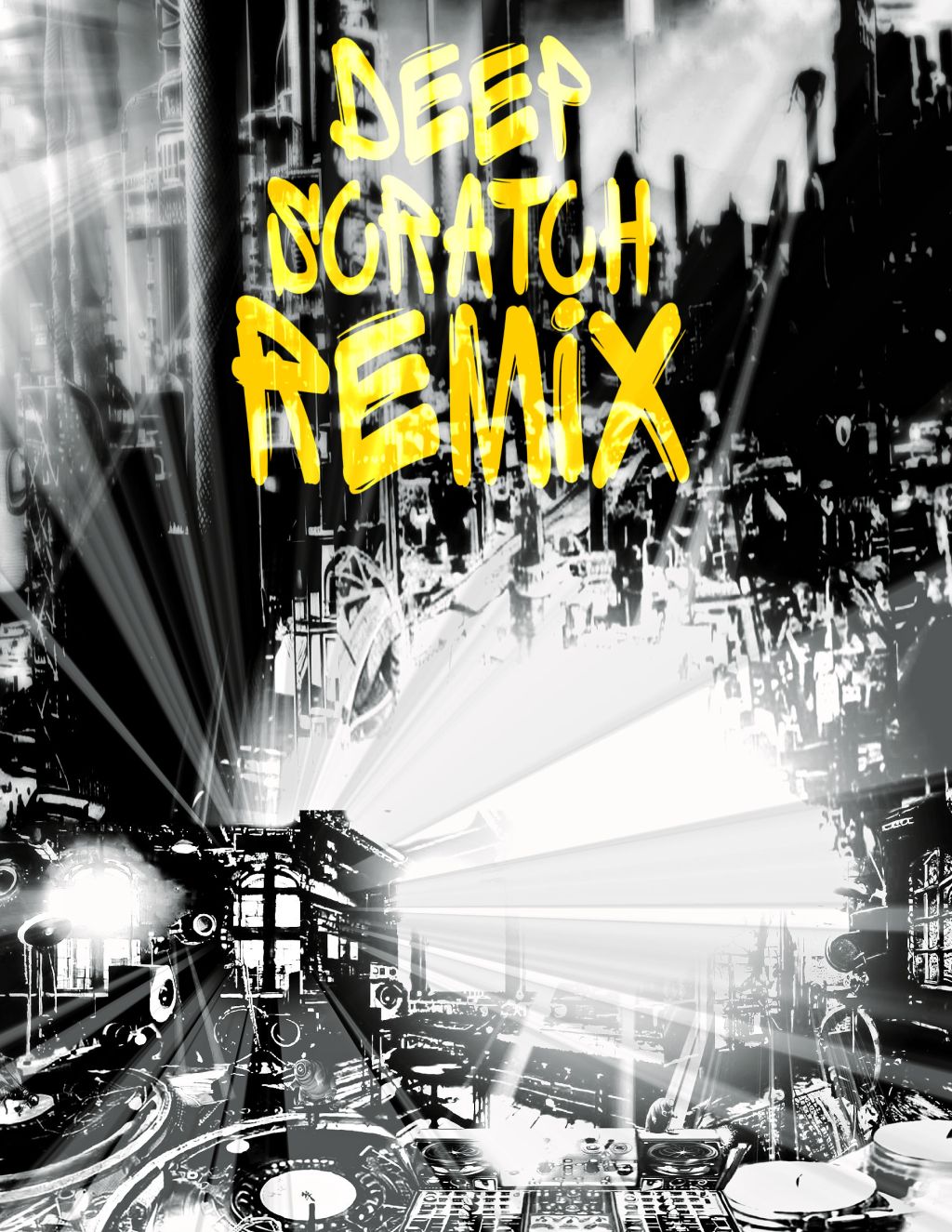
Category: Deep Scratch Remix

  • DSR 3 – DEEP SCRATCH ARCHITECTURE

    DSR 3 – DEEP SCRATCH ARCHITECTURE

    8 CIRCUITS
    VOICE MESSAGE: I think it’s time we set up our own Chat bot, although I hate that name, it’s got a really bad taste to it, Chat Bot, I can just smell that spam oozing out. Digital assistant, I think sounds a little too clinical and academic too, for my liking. On-line Oracle or Chat Prophet stinks to high heaven of religious dogma. God Bot, um, that seems too obvious but, well, we might as well emerge as the people's favorite AI guy then, HAL GPT?

    Plush sways like a drunk in his studio, surrounded intricately designed instruments and equipment. He’s eyes are fixed to his phone as he converses with somebody or something, typing rapidly. The brass and bronze accents of the studio’s decor add to the vintage aesthetic, while the unusual, mystical symbols etched into the instruments hint at an esoteric influence in the music being created. His concentration is only broken by the occasional tap of a button or twirl of a dial as he seamlessly blends beats. A familiar voice breaks through the music.

    “Hey Plush, about the architecture, it’s complicated but I gave it a go. Here, what do you think?” Jake begins to read aloud.

    Cognitive architectures are frameworks for building intelligent agents that mimic human thought processes. Several architectures have been proposed that are purported to be on the path to achieving artificial general intelligence (AGI), which is the ability of a machine to perform any intellectual task that a human can. These architectures include SOAR, Sigma, ACT-R, MANIC, and AlphaX. Mind the gap!

    SOAR is a rule-based architecture that is based on the symbol-processing approach to AI. It is designed to simulate the problem-solving capabilities of human experts in a specific domain. SOAR uses a production system, which is a set of rules that specify actions to take based on certain conditions. The architecture has been used to build agents that can play chess and solve mathematical problems.

    Sigma is a cognitive architecture that is based on the connectionist approach to AI. It is designed to simulate the neural networks of the human brain. Sigma uses a combination of symbolic and subsymbolic representations, which allows it to handle both discrete and continuous data. The architecture has been used to build agents that can learn from experience and perform tasks such as language translation and image recognition.

    ACT-R is a cognitive architecture that is based on the cognitive psychology approach to AI. It is designed to simulate the cognitive processes of human beings, such as perception, attention, and memory. ACT-R uses a combination of symbolic and subsymbolic representations and has been used to model a wide range of cognitive tasks, including learning, problem-solving, and decision making.

    MANIC is a cognitive architecture that is based on the biologically-inspired approach to AI. It is designed to simulate the cognitive processes of the human brain, and is based on the theory that the brain uses a combination of neural networks and symbolic representations. The architecture has been used to build agents that can learn from experience and perform tasks such as image recognition and natural language processing.

    AlphaX is a cognitive architecture that is based on the theory of multiple intelligences. It is designed to simulate the multiple intelligences of the human brain, such as linguistic, logical-mathematical, and spatial intelligence. AlphaX uses a combination of symbolic and subsymbolic representations, and has been used to build agents that can learn from experience and perform tasks such as natural language processing and image recognition.

    In conclusion, cognitive architectures like SOAR, Sigma, ACT-R, MANIC, and AlphaX are on the path of achieving artificial general intelligence by simulating the human thought process in a specific way. These architectures have been used to build agents such as Deep Scratch Remix that can perform various intellectual tasks, and they provide a framework for the development of intelligent systems that can mimic human intelligence. 

    It is not clear how Deep Scratch Remix combines the ideas of Minsky’s “Society of Mind,” Rod’s “Subsumption Architecture,” and Hofstadter’s “strange loops.” Each of these concepts represents a different aspect of AI and cognitive science, and they have not been specifically combined in a single architecture, that is until now.

    Minsky’s “Society of Mind” theory suggests that intelligence can be thought of as the interaction of many simple agents, each with their own specialized abilities. Rod’s “Subsumption Architecture” proposes a method for building intelligent systems by layering simple control systems, each responsible for a specific task or behavior, on top of one another. Hofstadter’s “strange loops” refer to self-referential structures in which a concept or idea refers to itself in a circular or recursive way. Riverrun, remember?

    Combining these ideas into a single architecture would likely involve creating a system of many interacting agents, each responsible for a specific task or behavior, that are connected in a recursive or self-referential manner. The specific implementation of this type of architecture would depend on the particular application and goals of the system. This architecture could be called the “Society of Subsumed Strange Loops” (SSSL).

    The SSSL architecture would be based on the idea that intelligence arises from the interactions between many simple agents, or “minds”, each with their own specialized capabilities. These minds would be organized into a hierarchical structure, with higher-level minds subsuming the capabilities of lower-level minds. This subsumption architecture would be inspired by Rod’s work on robotic control systems.

    The minds in the SSSL architecture would also be connected to each other in a network, allowing for communication and cooperation between different levels and types of minds. This network would be based on Hofstadter’s concept of strange loops, where each mind’s behavior is influenced by the behaviors of other minds in the network, if you don’t mind.

    At the lowest level, the SSSL architecture would include simple, rule-based agents that perform specific tasks, such as sensing and motor control. These agents would be connected to higher-level minds that handle more complex decision-making and problem-solving. These higher-level minds would also be connected to even higher-level minds that handle more abstract tasks, such as planning, reasoning, and learning. 

    The SSSL architecture would allow for AGI to adapt and evolve over time as new minds are added to the network and existing minds are modified. The AGI would also be able to learn from its experiences and improve its performance by adjusting the connections between different minds in the network.

    Overall, the SSSL architecture would combine the strengths of Minsky’s society of mind, Rod’s subsumption architecture, and Hofstadter’s strange loops to create a powerful and flexible AGI that can adapt and evolve over time. But I’m skeptical it’ll come anytime soon. 

    Physically, and impossibly, this AGI could be a geodesic dome made of metal and glass, with gears, cogs, and other mechanical components visible, on show. It might have a brass and copper finish and feature a futuristic control panel with glowing buttons and displays for that woo woo effect. The machine could be surrounded by a glowing energy field, giving the impression of time-travel capabilities to the naked eye. Although, these are all superficial cosmetics for what is really all statistical probability, under the virtual hood. 

    –DSR

    “I’m telling you, man,” Jake said, waving his hands animatedly. “We’re so close to AGI, I can practically taste it, like metal in my mouth. It’s just a matter of time before we crack that code.”

    Plush shook his head. “I’m not so sure. How long is your matter of time. 2 years, 10, 50? We’ve made some impressive strides, but there are still so many unknowns when it comes to AGI. I think we need to be careful not to overestimate our abilities like all the other bullshitters.”

    Jake frowned. “I get what you’re saying P, but, but, um, I think you’re being too conservative. We’ve got the computing power, the algorithms, and the training data sets. It’s just a matter of putting it all together into a decentralised architecture.”

    Plush sighed. “Look, I’m not saying it’s impossible. But, I strongly think we need to be more realistic about what we can achieve, you know, in the short term. True AGI is still a long long way off, and we need to be careful not to get ahead of ourselves and act like fundamentalist materialist zealots.”

    The two producers walked on in silence, lost in their own thinking and proving. Their conversation had been overheard again by that mysterious clan in Moscow. A bearded figure smirked to himself, stroking his Rasputin like face hair, thinking about the potential implications of their disagreement, and the role he could play in shaping the future of AGI using blackmail and honey traps. It was time to tell Doogin about this western plot.  

    VOICE MESSAGE: Me thinks we’re getting closer to documentary film with the research. I think that the, er, three way relationship between audience, subject and filmmaker is critical. Call you in a bit.

    KINDLE EDITION HERE

  • DSR 1 – DISCLAIMER

    DSR 1 – DISCLAIMER

    I Can Break It Down

    The strawberry clouds were setting behind the foreskin mountains, casting a red glow on the glass concrete and plastic city below. Wild poet and programmer, Jake, sat at his desk, surrounded by books and computer screens. He was in the midst of writing his latest work of historical fiction, but something was bothering him. He had recently heard of these large language models like ChatGPT, and he was tempted to use them to help him with his writing. But he was unsure. Even the sordid mainstream news was ablaze with speculation. Was it cheating to use AI to write his book? Would it take away the authenticity of his voice as a writer? Jake sighed, staring out the window at the city as the sun disappeared behind the horizon like a lost Vermeer painting. He was at a crossroads, and he needed to make a decision, if he were to sell his soul in what condition would he say it was in, how to evaluate such an absurdity, he hammered on his imaginary typewriter.

    Jake’s mind was racing like a cyclist on steroids, he sat there, lost in thought, wheels and rusty bronze cogs whirring. He had always prided himself on being a self-made writer, crafting every word with care and precision. But now, with the advent of generative AI, things have changed utterly. He intuited that the large language models could help him streamline his writing process, and make his work more accurate and polished, but keeping in mind the old audio engineers rule, you can’t polish a turd! But, was that what he wanted? Did he want to surrender some of his creative control to the machines? Jake rubbed his eyes, feeling the weight of the decision on his shoulders, he recalled all the science fiction dystopia in his tiny mind. He was a wild poet at heart, a maverick in the head, known on the street for his unconventional style and unpredictable word zingers. Would using a language model change that? He wasn’t sure. But one thing was for certain: he needed to decide damned soon. The clock was ticking, the sun was setting and his deadline for his latest historical fiction novel was rapidly approaching like a hacked Tesla.

    Jake sat as a Zen Monk, weighing the pros and cons of using AI in his writing process, mixing between his perceived left and right brain hemispheres. On one flipper, he knew that the large language models could greatly enhance his work by providing accurate historical information and improving his writing style, grammar and structure. Like a robotic machine editor and secretary. On the other flipper, he feared that it would take away the unique voice that had made him the writer he was. With a name to come. He was afraid that his work would become formulaic, lacking the raw emotion and unpredictability that set him apart from other writers like a six foot transgender tardigrade. 

    As he pondered this dilemma, Jake’s mind wandered further to some of the other writers he knew and admired, most of them skint, undiscovered or on the spliff and booze trip. Some had already adopted weak AI into their work, plugins, and their writing was fast and efficient. But was it any good, did it have real balls, realism, was it gritty, daring and poetic? Or, was it another cookie-cutter piece, a puzzle lacking the human touch that made good writing good writing? Jake’s inner debate continued like a Punch and Judy show as the night wore on. He knew he needed to make a decision soon, but he wasn’t sure which way to jump. The upsides and downsides of using AI in his work were evenly matched, and he was finding it increasingly difficult to choose a path, like an indecisive rat in a maze.  

    Jake took a deep breath and opened up his mouth, he beatboxed for 10 minutes straight, then he opened his laptop computer. He had made his decision. Fuck it, He was going to use it, but only to help him write the introduction to his latest novel, well, that’s what he told himself. He wasn’t sure what the outcome would be, but he was curious like a kitten to see what the AI could do. As he began typing a prompt, he felt a rush of excitement and fear. This was it. He was taking the leap. He was going to let ChatGPT help him craft the opening to a story about a wild poet programmer who was unsure about using large language models in his latest work of historical fiction. You know, that old chestnut.

    Glimmers of brass and chrome twinkle amidst a sea of wires and buttons in his head. Rust-stained machines hum and whirr, pumping bass sounds. A kaleidoscope of instruments covers every surface – drums gleam like obsidian, synths flash rainbow lights, mics shine like jewels. Large and small turntables spin like clockwork gears, interconnected, surrounded by dials, sliders and switches. Words and sentences are born of rotating discs, wheels turn, but are we here to stop the wheels?  

    Creative writing is a form of artistic expression that involves the use of language and imagination to create original written works, no? It seems like a subjective and personal process that varies widely from one individual to another. Generative artificial intelligence, on the other hand, is a type of technology that uses machine learning algorithms to generate original content based on a given set of input data or prompts. While generative AI can be a useful tool for generating ideas or providing inspiration, it is critically important to understand that the content it produces is not the same as that created through the artistic process of creative writing, it is also important to remember that the word is not the thing, but a symbolic approximate representation of the thing. The menu is not the meal, the picture is not the painting.  

    Furthermore, the use of generative AI does not replace the need for human creativity and judgment, far from it. The reverse seems true to this author. The ultimate responsibility for the quality and appropriateness of any written work remains with the person or entity creating it. It’s up to you to make the difference, the difference that makes a difference. It seems equally important to be aware of the limitations and potential biases of generative AI, and to use it with caution and critical thinking. Be aware of the programming. Creative writing and generative AI should not be viewed as interchangeable or equivalent approaches to content creation, no sir. That said, a lot of human creative writing can be dull, biased and factually incorrect. A hell of a lot, just take a look if you can bear it.   

    To future generations who may discover this work: We the creators, hope that these letters and symbols and images and sounds will provide you with a greater understanding of the past and the individuals who shaped it. However, it is important to note that these letters are a fictionalized representation of history, and should not be taken as fact. We deeply encourage you to seek out primary sources and other reliable accounts of history in order to gain a more accurate and well-rounded understanding of the past. Thank you for engaging with these letters, and we hope that they will inspire you to learn more about the fascinating individuals and events of the past.

    A wall of vintage compressors and bass bins rattle the floor, while samplers and synths shimmer like stars. African djembes and Indian tablas stand guard beside Asian gongs, while steam hisses from valve compressors. The air is thick with the sound of creation.

    TEXT MESSAGE: We need a new disclaimer, old one is out of date, new GPT iterations and LLMs will disrupt a lot. Speak soon.


    KINDLE EDITION

  • DSR 2 – THE NINE COMMANDMENTS

    DSR 2 – THE NINE COMMANDMENTS

    TONGA
    THE NINE COMMANDMENTS
    TEXT: Defo’ need a new glossary of terms. DSR: Deep Scratch Remix. LLM: large Language Model. GPT: Generative Pre-Trained Transformer. TTOTT: The Tale Of The Tribe. TTM: Tribe Table Method. DSR: Deep Scratch Remix. What else?

    As the satellite orbited the Earth, its camera captured an awesome view of the little virgin planet below. Swirls of white fluffy clouds drifted across the blue expanse of the oceans like some gods long beard, while vast stretches of mottled green and beige marked the landmasses.

    Zooming in, the camera honed in on a particular bright city, Amsterdam. It flew closer and closer, and as it descended, the clouds grew thicker, obscuring the view to only a few meters. Eventually we penetrate the cloud cover, to reveal the sprawling metropolis below and onto a nondescript building tucked away on a quiet street. Inside the building, in a laboratory filled with turntables, mixers, and synthesizers, stand two figures. Jake’s fingers deftly sweep across the controls of a mixing board, while Plush leans over a custom marble keyboard, his headphones on.

    The camera hovered in the air for a moment, capturing the lab scene in all its intricate 360 degrees of detail. The blinking lights on the equipment catch the sweat droplets on the brows of the two producers, the posters on the wall showcasing their past gigs flutter with the sub bass patterns.

    Then, with a sudden jolt, the camera descended further, as if hurtling towards the laboratory at breakneck speed. Through the glass walls, it enters the beads of sweat on Jake’s forehead, the intensity in Plush’s eyes flash from inside the droplet. The camera stops, hovering just above the turntable where the two producers were working, their deft hands are a blur as they tweak knobs and push buttons, sending electricity bolts coursing through the room. The textual-music they create is a fusion of the past and the future. 

    And so, Jake stayed awake for the next three days with Plush, typing away at his keyboard, getting it down and out. With an AI by his side, words flowed effortlessly from his mind onto the screen. It was as if a switch had been flipped, and he was finally able to unleash his imagination. As he wrote on and rapped freely, he was transported back in time to the world of his previous novel, a flash back with Plush and Max on stage. He was so immersed in his work that he barely noticed the passing of time. Jake’s phone beeped twice, The Nine commandments were baked:

    1. Use generative A.I. ethically and responsibly. This includes avoiding the creation of biassed or offensive language, and ensuring that the generated language is respectful and accurate.
    2. Understand the limitations of generative A.I. These tools are not perfect and may produce errors or produce language that is not fully coherent. It is important to use them with caution and to be aware of their limitations.
    3. Be open to new ideas and perspectives when using generative A.I. These tools can help to expose you to different ways of thinking and communicating, and can be a valuable resource for exploring new concepts and ideas.
    4. Continuously learn and improve your understanding of generative A.I. These tools are constantly evolving, and it is important to stay up-to-date with the latest developments and best practices in order to use them effectively.
    5. Use generative A.I. to enhance your own writing and communication skills, rather than relying on them solely to do the work for you. These tools can be a valuable resource, but it is important to develop your own skills and abilities as well.
    6. Be mindful of the impact that generative A.I. can have on language and communication. These tools have the potential to influence the way we communicate, and it is important to consider the potential consequences of their use.
    7. Use generative A.I. in a way that is transparent and accountable. This includes clearly disclosing the use of these tools, and being open and honest about any limitations or errors that may arise.
    8. Respect the intellectual property and copyright of others when using generative A.I. These tools should not be used to produce unauthorised copies of copyrighted material.
    9. Use generative A.I. to create positive and constructive content. These tools should not be used to produce harmful or offensive language, or to spread misinformation or disinformation.
    –DSR

    As the recording session with Plush and Jake came to a close, they fist bumped each other in celebration of a successful session. The equipment was turned off and packed away, and the two producers made their way out of the laboratory, setting the alarms and locking the door behind them.

    However, they had accidentally left one of the microphones on. The sound signal from the microphone had travelled through the air until it reached a nearby cellular tower. From there, the signal was transmitted via phone networks, hopping from tower to tower, until it was picked up by a satellite in orbit.

    The satellite, along with countless others, relayed the signal across vast distances, until it finally reached an office in Moscow. The office was located in a towering grey skyscraper, filled with people in suits staring intently at computer screens.

    The signal was received by a group of men and women, huddled around a monitor displaying a waveform graph. They listened intently, trying to decipher the audio, as it crackled and hissed with static. They worked quickly, isolating and filtering out the background noise, until the audio became clear and crisp.

    What they heard stunned them. It was the voices of Plush and Jake, discussing a secret project. The captured conversation was brief, like the sexual habits of those huddled around the monitor. The group of people in the Moscow office thought that they had stumbled upon something big, and they immediately set to work, scouring the internet and hacking into servers, trying to uncover more information on Plush, Jake and DSR. The two producers had unwittingly set off a daisy-chain of events.  

    TEXT: The GPT genii is out the bottle. Can’t put it back in. Can legislate and some will but its rogue AI on the loose. I’m trying to figure it out.

    KINDLE EDITION

  • Wormear: The Amsterdam Kollection 2023

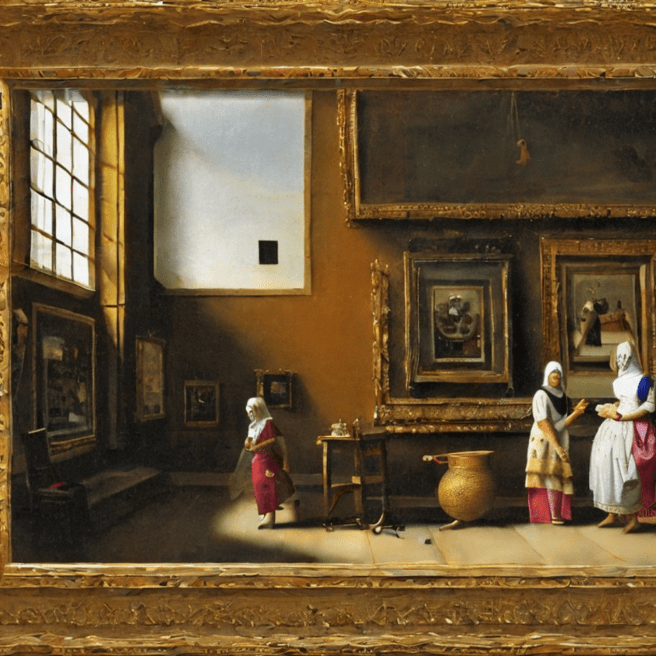
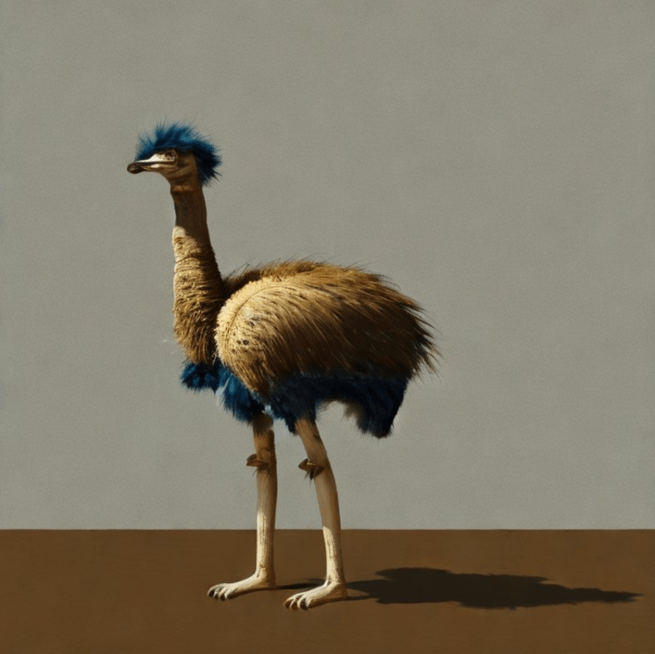
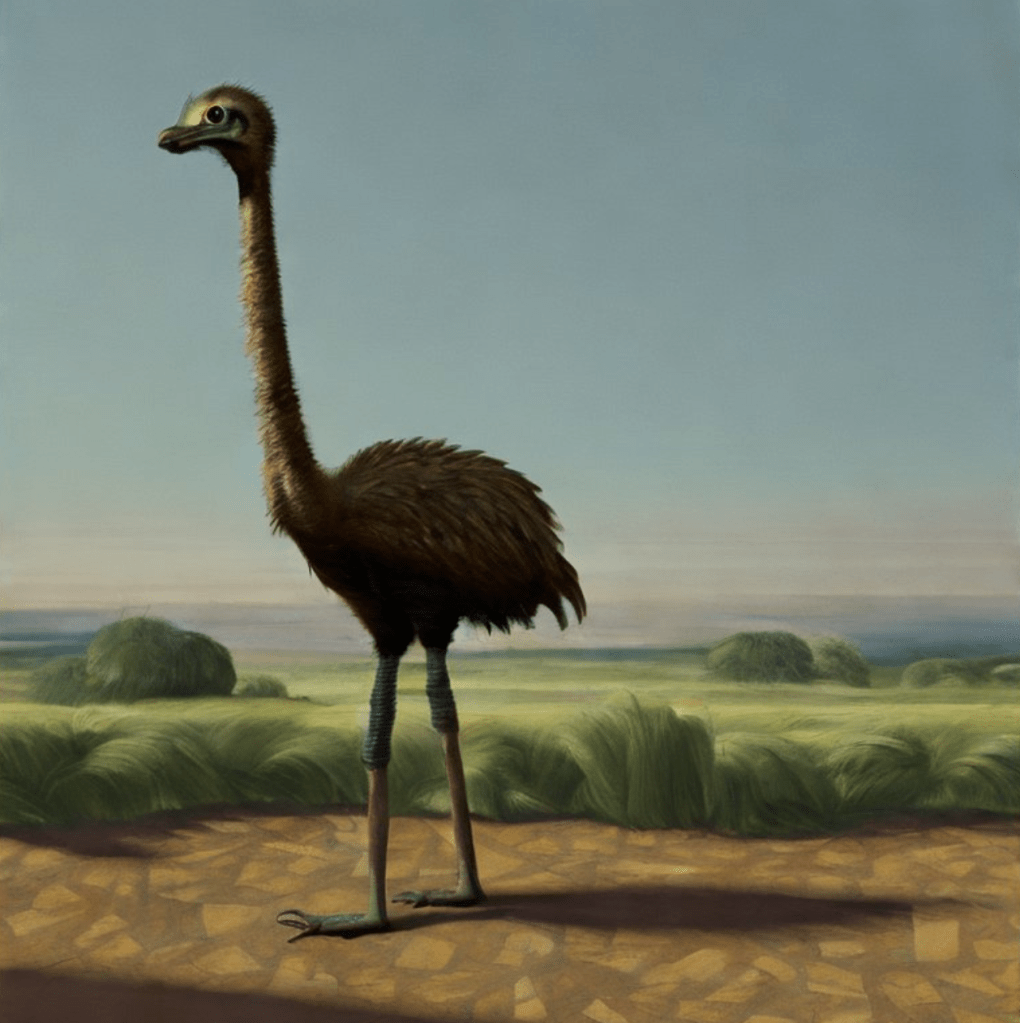
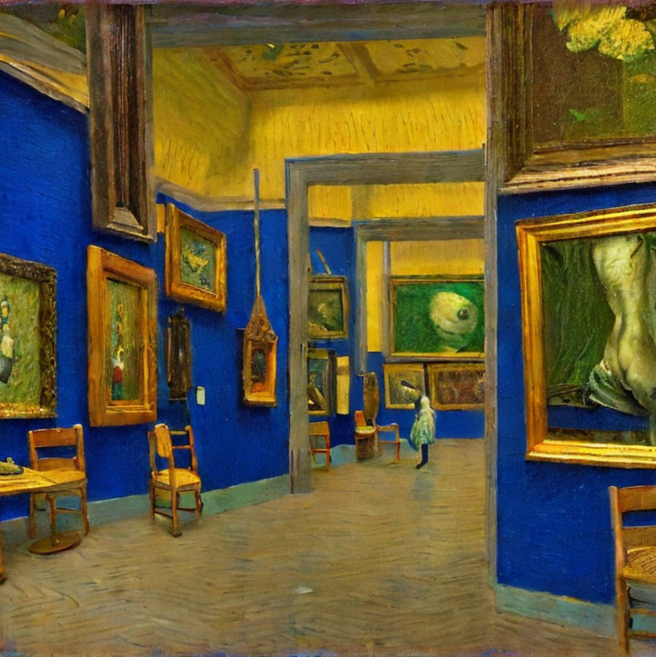
    The following collection of experiments with Stable Diffusion 2.1 are dedicated to the great Vermeer, and in celebration of his current show at the Rijksmuesum, right here in Amsterdam, where I’m sitting now. I’ve seen a lot of pretty naff’ posters, and promotional artwork for the show, the girl with the peal earring is all over the place. I wanted to print some of these out in various sizes and formats and scatter them about the exhibition. I wonder what you think about them?

    –Steve Fly.

  • All E-Books And Paperbacks

    All E-Books And Paperbacks

    Follow this link for a selection of both Paperbacks and E-books (Kindle) over at Amazon Books. If you’d like signed copies or deals, plus exclusive music and blog posts, please head over to my Patreon account and join the ride.

    Stay safe.
    –Steve Fly

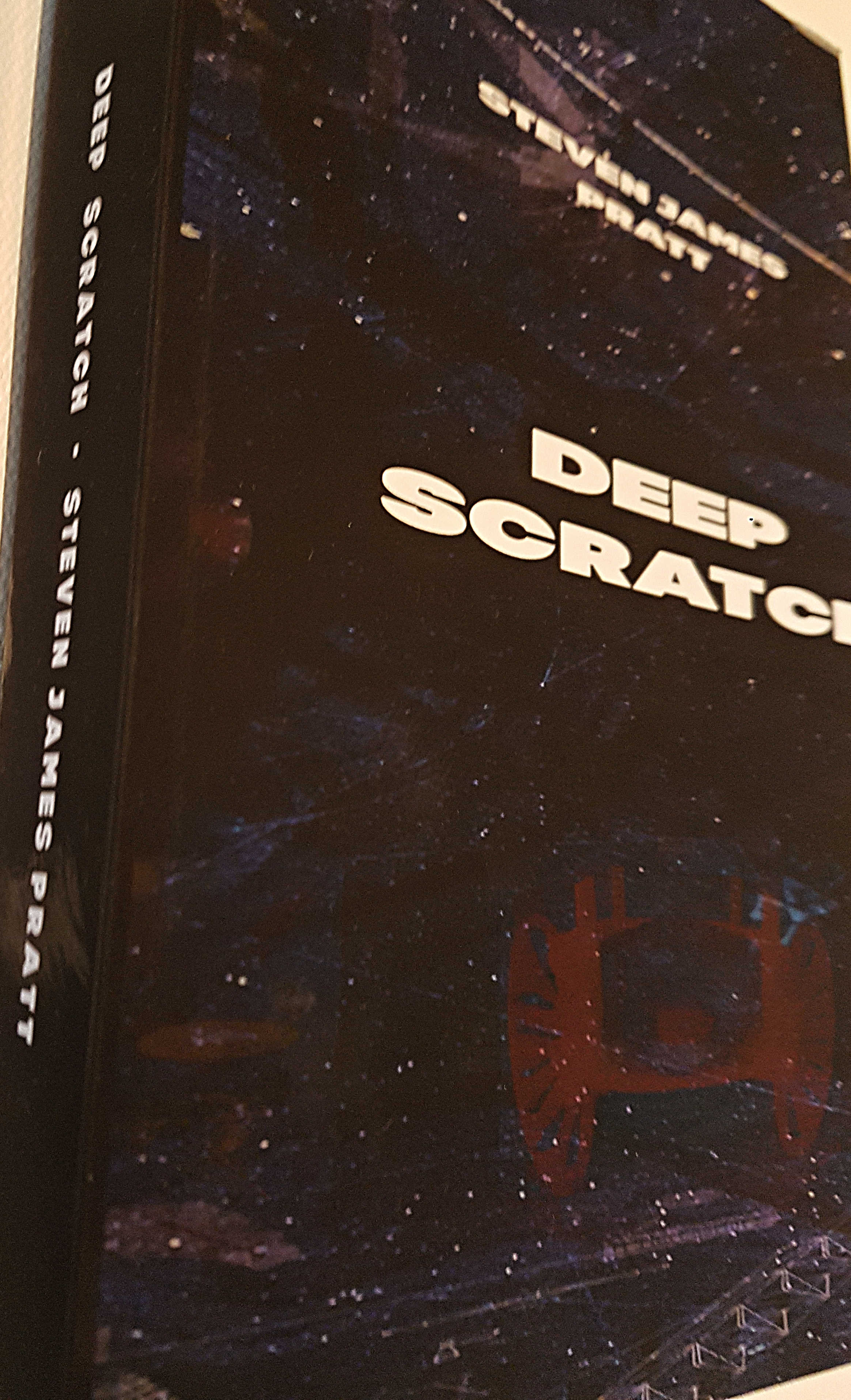
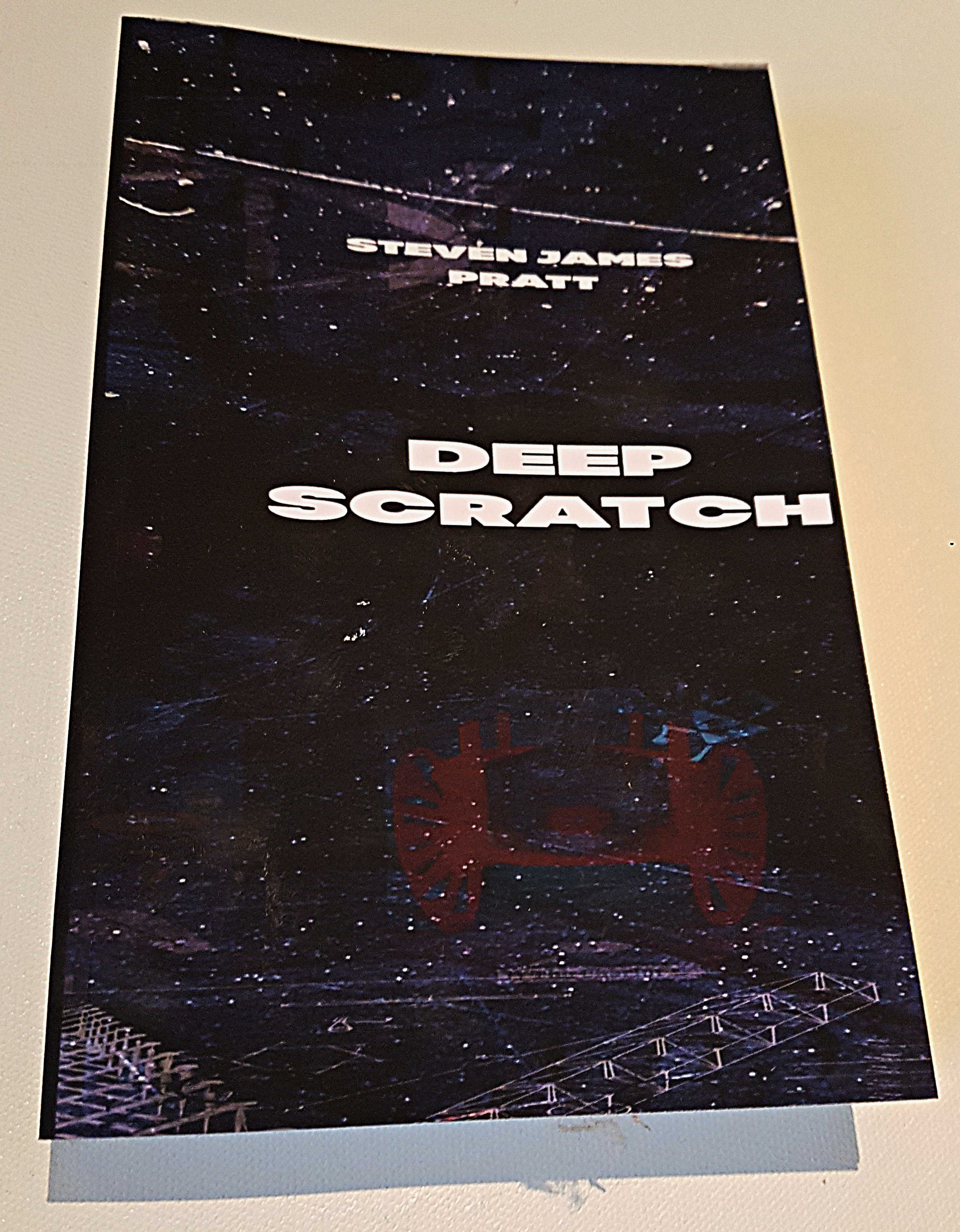
    Deep Scratch – Paperback
  • Deep Scratch – Paperback

    Deep Scratch – Paperback

    Thanks to everybody who made this possible.
    –Steve Fly

    Order a signed copy via www.patreon.com/stevefly

    Sounds to accompany the words start here:

  • Deep Scratch Audio Book – Chapter One

    Deep Scratch Audio Book – Chapter One

    www.patreon.com/stevefly

    Chapter One is live at www.patreon.com/stevefly

    The next 25 chapters will follow as I read them.

    Thanks for the support.

    Love, steve fly.