Category: flyagaric23

  • THE MULTI STORY BARD BARK (a short multi story)

    A NOTE TO MY FRIENDS AND READERS….

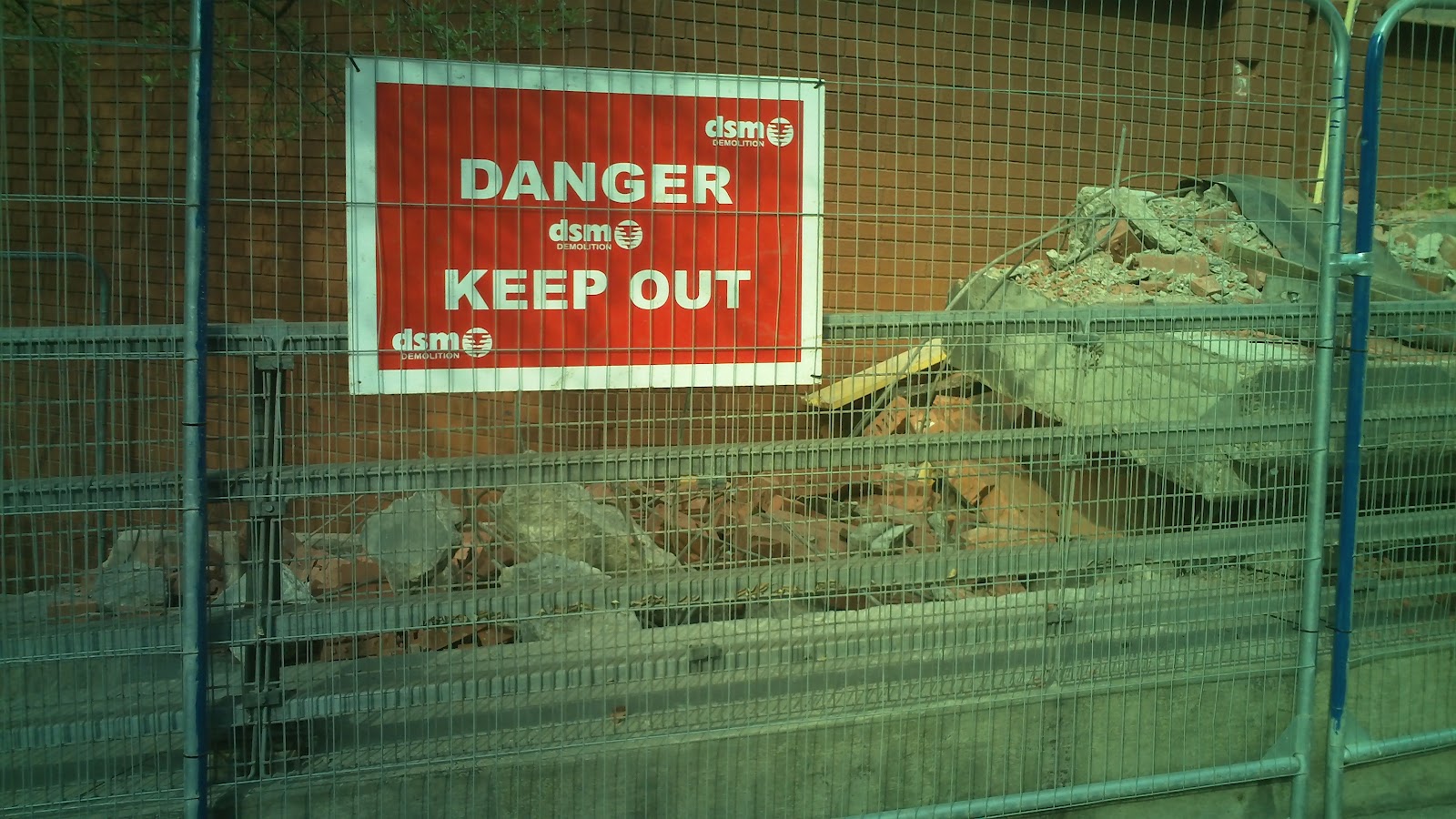
    I promised my friends and myself that I would write a multi-story about the multi-story car park in Stourbridge that is scheduled to be demolished today (April 1st, 2012). So here is a first draft, its pretty RAW will undergo editing at a later date.

    Enoy, and please feel free to feed back as you see fit. (the original idea was a multi authored story, so if anyone wants to pick up a thread, please do). Maybe somebody from Stourbridge will get a hold of this a print it out and give it out to some locals, feel free my friends, Love, steve fly

    Car park demolition day will see more than 100 homes evacuated

    THE MULTI STORY BARD BARK. (first draft)
    by Steven James Pratt, 1st April 2012.


    (Any names, events, or places that are similar by name, event or by places–existing in the real universe outside of this story–is purely and totally coincidental. It is, in fact, the wishes of the author to make fiction from the imagination and raw material of experience.)

    The RACE day

    (more…)

  • Untitled 1.0 and Fly Agaric at WIKIPEDIA.

     “Wasson and his school have demonstrated how mushroom language tends to be euphemized, masked, coded, buried in etymologies and even “false” etymologies.–Peter Lamborn Wilson, Irish soma.

    AMANITA MUSCARIA AND THE THUNDERBOLT LEGEND IN GUATAMALA AND MEXICO. BY L.LOWRY. 1973.–http://www.samorini.it/doc1/alt_aut/lr/lowy4.pdf


    UNTITLED 1.0

    “Lo saturnalia,

    Drink new flesh back with kwantum mechanix
    Fliegenschwamm gerr,
    Mukhomor flowing moments drunken bards piss somert,
    Tue-mouche Amanite,
    Born from nothing into La picene.
    Dark mother Earth: early autumn,
    Nourishing dark belly of night
    Receptive southwestern mother,
    Weak yielding
    It is difficult to get the news from poems.
    Jesusland economy seems symbiotic with the dollars role as reserve Currency
    Monstrous and oily-veined bloodhungry pricks feastupon
    Dharmadollar ghosts
    Holla,
    The great Eastern sun saves and radiates.
    All perception as gambowl
    And under the almond-trees, gods,
    lo! lands of Cyberia, Siberia and Peteurasia
    Persian Haoma + 5 indole Eztheotextz +
    Chinese + pranayama, may = “stoned” perception.


     http://en.wikipedia.org/wiki/Amanita_muscaria

    Cultural depictions

    Children play on Jose de Creeft‘s sculpture Alice in Wonderland in Central Park, New York. Alice sits atop a mushroom, inviting children to climb up and join her. Whilst the mushroom in the sculpture is not a faithfully reproduced Amanita muscaria, the reference within Lewis Carroll‘s original literary work upon which the sculpture is based is often discussed.[112][113]

    Moritz von Schwind‘s 1851 painting Ruebezahl features fly agarics.[114]

    The red-and-white spotted toadstool is a common image in many aspects of popular culture, especially in children’s books, film, garden ornaments, greeting cards, and more recently computer games.[32] Garden ornaments, and children’s picture books depicting gnomes and fairies, such as the Smurfs, very often show fly agarics used as seats, or homes.[32][115] Fly agarics have been featured in paintings since the Renaissance,[116] albeit in a subtle manner. In the Victorian era they became more visible, even becoming the main topic of some fairy paintings.[117] Two of the most famous uses of the mushroom are in the video game series Super Mario Bros.,[118] and the dancing mushroom sequence in the 1940 Disney film Fantasia.[119]

    [edit] Literature

    The journeys of Philip von Strahlenberg to Siberia and his descriptions of the use of the mukhomor there was published in English in 1736. The drinking of urine of those who had imbibed the mushroom was commented on by Anglo-Irish writer Oliver Goldsmith in his widely read 1762 novel Citizen of the World.[120] The mushroom had been identified as the fly agaric by this time.[121] Other authors recorded the distortions of the size of perceived objects while intoxicated by the fungus, including naturalist Mordecai Cubitt Cooke in his books The Seven Sisters of Sleep and A Plain and Easy Account of British Fungi.[122] This observation is thought to have formed the basis of the effects of eating the mushroom in the 1865 popular story Alice’s Adventures in Wonderland.[112] A hallucinogenic “scarlet toadstool” from Lappland is also featured as a plot element in Charles Kingsley‘s 1866 novel Hereward the Wake based on the medieval figure of the same name;[123] fly agaric shamanism is explored more recently in the 2003 novel Thursbitch by Alan Garner.[124]

    [edit] Christmas decorations and Santa Claus

    Fly agarics appear on Christmas cards and New Year cards from around the world as a symbol of good luck.[125] The ethnobotanist Jonathan Ott has suggested that the idea of Santa Claus and tradition of hanging stockings over the fireplace is based centrally upon the fly agaric mushroom itself.[75] With its generally red and white color scheme, he argues that Santa Claus’s suit is related to the mushroom. He also draws parallels with flying reindeer: reindeer had been reported to consume the mushroom and prance around in an intoxicated manner afterwards.[126] American ethnopharmacologist Scott Hajicek-Dobberstein, researching possible links between religious myths and the red mushroom, notes, “If Santa Claus had but one eye [like Odin], or if magic urine had been a part of his legend, his connection to the Amanita muscaria would be much easier to believe.”.[127]

    The connection was reported to a much wider audience with an article in the magazine of The Sunday Times in 1980,[128] and New Scientist in 1986.[129] Historian Ronald Hutton has since disputed the connection;[130] he noted reindeer spirits did not appear in Siberian mythology, shamans did not travel by sleigh, nor did they wear red and white, or climb out of smoke holes in yurt roofs. Finally, American awareness of Siberian shamanism postdated the appearance of much of the folklore around Santa.[131]


    http://www.maybelogic.org/maybequarterly/01/0121FlyUntitled.htm

    TRANSLATED BY GOOGLE FROM GIORGIO SAMORINI.
    http://samorini.it/site/en/antropologia/asia/amanita-muscaria-siberia/

    The Amanita muscaria from Siberian populations

    amanita koriako

    Koriako Shaman who plays the drum inside a yurt (tent). From Jochelson, 1905
     

    The fly-agaric Among the Siberian Populations
    The use of the hallucinogenic mushroom Amanita muscaria (Fly agaric mushroom) is attested in Siberian regions in the images of prehistoric rock carvings of various archaeological sites in the rivers Yenisei and Pegtymel . The ethnographic reports of the last century documented use as intoxicating in different populations.
     
    Its use is attested in two vast regions of Siberia. The first concerns the territory of Siberia to the north-west including the rivers Dvina and Kotuj, including the peninsula of Tayma. In this region the people involved in the use of the fungus belongs to the Ural language family, and they are: Khanty (Ostiaki), Mansi (Vogul), Forest Nenets, Selkup (Samoidei group), Nganasan, Ket (Yenisei Ostiaki of) . According to recent observations of Saar (1991), with these people today use the fungus became extinct.
     
    The second region covers the eastern part of Siberia from the Kolyma River, including the peninsula of Kamchatka and the people involved are: Chukchi, Koriaki, Itelmen, Eskimos, Chuvanian (one of the tribes Yukagir), Yukagir, Even Russians who settled for centuries and along the Kolyma River.
     
    The use of the fungus has been reported by ethnographers of the nineteenth century, even among the Lapps of Inari in northern Scandinavia (Wasson, 1968) and at the northern Komi living in the Urals (Dunn, 1973).
     
    Anthropologists of the Russian post-revolutionary period reported that, with the advent of Soviet power, the Siberian populations stopped their old practice of fly-agaric ingestion dell’agarico, “Socialist soon reaching the stage of social development” (in rip. Wasson, 1968: 151). Following the political change in post-Soviet 1990s, anthropologists, more free from censorship, they returned to report the use of the fungus in these populations, showing that this use was in fact never been stopped (see Saar, 1991) .
     
    Depending on the populations of Fly agaric mushroom was and is used collectively for ceremonies and parties, or used by shamans to promote healing trance during practices or to contact the spirits of the dead, in divination and the interpretation of dreams. And ‘as fortifying used during long journeys and hunting. And ‘highly probable that originally was exclusively use shamanic and subsequently weakening the institution of shamanic power and the use of the fungus has spread to other members of the tribal society.
     
    During the fly-agaric dall’agarico induced visions they occur in siberian investigator of anthropomorphic figures without arms and legs, and regarded the spirits of the fungus called “man-love” or “dummies”, which communicate with the investigator and the lead for hand in the afterlife journey. These “men-like” to play an important role in the interpretation of the experience with the fungus, are depicted in prehistoric petroglyphs of the ancient Siberian peoples and are a recurring theme in mythology and stories of Yakuti, Chukchee and other tribes present.
    See: The Amanita muscaria among the Chukchi (V. Bogoraz)
     
    The Siberian populations have found that the urine of those who have eaten the Fly agaric mushroom is also equipped with psychoactive properties and are known for the bizarre habit of drinking his own urine or that of other individuals to prolong the effects of the fungus.
    It is very likely that these people have discovered the psychoactive properties of the urine of those who have eaten the same mushroom fungus and observing the behavior of the reindeer, which are both tasty and intentionally become drunk with the Fly agaric mushroom, which the urine of other reindeer that have eaten.
    See:
    The Amanita muscaria among Koriaki (W. Jochelson)
    The use of Amanita muscaria among Siberian Koriaki (J. Enderli)
    The Amanita muscaria among Ugri (Ostiaki and Vogul) (KF Karjalainen)
    The Amanita muscaria among Kamchadal (Erman)
     
    ri_bib
    ETHEL DUNN, 1973, Russian Use of Amanita muscaria: A Footnote to Wasson’s Soma, Current Anthropology, vol. 14, pp.. 488-492.
    GEERKEN HARTMUT, 1992, Fliegen Pilze? Merkungen Anmerkungen und und zum Schamanismus Sibirien in Andechs, Integration, vol. 2 / 3, pp. 109-114.
    WALDEMAR Jochelson, 1905-1908, The Koryak, Memoir of the American Museum of Natural History, New York.
    Langsdorf GH, 1809, Einig Bemerkungen day Eigenschaften des Kamtschadalischen Fliegenschwammes betreffend, Annalen für die Wetterauischen Gesellschraft gesammte Naturkunde, vol. 1 (2), pp. 249-256.
    ROSENBHOM ALEXANDRA, 1991, in Der Fliegenpilz Nordasien, in: W. Bauer, E. A. Klapp & Rosenbhom (Ergs.), Der Fliegenpilz, Wienand Verlag, Cologne, pp.. 121-164.
    SAAR MARET, 1991, date from Siberia and North Ethnomycological-East Asia on the effect of Amanita muscaria, Journal of Ethnopharmacology, vol. 31, pp.. 157-173.
    R. Wasson GORDON, 1967, Fly Agaric and Man, in: Daniel H. Efron, Bo Holmstedt & Nathan S. Kline (Eds.), Psychoactive Drugs Search for Ethnopharmacologic, U.S. Department of Health, Education and welfare state, Washington, pp. 405-414.
    Father Wasson VALENTINA & R. Gordon Wasson, 1957, Mushrooms, Russia and History, Pantheon Books, New York, 2 vol.
    R. Wasson GORDON, 1968, Soma. Divine Mushroom of Immortality, HBJ, New York.

  • OOCUPY

    For the OCCUPY movement, the people and the spirits.–Steven James Pratt (Fly Acrillic 23)

    Occupy Your Mind
    The skies
    The stars
    Occupy hearts parks forests and stores

    Occupy The Streets
    Tweets
    And Occupied Toilets
    Occupy Beats and sing to highlight deceit to foil it

    Occupy War Street
    Your Walk
    Banksterdam,
    Occupy the Vatican of worms if you can

    Occupy Loan Don
    Switchaland
    Franchise,
    Occupy Organize Codify Ampliflies

    Occupy Pounds
    Occupy Cents
    Occupy Bill’s
    Occupy Beverly Hills

    Occupy Pence
    Occupy jails
    Occupy rents
    Girls penned in by pigs behind a fence,
    Poisoned like snails

    Occupy Bonds
    Dollars
    The Euro,
    Occupy The Bureau with Neuro Scholar Judo

    Occupy the Spyguys
    Occupy in face
    Occupy to Shock the eye
    The Ochre clings to the pepper spray
    Red Octopi tents tackle dragons and lions
    Occupy Occidental
    Sock your thigh your legs
    Occupy your pants my dear
    Occupy a wig
    All through October we’ll
    Occupy a jig
    Let’s Occupy November
    December through March
    Arab Spring and all,
    Then we’ll Occuply […….]
    And the Seasons revolve,
    Occupy the planet earth
    Coagulate, Solve.
  • TTOTT in 12 lines or less

    TTOTT in TWELVE by Steve ‘fly agaric 23’ Pratt.

    Fly On The Tale Of The Tribe: A Rollercoaster Ride With Robert Anton Wilson

    by Steven James Pratt

    Link: http://a.co/gOGNKyV

    (more…)

  • THE PIG WILL HAVE THE LAST GRUNT. BY ACRILLIC FIGA 2007.

    THE PIG MAY HAVE THE LAST GRUNT. By ACRILLIC FIGA (steve ‘fly agaric 23’ Pratt) 2007.
    Pigasus for Prez’ of Swineland 68-69 & 2012
    pigs in space, pigs in time;
    in the Chinese year of the pig: 2007
    i put my pen to the Tusk

    In soilydarity with lush Miss Piggy,
    Hogzilla, Napoleon, old Major and Pigsey,
    Wilbur, Professor Strangepork, Picasso, Pigasus
    and Porky pig

    The four legged hog that the label
    refers to is innocent of man’s crime.
    treated as Swine, in many lands pig denotes
    bad Authority, uncleanliness,
    consumerism, greed,
    and a BLT
    What intricate conspiracy afoot
    set against the animal kingdom
    against the plant kingdom
    the human barn-yard mind,
    orchestrated by Farmageddon
    what vgetable vendetta?

    Rolling in mud, eating shit
    and their own litter, once in a while,
    parallels modern arms factory
    economic practice.

    If you can stomach a capitalist pig
    don’t snap your wig over cannibalism
    pigs act pretty peaceful
    they don’t make Nukes, deploy troops
    most roll with styl, most roast.

    Pig as profanity! pig police authority,
    pig brother, animal in salts.
     
    The pigs may have the last grunt
    as the year of the pig makes its course.


    Steve fly agaric. 2007. Edited January 29th, 2012.

    I Talk to the dead pig in the sandwhich: Pigasus for Prez of Swineland 68-69 & 08-09? Pigs in Space, pigs in time; in the Chinese year of the pig in 2007′ i’ll put my pen to the Tusk of taking all pigs to heaven. Napoleon & Old major pigs, Ministry of Pig: 1984! Porky Pigs limbs litter the swine factory floor, Pig as profanity! Pigs as the Police authority, Pig Brother. Animals used as insulting metaphors for humans but Machines, Poisons and sleeping robots rule us? Ass drunk and/or stubborn as a mule like Pigasus parroting the whole dirty Bay of Swine thing, War pigs crawling Begging mercy for their sins – sang Sabbath, But the four legged HOG that the word PIG refers to is INNOCENT of all crimes leagilly piggily crimes! Just a bristly pink critter! There seems an intricate Telepathic Conspiracy afoot against the animal kingdom. And against the Plant Kingdom and supernature, from a human-plants point of view. Orchestrated by humans or machine/Robot/poisoned humans. V’ for Vegetable Vendetta. Other than rolling in mud, eating shit and sometimes their own litter (Which makes an illuminating metaphor for modern Arms factory economic practice, invented by Humans), Pigs seem peaceful and intelligent to me, they don’t make Nukes, deploy troops or go to Church. The Hippopota-muses lament for their HOG kind Treated like Swine, the pig has become the Animal word used in Western Civilization that reflects the characteristics Of Authority, Uncleanliness, consumerism and greed. Greedy PIG! A poet in solidarity with the lush Miss Piggy, Hogzilla Napoleon, Old Major and pigsy, Wilbur, Professor Strangepork, Picasso, Pigasus and Porky – i hereby swear to clear these Swine of their stereotypical image quickly and their Stereotypical place in human history and knotted Language as Stupid dumb and dirty cheap fodder; useful at Christmas time with a little gravy tea to dip my TOE into. Dirty grunting Ugly pigs until Served up With a little Sauce. The pigs will have the last grunt as the year of the pig makes its course. —fly acrillic/fly agaric 23. 2007. taken from world piss: the spore of the words.