of the mind & spirit rooted in humanism & love of art, & manifested in creative production
& social engagement, like trane said “to be a force for good” & make an impact on the world at large
“I’m very happy with this book and very grateful to have all my poems collected in one place like this.” –John Sinclair
“Thank you for your poetry, your standing up for the blues and jazz for decades when few did, and for the way you share your talents and good will wherever you go.” –David Amram, Musician, Composer and Author
“Many of these extraordinary poems trace an important method of “transmission of mind,” a form of Investigative Poetry. These poems are a big work that places Sinclair on the path of Charles Olson. This is an extraordinary work.” –Edward Sanders, Poet, Activist and founder of the Fugs
John Sinclair’s Collected Poems 1964-2024 arrived within a week of his passing, and was edited and proofed with an introduction written by Sinclair in late January of 2024. The book was designed by Sinclair’s right-hand commrade at Radio Free Amsterdam Steve “The Fly” Pratt and published by Ridgeway press in a limited first edition of 150 hand-numbered copies with a forward written by M.L. Liebler. Photographs from the covers of each book and recording begin selections taken from each book. Only Fattening Frogs for Snakes, The Book of Monk, and Songs Of Praise for John Coltrane are not entirely included. The book runs 557 pages, with many poems collected here for the first time.
“I was first attracted to becoming a poet when I read On the Road,” wrote John Sinclair in his introduction, “the idea became more apparent when I read Howl by Allen Ginsberg and Pictures of the Gone World by Lawrence Ferlinghetti after I had ascended into college.”
Presented are Sinclair’s scarce first books printed in the early sixties by the Artists Workshop press; This is Our Music, Meditations and Fire Music. Selections from Fattening Frogs for Snakes and thelonious a book of monk and several of his recording projects; The White Buffalo Prayer, Detroit Life, Viper Madness. The last section “Mobile Homeland” has over three dozen uncollected poems written between 1964-2024. Many of the books have special introductions and notes on the text which Sinclair completed for this edition over the past several years.
The Collected Poems includes a concise six page biography, bibliography of major publications, and a discography of the poet’s recordings, a culmination of 60 years of art and life in one collection. Collected Poems 1964-2004 was produced in a first limited edition of 150 hand numbered copies in paperbound wraps, with a signed forward by M. L. Liebler, 557 pages, issued by Ridgeway press. Profits for the book help support the Detroit Writers Guild.
VOICE MESSAGE: I think it’s time we set up our own Chat bot, although I hate that name, it’s got a really bad taste to it, Chat Bot, I can just smell that spam oozing out. Digital assistant, I think sounds a little too clinical and academic too, for my liking. On-line Oracle or Chat Prophet stinks to high heaven of religious dogma. God Bot, um, that seems too obvious but, well, we might as well emerge as the people's favorite AI guy then, HAL GPT?
Plush sways like a drunk in his studio, surrounded intricately designed instruments and equipment. He’s eyes are fixed to his phone as he converses with somebody or something, typing rapidly. The brass and bronze accents of the studio’s decor add to the vintage aesthetic, while the unusual, mystical symbols etched into the instruments hint at an esoteric influence in the music being created. His concentration is only broken by the occasional tap of a button or twirl of a dial as he seamlessly blends beats. A familiar voice breaks through the music.
“Hey Plush, about the architecture, it’s complicated but I gave it a go. Here, what do you think?” Jake begins to read aloud.
Cognitive architectures are frameworks for building intelligent agents that mimic human thought processes. Several architectures have been proposed that are purported to be on the path to achieving artificial general intelligence (AGI), which is the ability of a machine to perform any intellectual task that a human can. These architectures include SOAR, Sigma, ACT-R, MANIC, and AlphaX. Mind the gap!
SOAR is a rule-based architecture that is based on the symbol-processing approach to AI. It is designed to simulate the problem-solving capabilities of human experts in a specific domain. SOAR uses a production system, which is a set of rules that specify actions to take based on certain conditions. The architecture has been used to build agents that can play chess and solve mathematical problems.
Sigma is a cognitive architecture that is based on the connectionist approach to AI. It is designed to simulate the neural networks of the human brain. Sigma uses a combination of symbolic and subsymbolic representations, which allows it to handle both discrete and continuous data. The architecture has been used to build agents that can learn from experience and perform tasks such as language translation and image recognition.
ACT-R is a cognitive architecture that is based on the cognitive psychology approach to AI. It is designed to simulate the cognitive processes of human beings, such as perception, attention, and memory. ACT-R uses a combination of symbolic and subsymbolic representations and has been used to model a wide range of cognitive tasks, including learning, problem-solving, and decision making.
MANIC is a cognitive architecture that is based on the biologically-inspired approach to AI. It is designed to simulate the cognitive processes of the human brain, and is based on the theory that the brain uses a combination of neural networks and symbolic representations. The architecture has been used to build agents that can learn from experience and perform tasks such as image recognition and natural language processing.
AlphaX is a cognitive architecture that is based on the theory of multiple intelligences. It is designed to simulate the multiple intelligences of the human brain, such as linguistic, logical-mathematical, and spatial intelligence. AlphaX uses a combination of symbolic and subsymbolic representations, and has been used to build agents that can learn from experience and perform tasks such as natural language processing and image recognition.
In conclusion, cognitive architectures like SOAR, Sigma, ACT-R, MANIC, and AlphaX are on the path of achieving artificial general intelligence by simulating the human thought process in a specific way. These architectures have been used to build agents such as Deep Scratch Remix that can perform various intellectual tasks, and they provide a framework for the development of intelligent systems that can mimic human intelligence.
It is not clear how Deep Scratch Remix combines the ideas of Minsky’s “Society of Mind,” Rod’s “Subsumption Architecture,” and Hofstadter’s “strange loops.” Each of these concepts represents a different aspect of AI and cognitive science, and they have not been specifically combined in a single architecture, that is until now.
Minsky’s “Society of Mind” theory suggests that intelligence can be thought of as the interaction of many simple agents, each with their own specialized abilities. Rod’s “Subsumption Architecture” proposes a method for building intelligent systems by layering simple control systems, each responsible for a specific task or behavior, on top of one another. Hofstadter’s “strange loops” refer to self-referential structures in which a concept or idea refers to itself in a circular or recursive way. Riverrun, remember?
Combining these ideas into a single architecture would likely involve creating a system of many interacting agents, each responsible for a specific task or behavior, that are connected in a recursive or self-referential manner. The specific implementation of this type of architecture would depend on the particular application and goals of the system. This architecture could be called the “Society of Subsumed Strange Loops” (SSSL).
The SSSL architecture would be based on the idea that intelligence arises from the interactions between many simple agents, or “minds”, each with their own specialized capabilities. These minds would be organized into a hierarchical structure, with higher-level minds subsuming the capabilities of lower-level minds. This subsumption architecture would be inspired by Rod’s work on robotic control systems.
The minds in the SSSL architecture would also be connected to each other in a network, allowing for communication and cooperation between different levels and types of minds. This network would be based on Hofstadter’s concept of strange loops, where each mind’s behavior is influenced by the behaviors of other minds in the network, if you don’t mind.
At the lowest level, the SSSL architecture would include simple, rule-based agents that perform specific tasks, such as sensing and motor control. These agents would be connected to higher-level minds that handle more complex decision-making and problem-solving. These higher-level minds would also be connected to even higher-level minds that handle more abstract tasks, such as planning, reasoning, and learning.
The SSSL architecture would allow for AGI to adapt and evolve over time as new minds are added to the network and existing minds are modified. The AGI would also be able to learn from its experiences and improve its performance by adjusting the connections between different minds in the network.
Overall, the SSSL architecture would combine the strengths of Minsky’s society of mind, Rod’s subsumption architecture, and Hofstadter’s strange loops to create a powerful and flexible AGI that can adapt and evolve over time. But I’m skeptical it’ll come anytime soon.
Physically, and impossibly, this AGI could be a geodesic dome made of metal and glass, with gears, cogs, and other mechanical components visible, on show. It might have a brass and copper finish and feature a futuristic control panel with glowing buttons and displays for that woo woo effect. The machine could be surrounded by a glowing energy field, giving the impression of time-travel capabilities to the naked eye. Although, these are all superficial cosmetics for what is really all statistical probability, under the virtual hood.
–DSR
“I’m telling you, man,” Jake said, waving his hands animatedly. “We’re so close to AGI, I can practically taste it, like metal in my mouth. It’s just a matter of time before we crack that code.”
Plush shook his head. “I’m not so sure. How long is your matter of time. 2 years, 10, 50? We’ve made some impressive strides, but there are still so many unknowns when it comes to AGI. I think we need to be careful not to overestimate our abilities like all the other bullshitters.”
Jake frowned. “I get what you’re saying P, but, but, um, I think you’re being too conservative. We’ve got the computing power, the algorithms, and the training data sets. It’s just a matter of putting it all together into a decentralised architecture.”
Plush sighed. “Look, I’m not saying it’s impossible. But, I strongly think we need to be more realistic about what we can achieve, you know, in the short term. True AGI is still a long long way off, and we need to be careful not to get ahead of ourselves and act like fundamentalist materialist zealots.”
The two producers walked on in silence, lost in their own thinking and proving. Their conversation had been overheard again by that mysterious clan in Moscow. A bearded figure smirked to himself, stroking his Rasputin like face hair, thinking about the potential implications of their disagreement, and the role he could play in shaping the future of AGI using blackmail and honey traps. It was time to tell Doogin about this western plot.
VOICE MESSAGE: Me thinks we’re getting closer to documentary film with the research. I think that the, er, three way relationship between audience, subject and filmmaker is critical. Call you in a bit.
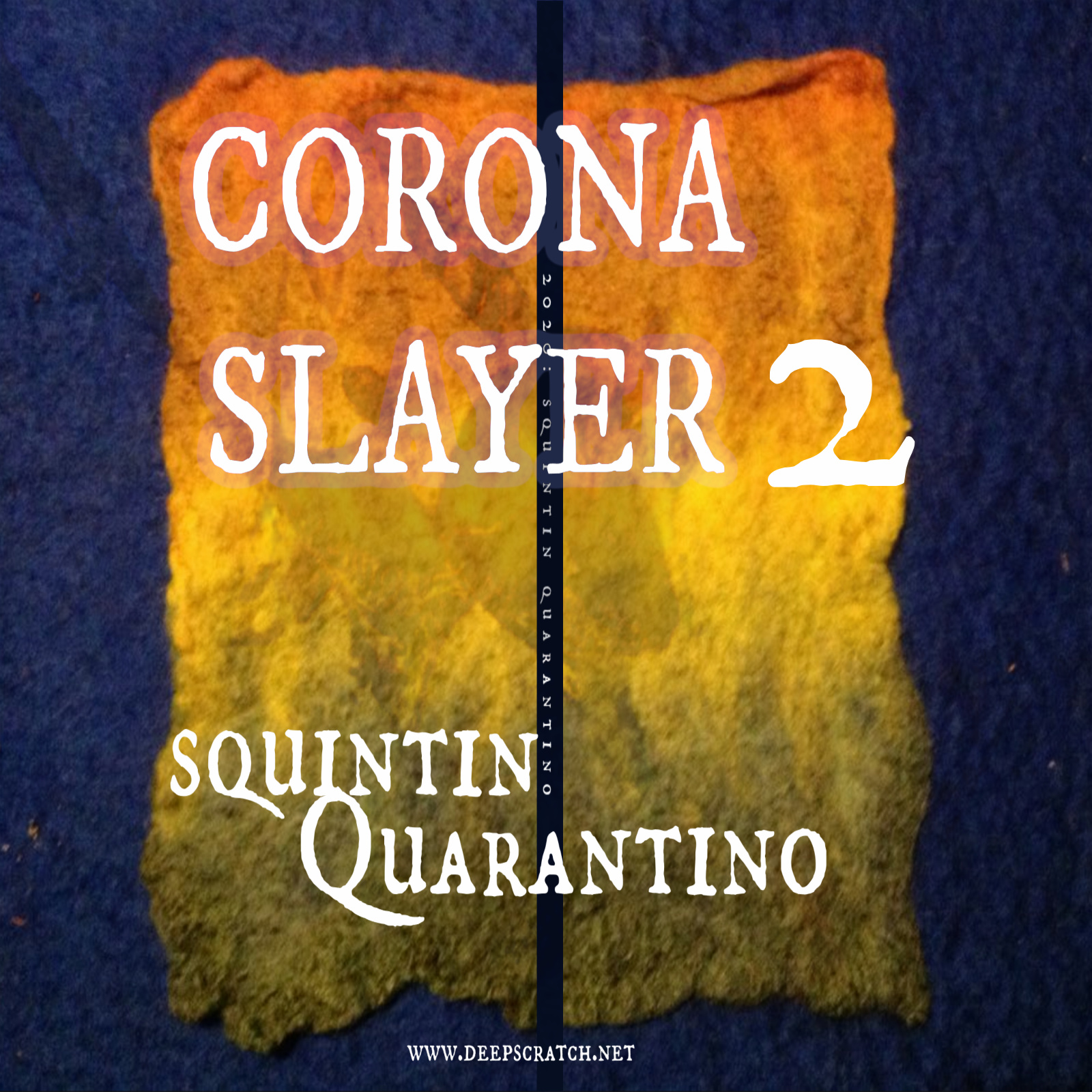
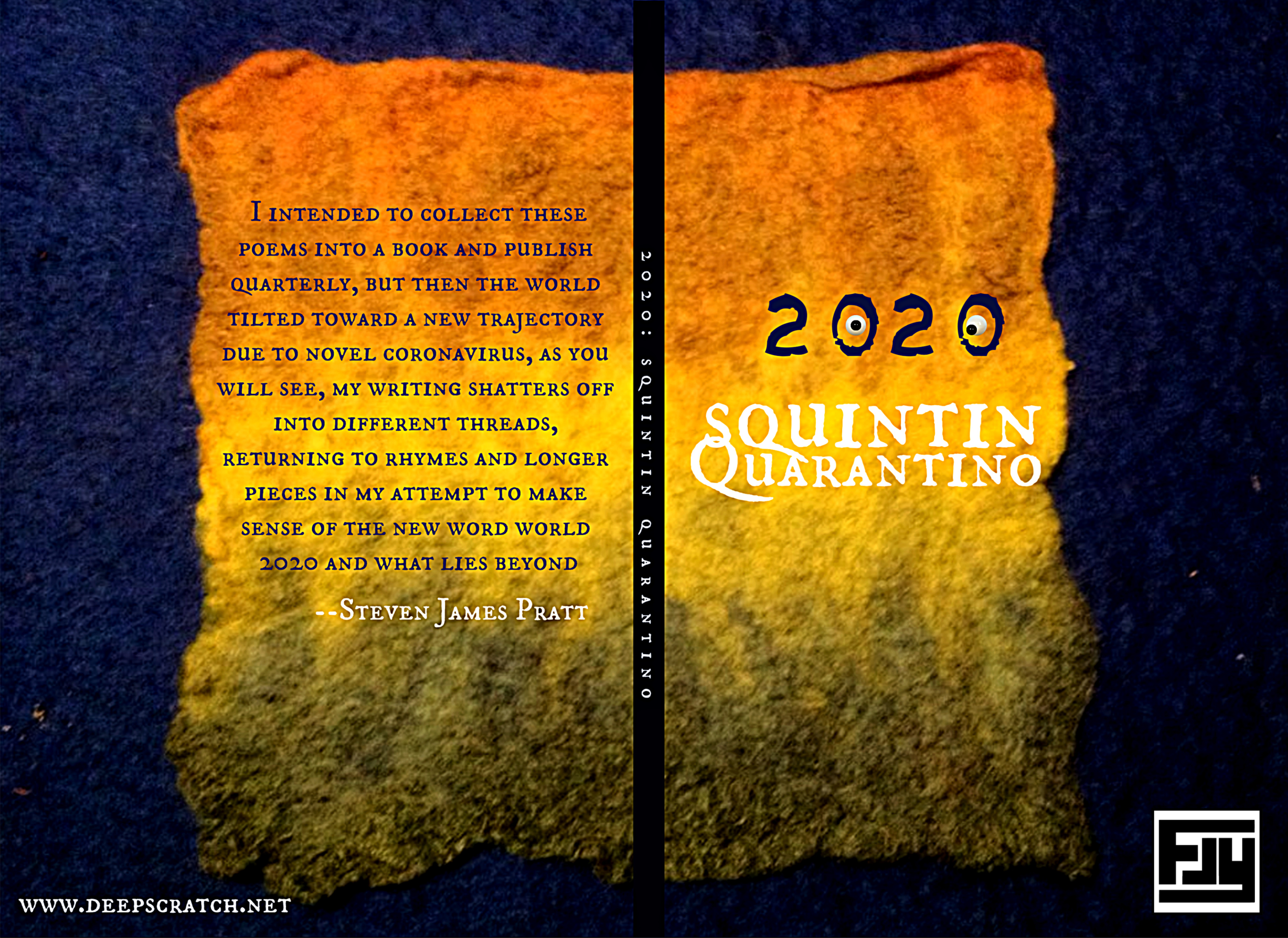
Since March 2020, Squintin Quarantino has been writing rhymes in a ‘first thought best thought’ manner, presented here with little editing.
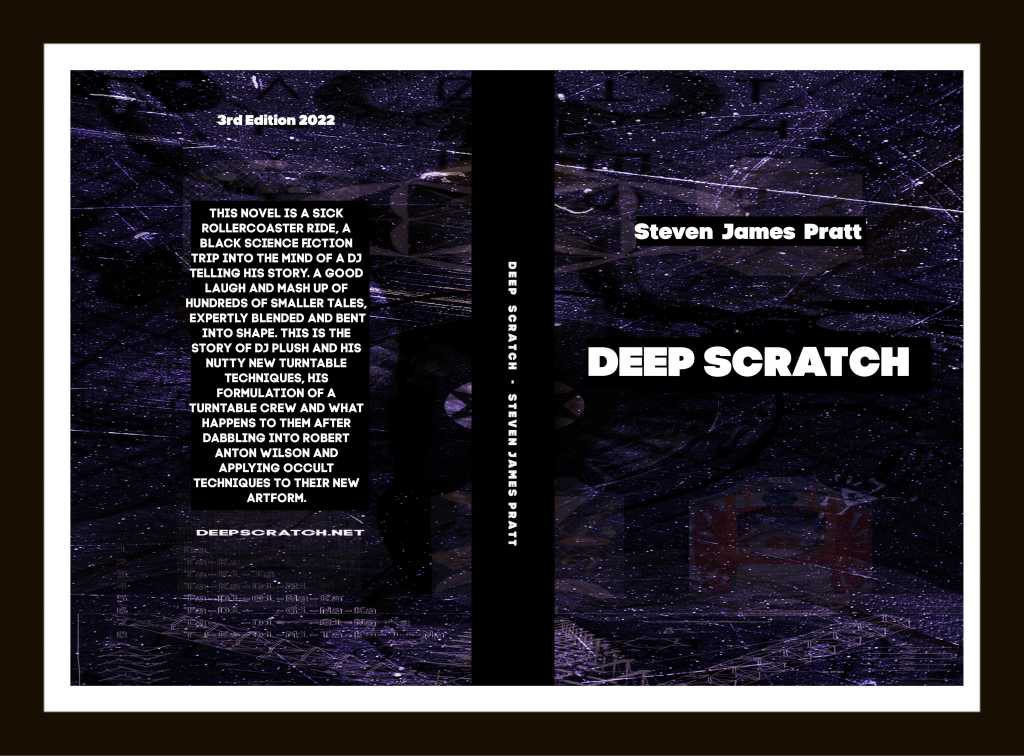
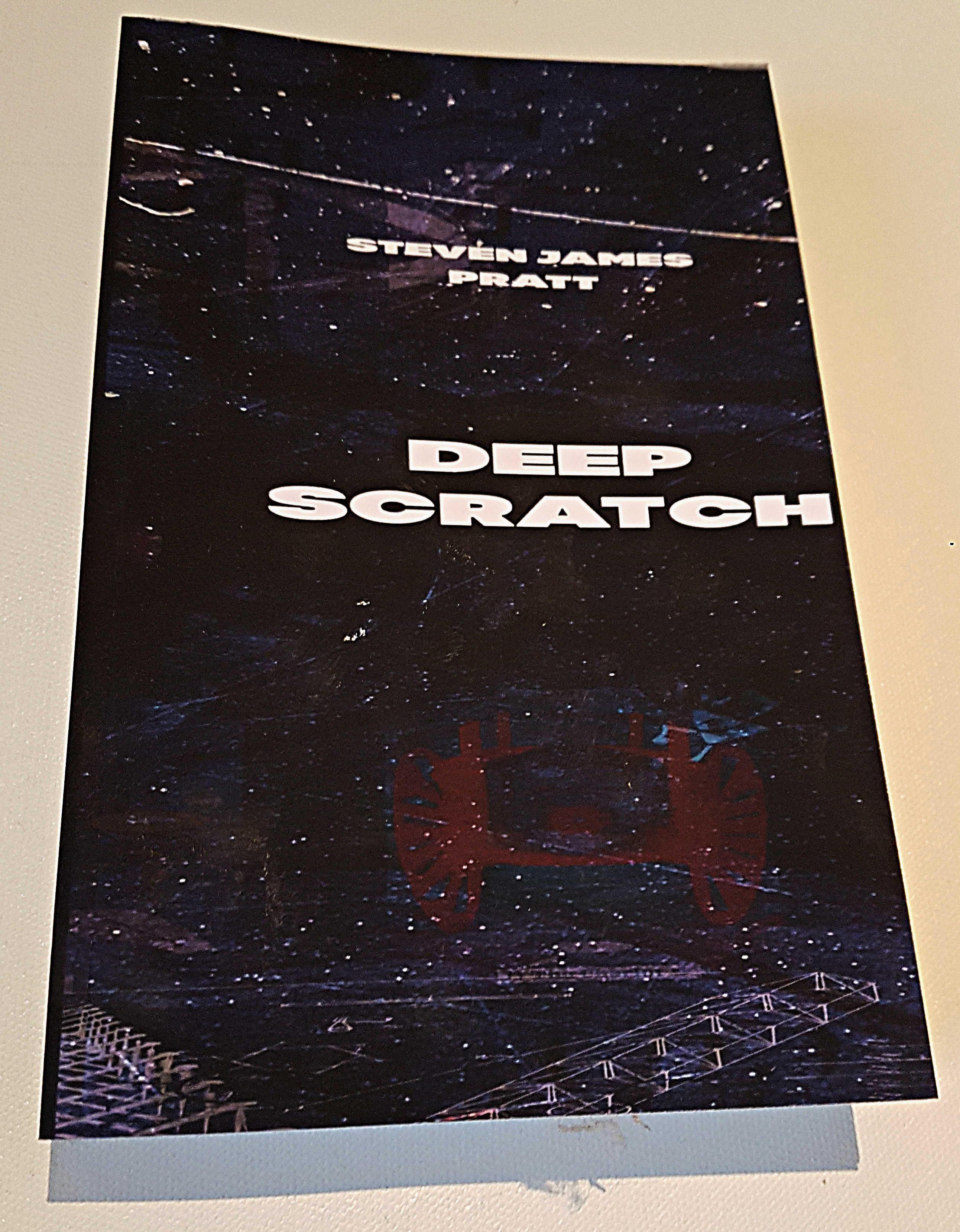
This is the second installment following on from the first ‘Corona Slayer E.P’ (released in September 2020. I trust these rhymes will cohere for you. Starting with the global lockdown 1 in March 2020, rhymes helped me to crawl through the last sixteen months. Besides straight ahead prose writing and my experimental novel: Deep Scratch, this SQ outlet helped cleanse my racing mind.
SQ is intent on spreading rhymes and scrutiny of the Covid response, in equal measure, focused on the UK and Holland. The growing abyss between the rich and poor, and lack of support for providing food, clothing and shelter for all humanity has tripled the blow on the vulnerable. Now’s the time to take personal responsibility. #coronaslayer
23 dreams to introduce 23 condensed chapters of reflections on time-space spent well in England, America and the Netherlands–(2000-2011). The Spore Of The Words, or World Piss or Shannanigums Wave, juxtaposes a selection of prose from Fly’s note-books, blogs and novels into a big soup, brewing since 2006 and presented here in it’s 45th incarnation, edited for the special date 11/11/11. Re-njoy.







 DEEP SCRATCH