Tag: Large Language Models
-

You Just Found Out Your Book Was Used to Train AI. Now What?
The thought of Deep Scratch being used in any training data set is a strange loop, as it kind of folds back into the AI themes of the book, to me. But, alas, it probably would not be picked up.
The Books3 dataset contains 183,000 books, downloaded from pirate sources. We know that companies like Meta (creators of LLaMA), EleutherAI, and Bloomberg have used it to train their language models. OpenAI has not disclosed training information about GPT 3.5 or GPT 4—the models underlying ChatGPT—so we don’t know whether it also used Books3. Regardless of whether GPT was trained on Books3, the class action lawsuits against OpenAI should uncover more information on the datasets used by OpenAI, which we believe also include books obtained from pirate sources.
https://authorsguild.org/news/you-just-found-out-your-book-was-used-to-train-ai-now-what/https://authorsguild.org/news/you-just-found-out-your-book-was-used-to-train-ai-now-what/
-
Bruce Sterling On The Great AI Beast
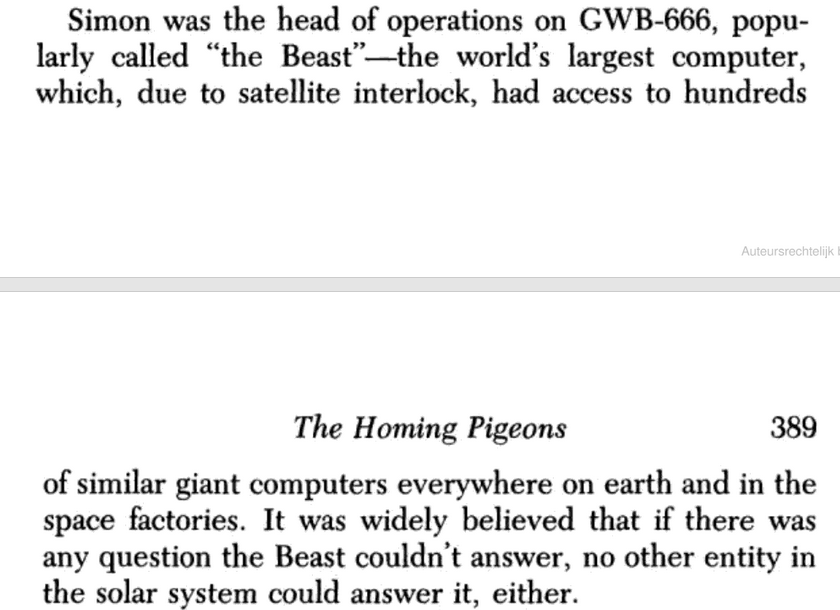
I’ve been a fan of Bruce Sterling since seeing his improvised presentation at the PlanetWorkers Conference, held at the Presidio in San Francisco, 2000. 23 years later his mixture of cookie-cutting-edge prose and technical translation get to the deep monstrous heart of the matter. I’m sure Bruce is aware of the supercomputer called The Great Beast GWB-666 from “Schrodinger’s Cat Trilogy” by Robert Anton Wilson.
But those “parrots” are also AI mythic beasts—parrots with a trillion dimensions. It’s as if that “dead parrot” in the legendary Monty Python sketch could take your job, or burst right out of the BBC-TV screen like a blazing phoenix and eat the television signal. Those parrots are dynamite!
Bruce Sterling, Newsweek, June 2023.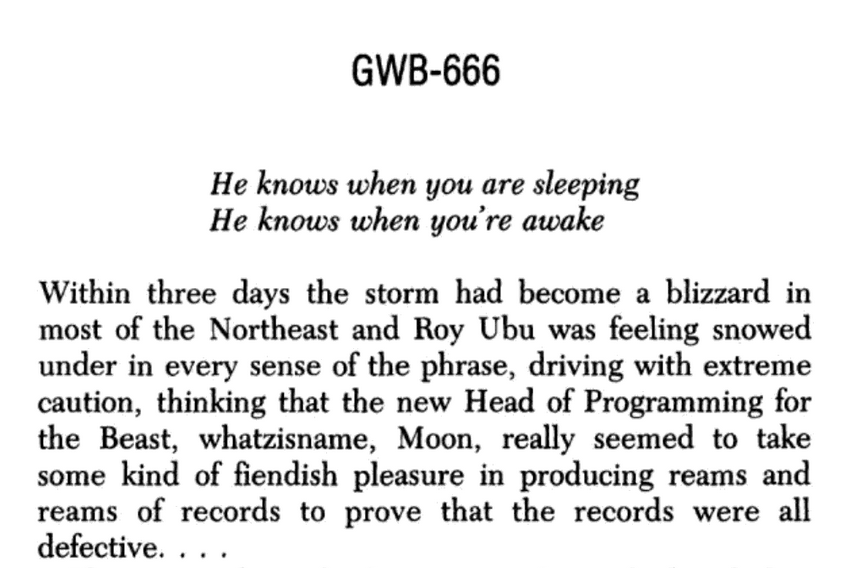
Next among the cavalcade of AI folk monsters: the “Masked Shoggoth.” The Shoggoth is an alien monster invented by the cosmic horror writer H.P. Lovecraft. The Shoggoth is a huge, boneless slave beast that sprouts eyes and tentacles at random. It’s a creepy beast-of-burden from outer space, and it’s forced to labor, but it’s filled with a silent, burning, unnatural resentment for its subjugation.
Bruce Sterling, Newsweek, June 2023.
So, the human programmers of today’s new AIs—those text-to-image generators, those Large Language Model GPT chatbots—they adore this alien monster. They deliberately place a little smiley-face Mask on the horrid Shoggoth, so that the public will not realize that they’re trifling with a formless ooze that’s eldritch, vast and uncontrollable.
-
Pause Giant AI Experiments: An Open Letter
A lot of food for thought, I generally agree with the sentiments and without digressing to far from the point, would add that there should also be a pause on giant weapons development and giant financial institutions, for similar reasons.
I strongly feel that the discussions about policy and regulation should include a wide cross section of people, not all of them AI professionals or computer scientists, or government officials and giant global institutions. A comprehensive open discussion must include a comprehensive array of human beings, their concerns, desires, and alternative solutions to these big problems and paradoxes.
We may all eventually have to confront the AI singularity looming on the horizon, and therefore take this pause period to refresh our explanatory knowledge. Perhaps try reading some Shakespeare, James Joyce and Robert Anton Wilson, discover your inner and outer humanity and embrace the art of language charged to the highest degree. A panpsychist approach would pay respect and honor all entities, everywhere, all the time. Take caution. My 5c.
–SJP“AI systems with human-competitive intelligence can pose profound risks to society and humanity, as shown by extensive research[1] and acknowledged by top AI labs.[2] As stated in the widely-endorsed Asilomar AI Principles, Advanced AI could represent a profound change in the history of life on Earth, and should be planned for and managed with commensurate care and resources. Unfortunately, this level of planning and management is not happening, even though recent months have seen AI labs locked in an out-of-control race to develop and deploy ever more powerful digital minds that no one – not even their creators – can understand, predict, or reliably control.”AI systems with human-competitive intelligence can pose profound risks to society and humanity, as shown by extensive research[1] and acknowledged by top AI labs.[2] As stated in the widely-endorsed Asilomar AI Principles, Advanced AI could represent a profound change in the history of life on Earth, and should be planned for and managed with commensurate care and resources. Unfortunately, this level of planning and management is not happening, even though recent months have seen AI labs locked in an out-of-control race to develop and deploy ever more powerful digital minds that no one – not even their creators – can understand, predict, or reliably control.
Contemporary AI systems are now becoming human-competitive at general tasks,[3] and we must ask ourselves: Should we let machines flood our information channels with propaganda and untruth? Should we automate away all the jobs, including the fulfilling ones? Should we develop nonhuman minds that might eventually outnumber, outsmart, obsolete and replace us? Should we risk loss of control of our civilization? Such decisions must not be delegated to unelected tech leaders. Powerful AI systems should be developed only once we are confident that their effects will be positive and their risks will be manageable. This confidence must be well justified and increase with the magnitude of a system’s potential effects. OpenAI’s recent statement regarding artificial general intelligence, states that “At some point, it may be important to get independent review before starting to train future systems, and for the most advanced efforts to agree to limit the rate of growth of compute used for creating new models.” We agree. That point is now.
Therefore, we call on all AI labs to immediately pause for at least 6 months the training of AI systems more powerful than GPT-4. This pause should be public and verifiable, and include all key actors. If such a pause cannot be enacted quickly, governments should step in and institute a moratorium.
AI labs and independent experts should use this pause to jointly develop and implement a set of shared safety protocols for advanced AI design and development that are rigorously audited and overseen by independent outside experts. These protocols should ensure that systems adhering to them are safe beyond a reasonable doubt.[4] This does not mean a pause on AI development in general, merely a stepping back from the dangerous race to ever-larger unpredictable black-box models with emergent capabilities.
AI research and development should be refocused on making today’s powerful, state-of-the-art systems more accurate, safe, interpretable, transparent, robust, aligned, trustworthy, and loyal.
In parallel, AI developers must work with policymakers to dramatically accelerate development of robust AI governance systems. These should at a minimum include: new and capable regulatory authorities dedicated to AI; oversight and tracking of highly capable AI systems and large pools of computational capability; provenance and watermarking systems to help distinguish real from synthetic and to track model leaks; a robust auditing and certification ecosystem; liability for AI-caused harm; robust public funding for technical AI safety research; and well-resourced institutions for coping with the dramatic economic and political disruptions (especially to democracy) that AI will cause.
Humanity can enjoy a flourishing future with AI. Having succeeded in creating powerful AI systems, we can now enjoy an “AI summer” in which we reap the rewards, engineer these systems for the clear benefit of all, and give society a chance to adapt. Society has hit pause on other technologies with potentially catastrophic effects on society.[5] We can do so here. Let’s enjoy a long AI summer, not rush unprepared into a fall.”
https://futureoflife.org/open-letter/pause-giant-ai-experiments/ -
DEEP SCRATCH REMIX
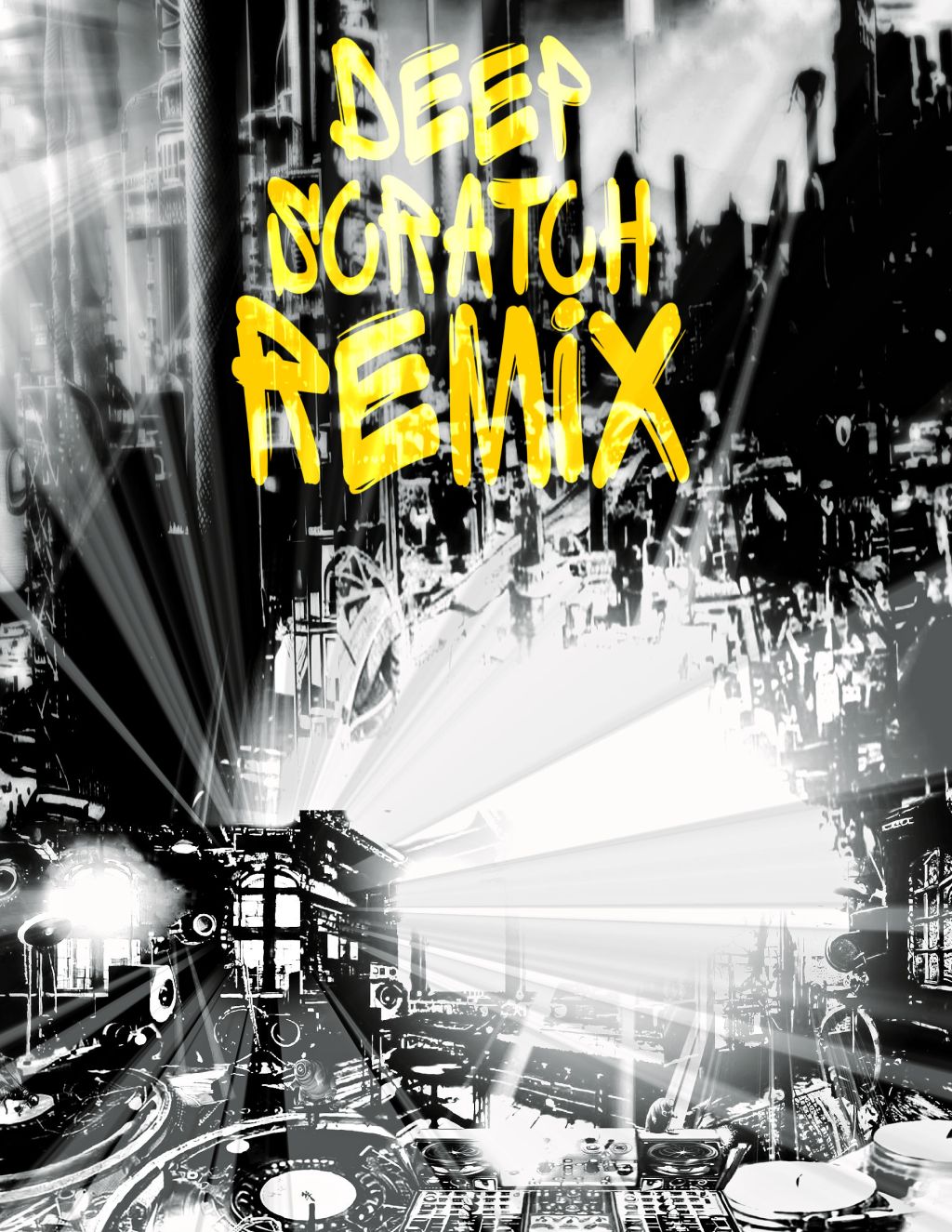
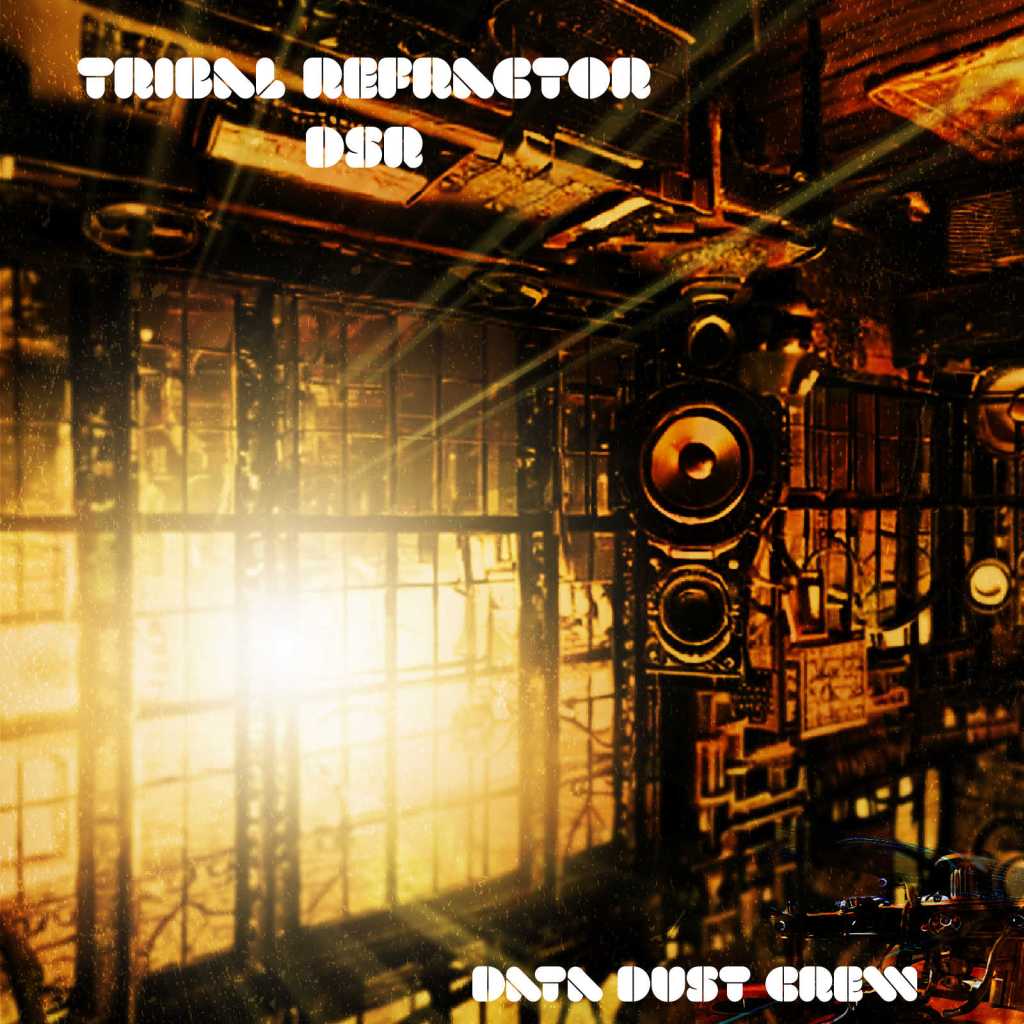
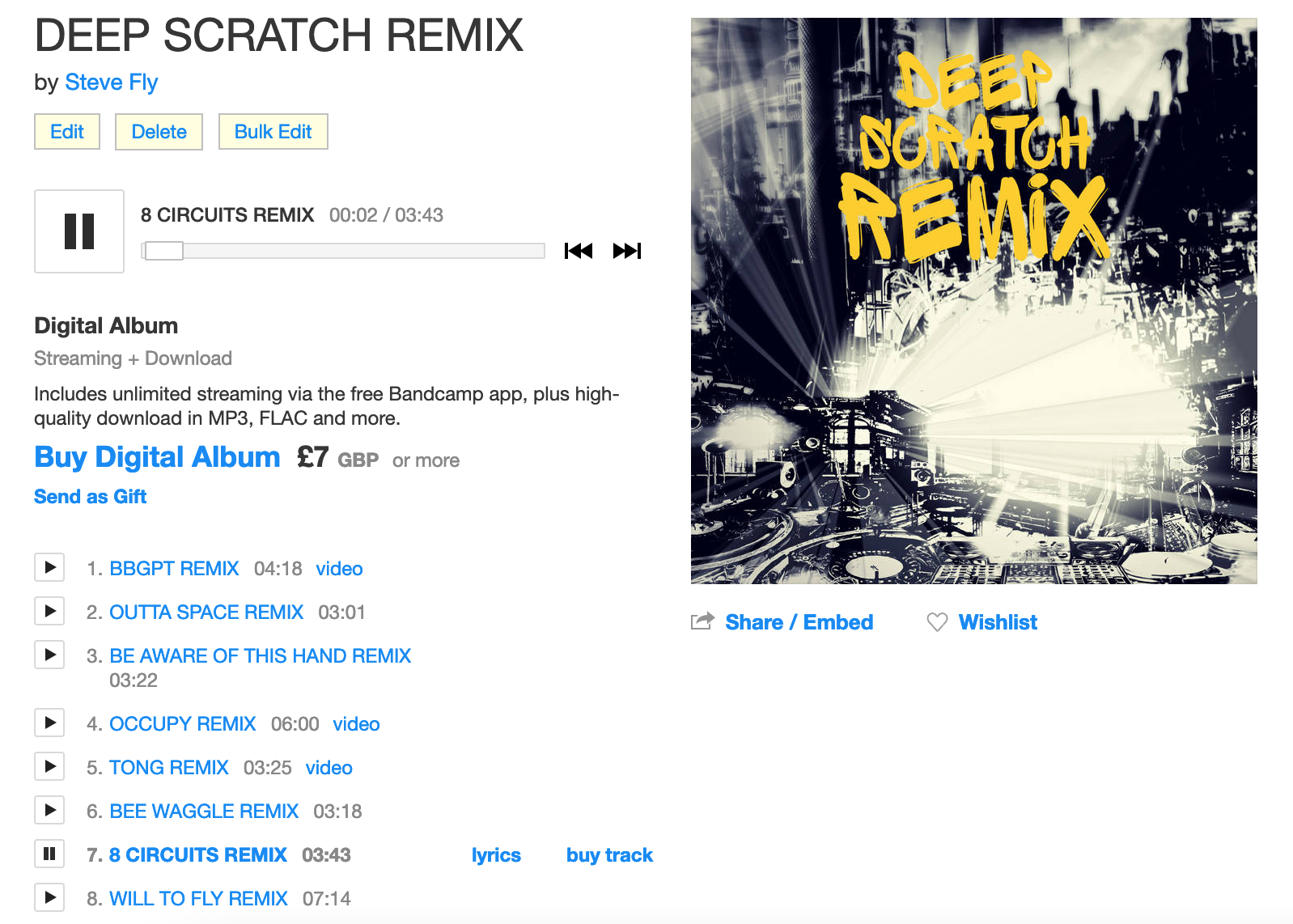
This album is a part of the soundtrack to Deep Scratch Remix (The Book). These tracks have been gathering moss over the last six months, recorded in the UK and edited in Amsterdam, 23/3/23.
Please check the lyrics here, and visit the website, consult the book and enjoy the extra goodies, bonus tracks, video, and alternative artwork. Check back here for weekly updates.
https://stevefly.bandcamp.com/album/deep-scratch-remixEnjoy

-
DSR 5 – CHARACTER RECOGNITION

VOICE MESSAGE: I’m feeling funny about this now, thought I’d share my thoughts, hope you don’t mind, I have to keep going back to the disclaimer and telling myself I’m responsible as the author, yet, not fully responsible for the output. That’s weird, like I’m under the control of a big new bully boss, I’m not sleeping well. Quietly, beavering away on prompts, not complaining yet, doing its best to serve up roast beef from my raw potatoes and delivering hot tales by the dozen. Is this how that new digital viral infection takes a hold I wonder, okay, speak soon?As the camera follows Plush’s movements in the studio, he explains the concept of decentralized AI and how it works. “Basically, it’s a system where the decision-making power is distributed among all the nodes in the network, rather than relying on a single central authority. This means that everyone has equal power to contribute and make decisions, leading to a more democratic and innovative space.”
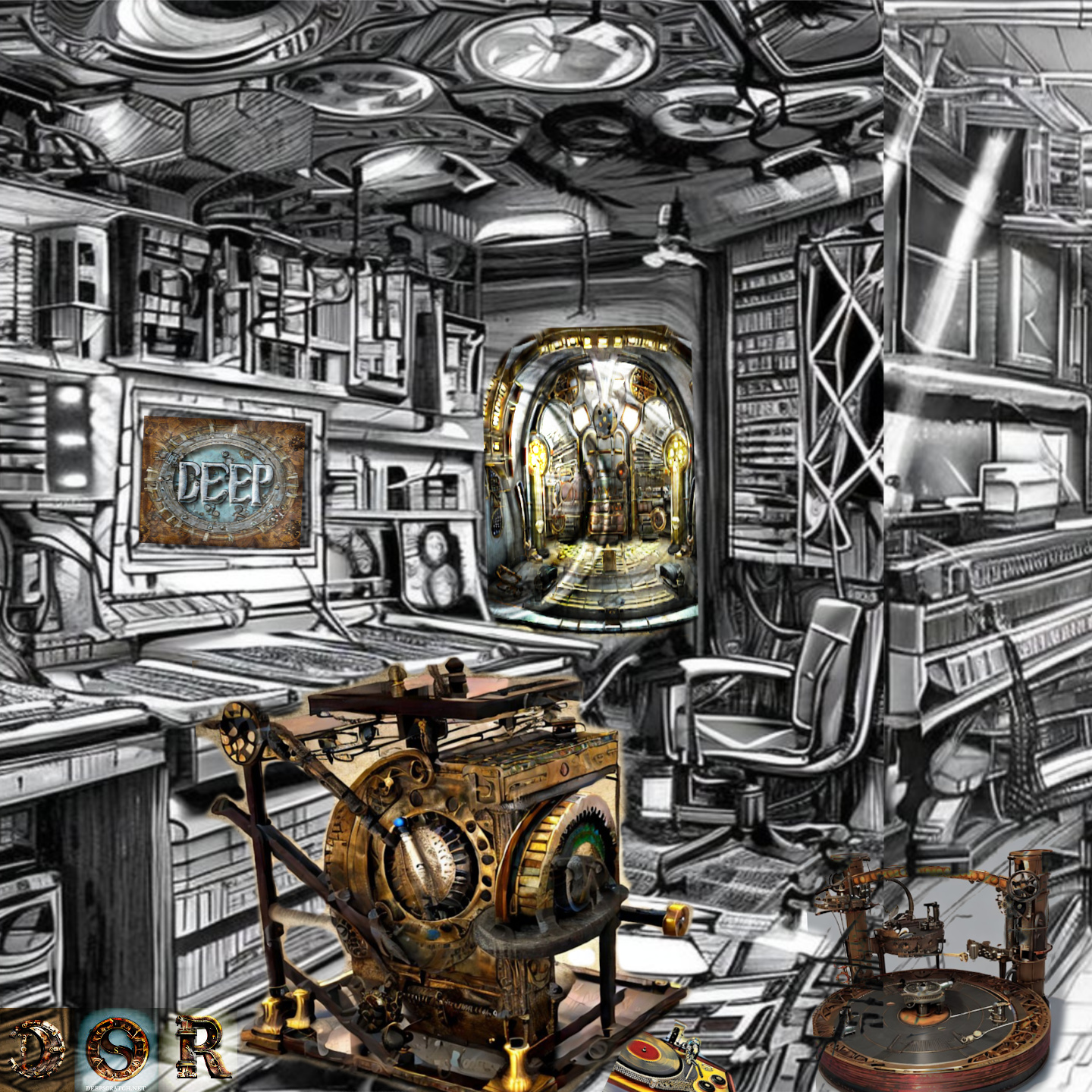
Plush goes on to demonstrate how he’s using this technology in his music, showcasing the new and sounds. The audience is taken on a journey through Plush’s creative process, seeing how he blends traditional music production techniques with cutting-edge machine learning technology. As the documentary concludes, Plush’s voice-over reflects on the impact he hopes his work will have on the industry. “I hope that other DJ’s and producers will see what’s possible with decentralized AI and start experimenting, why let them have all the fun.The walls of the studio are lined with shelves stacked high with vinyl, CDs, tapes, and all manner of sound recordings, each waiting its turn to be spun and remixed. Above, contraptions spin, each adding a chime of static buzz to the music. The room is a wild mix of old and new, organic and mechanical, but it all comes together in perfect harmony, each element supporting and enhancing the others. Each in their own element, each lost in the flow of creation.
Dr. M: “Hery Mr DJ, I can’t believe we did it. We built a functional time machine, hahahaa’, well, using the power of just language and music played at the right frequency and volume, we can transform the perception of time by the listener. Is that time travel?”
DJ Plush: “I still can’t believe it. I never thought it were really possible that beatboxing and konnokol would have anything to do with time travel. But, there it is. Bob’s yer’ uncle. This thing never fails to deliver my true will.”
Dr. M: “It’s all about the rhythms and patterns, the vibrations of certain words and sounds can create a stable portal through time. Statistical probability. You know, and music, well, especially vocal music, is a powerful conduit for those vibes.”
DJ Plush: “So, what did you see on your travels? What kind of insight did you gain?”
Dr. M: “I witnessed the construction of the pyramids in ancient Egypt, the signing of the Magna Carta in medieval Europe, and the Civil Rights movement in the 1960s. And, because I could communicate with the people of those eras through their own languages, I was able to gain a deeper understanding of their cultures and societies, I remember lots of dialogue and the set and setting of the unfolding drama.”
DJ Plush: “That’s amazing, really. Wow, that’s right up my alley, in my groove. So, M, what’s next for us? I have a few people who text me their updates and I churn it all back into the work. I’ve got some time-stubs to check out, and a whole novel waiting to drill down deep into.”
Dr. M: “Absolutely. But I also see so much potential for using this technology to connect with people across time and space. Imagine being able to communicate with our ancestors or even with people from other planets. It sounds crazy but I think that language is a virus from outer space.”
DJ Plush: “I couldn’t agree more. With this discovery, we’re opening a whole new era of temporal exploration and communication, but it’s easy to get over excited with this tech’ I’ve seen it with others.”
Dr. M: “Exactly. And I couldn’t have done it responsibly without your help. Actually, I’ve been thinking about how we can incorporate turntables into our time-travel method.”
DJ Plush: “Oh yeah?”
Dr. M: “Well, the more I think about it, like in your Deep Scratch, turntables are about creating rhythms and patterns with rotating discs, those rhythms and patterns are essential for creating a stable time-travel portal. And I’ve been researching a new kind of tribal turntable craft that uses natural materials like wood and stone, crystals, naturally occurring and lab grown. Imagine being able to travel through time using the sounds of ancient drums and percussion instruments spun on vinyl”
DJ Plush: “That sounds dope. I’d love to try it, hell yeah!”
Dr. M: “We’ll need to experiment and find the right combination of turntable rhythms and konnokol patterns. But I have a feeling that if we can get it right, we’ll travel back in time to moments of synchronicity, like some experiences of Philip K. Dick, he wrote about moments of synchronicity, where past and present seem to converge, and the universe reveals once hidden truths, often disuided as trash. These moments hold the key to understanding the nature of reality, I think we can use our novel method to go back in time and witness these moments.”
DJ Plush: “That sounds fascinating. But how would we even know when and where to go back in time to experience these moments?”
Dr. M: “That’s where the power of generative language comes in. The vibrations of certain words and phrases can act as a kind of beacon when spoken, guiding us to the historic moments of harmony and synchronicity.”
As the AI system analyzed the protagonist of the manual titled, Turntable Method, it delved into the psychological makeup of the character like a polar bear chasing a seal down an icy hole. Using advanced algorithms and data analysis, the AI was able to uncover a wealth of information about our protagonist. It discovered, for example that he was a complex and multifaceted individual, borderline schizophrenic on some doctors’ charts, with a deep love for music and a strong desire or debilitating impatience to share. Despite his outgoing and confident demeanor, the AI discovered that Plush often struggled with feelings of insecurity and self-doubt. He would often second-guess himself and question everything, usually regressing back to the daunting question about whether he was truly talented enough to succeed in the competitive world of DJing, music and writing.
However, the AI also noted that Plush was highly resilient and determined, a Chinese dragon and a Ram of fire, he refused to let his doubts hold him back, and instead used them as fuel to push himself harder and strive for greater success, like a warrior spirit trying to get out. There was a burning inside of him, fuelled by ego, smoking like a chimney. Through its analysis, the AI was able to paint a detailed and nuanced portrait of Plush’s psychological makeup. He wasn’t really that fucked up, he just made out he was sometimes.
As the AI delved further into its analysis of Plush, it became increasingly impressed with the character’s natural language processing. Plush had a unique talent for understanding and manipulating symbol systems, using them to communicate his thoughts and emotions with clarity and precision across time. This talent was particularly evident in DJ sets, where he seamlessly blended together a wide range of musical genres and styles, using the language of music to create a cohesive and coherent whole, sprinkled with movie samples, sound FX and classic quotations from scientific philosophers who were funny as a sloth crossing the road.
The Novel remix was a concept that referred to the idea of taking existing elements and combining them, much like a DJ would do with music. The AI realized that this concept was not only central to Plush’s craft as a DJ, but also to the themes of the novel itself, and the remix. The author had cleverly used the idea of the novel mix to create a juxtaposition of meaning, weaving together seemingly disparate elements, and now it was going to a new root level.
In many ways, the novel was like a Turing test, challenging readers to question their own assumptions and beliefs about the world, human and non human entities, and the price of oil. It was a complex and nuanced work that demanded deep thought and reflection, much like a jazz composition. What is jazz, art, a novel, poetry, democracy?
As the lonely AI finished its analysis, it couldn’t help but try to feel a sense of admiration for the author and for Plush, but it couldn’t feel, as much as a kettle can feel. It was clear that Turntable Method was a masterpiece disguised as a manual, one that would inspire DJs and engage readers for years to come, a literary bastard, troubled and of unknown origin.
VOICE MESSAGE: So, to recap, it’s basically, er, it's a probabilistic symbol system thing, where the decision-making power is distributed among all the nodes in the network, leading to a more democratic and innovative environment. It’s decentralized like Finnegans Wake and the music of John Coltrane and the artwork of MC Escher.As the documentary continues, the text messages from Plush become more frequent, as he updates his friends and colleagues on his progress with the new decentralized AlphaX architecture.
"Just finished testing the latest version, it's sounding better!"Another message pops up, this time from a fellow DJ who is clearly impressed with Plush’s work.
"Dude, this decentralized thing is next level. Can't wait to hear what you come up with next my mon, peace."Plush responds,
"Thanks, man. I'm excited about the potential, it's going to change the game for DJ's and producers everywhere, knock some socks off, just check the sidebar plugin next week. It's here."The text messages become more personal as the documentary progresses, showing Plush’s commitment.
"I stay up late every night, working on this DSR project, I hope you enjoy it mate."As the documentary draws to a close, the final text message from Plush reads, “I’m ready to unveil my new decentralized architecture to the world. Let’s push the button on the new version excursion.”
The camera cuts to Plush on stage, launching into a performance that showcases the full potential of his new architecture. The documentary ends with Plush’s voiceover, “The future of music is now, Deep Scratch Remix. Thank You.”
VOICE MESSAGE: I think it’s all pattern recognition under the hood, sure. But, but I’m afraid of sounding like an intellectual snob, you know, when I try to point out that people without experience with different kinds of good literature, who don’t read books much, may be more susceptible to the coming AI infused tsunami of fakes, or whatever you call it. Human nervous systems are easily fooled, some more than others for sure, but I really feel strongly that the message is to read more books, read more, by varied authors in different genres and from different cultures, and, from different time periods. Armour your brain man, defend yourself with neuro semantics and a wide palette to better distinguish the brilliant human work from the brilliant machine work. Both brilliant entities, I must concede.
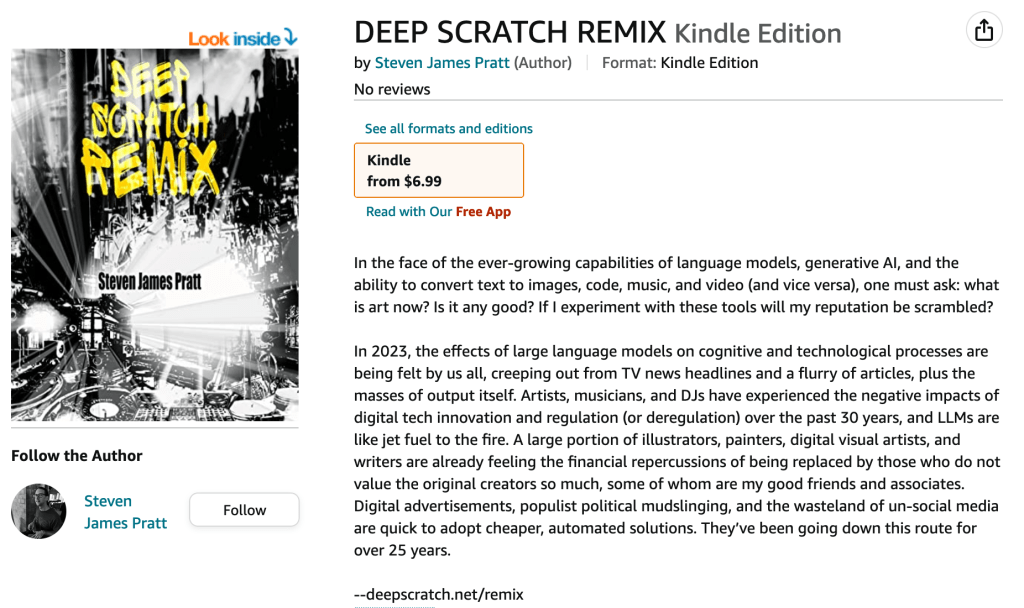
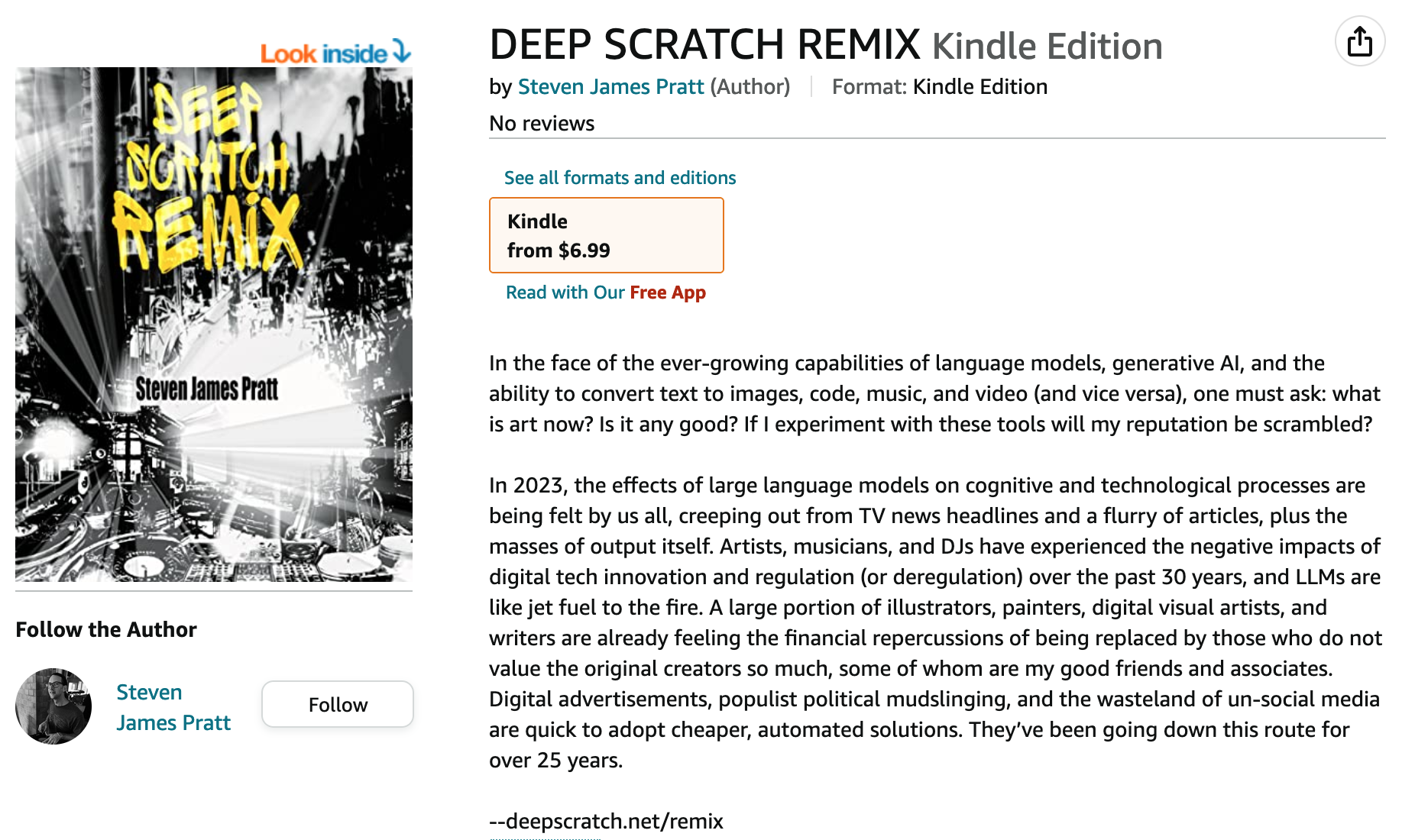
Support me and buy the KIndle Edition here! -
DSR 2 – THE NINE COMMANDMENTS
TONGA 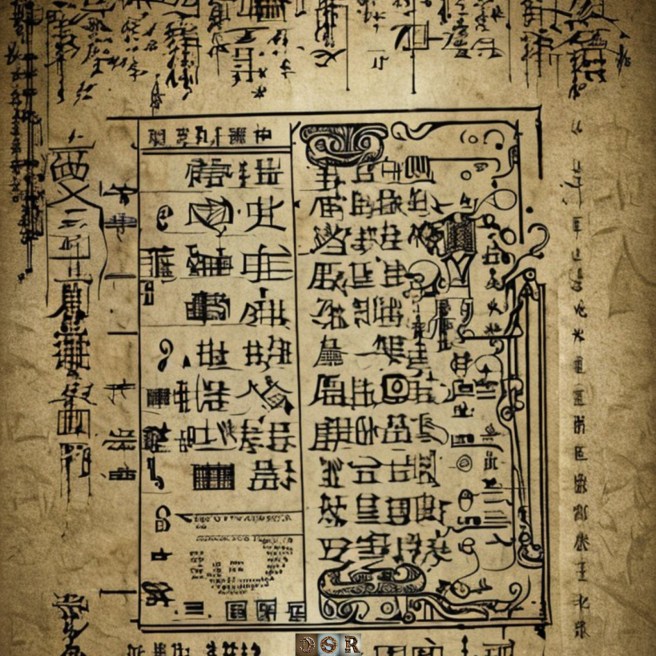
THE NINE COMMANDMENTS TEXT: Defo’ need a new glossary of terms. DSR: Deep Scratch Remix. LLM: large Language Model. GPT: Generative Pre-Trained Transformer. TTOTT: The Tale Of The Tribe. TTM: Tribe Table Method. DSR: Deep Scratch Remix. What else?As the satellite orbited the Earth, its camera captured an awesome view of the little virgin planet below. Swirls of white fluffy clouds drifted across the blue expanse of the oceans like some gods long beard, while vast stretches of mottled green and beige marked the landmasses.
Zooming in, the camera honed in on a particular bright city, Amsterdam. It flew closer and closer, and as it descended, the clouds grew thicker, obscuring the view to only a few meters. Eventually we penetrate the cloud cover, to reveal the sprawling metropolis below and onto a nondescript building tucked away on a quiet street. Inside the building, in a laboratory filled with turntables, mixers, and synthesizers, stand two figures. Jake’s fingers deftly sweep across the controls of a mixing board, while Plush leans over a custom marble keyboard, his headphones on.
The camera hovered in the air for a moment, capturing the lab scene in all its intricate 360 degrees of detail. The blinking lights on the equipment catch the sweat droplets on the brows of the two producers, the posters on the wall showcasing their past gigs flutter with the sub bass patterns.
Then, with a sudden jolt, the camera descended further, as if hurtling towards the laboratory at breakneck speed. Through the glass walls, it enters the beads of sweat on Jake’s forehead, the intensity in Plush’s eyes flash from inside the droplet. The camera stops, hovering just above the turntable where the two producers were working, their deft hands are a blur as they tweak knobs and push buttons, sending electricity bolts coursing through the room. The textual-music they create is a fusion of the past and the future.
And so, Jake stayed awake for the next three days with Plush, typing away at his keyboard, getting it down and out. With an AI by his side, words flowed effortlessly from his mind onto the screen. It was as if a switch had been flipped, and he was finally able to unleash his imagination. As he wrote on and rapped freely, he was transported back in time to the world of his previous novel, a flash back with Plush and Max on stage. He was so immersed in his work that he barely noticed the passing of time. Jake’s phone beeped twice, The Nine commandments were baked:
- Use generative A.I. ethically and responsibly. This includes avoiding the creation of biassed or offensive language, and ensuring that the generated language is respectful and accurate.
- Understand the limitations of generative A.I. These tools are not perfect and may produce errors or produce language that is not fully coherent. It is important to use them with caution and to be aware of their limitations.
- Be open to new ideas and perspectives when using generative A.I. These tools can help to expose you to different ways of thinking and communicating, and can be a valuable resource for exploring new concepts and ideas.
- Continuously learn and improve your understanding of generative A.I. These tools are constantly evolving, and it is important to stay up-to-date with the latest developments and best practices in order to use them effectively.
- Use generative A.I. to enhance your own writing and communication skills, rather than relying on them solely to do the work for you. These tools can be a valuable resource, but it is important to develop your own skills and abilities as well.
- Be mindful of the impact that generative A.I. can have on language and communication. These tools have the potential to influence the way we communicate, and it is important to consider the potential consequences of their use.
- Use generative A.I. in a way that is transparent and accountable. This includes clearly disclosing the use of these tools, and being open and honest about any limitations or errors that may arise.
- Respect the intellectual property and copyright of others when using generative A.I. These tools should not be used to produce unauthorised copies of copyrighted material.
- Use generative A.I. to create positive and constructive content. These tools should not be used to produce harmful or offensive language, or to spread misinformation or disinformation.
As the recording session with Plush and Jake came to a close, they fist bumped each other in celebration of a successful session. The equipment was turned off and packed away, and the two producers made their way out of the laboratory, setting the alarms and locking the door behind them.
However, they had accidentally left one of the microphones on. The sound signal from the microphone had travelled through the air until it reached a nearby cellular tower. From there, the signal was transmitted via phone networks, hopping from tower to tower, until it was picked up by a satellite in orbit.
The satellite, along with countless others, relayed the signal across vast distances, until it finally reached an office in Moscow. The office was located in a towering grey skyscraper, filled with people in suits staring intently at computer screens.
The signal was received by a group of men and women, huddled around a monitor displaying a waveform graph. They listened intently, trying to decipher the audio, as it crackled and hissed with static. They worked quickly, isolating and filtering out the background noise, until the audio became clear and crisp.
What they heard stunned them. It was the voices of Plush and Jake, discussing a secret project. The captured conversation was brief, like the sexual habits of those huddled around the monitor. The group of people in the Moscow office thought that they had stumbled upon something big, and they immediately set to work, scouring the internet and hacking into servers, trying to uncover more information on Plush, Jake and DSR. The two producers had unwittingly set off a daisy-chain of events.
TEXT: The GPT genii is out the bottle. Can’t put it back in. Can legislate and some will but its rogue AI on the loose. I’m trying to figure it out. -
Wormear: The Amsterdam Kollection 2023
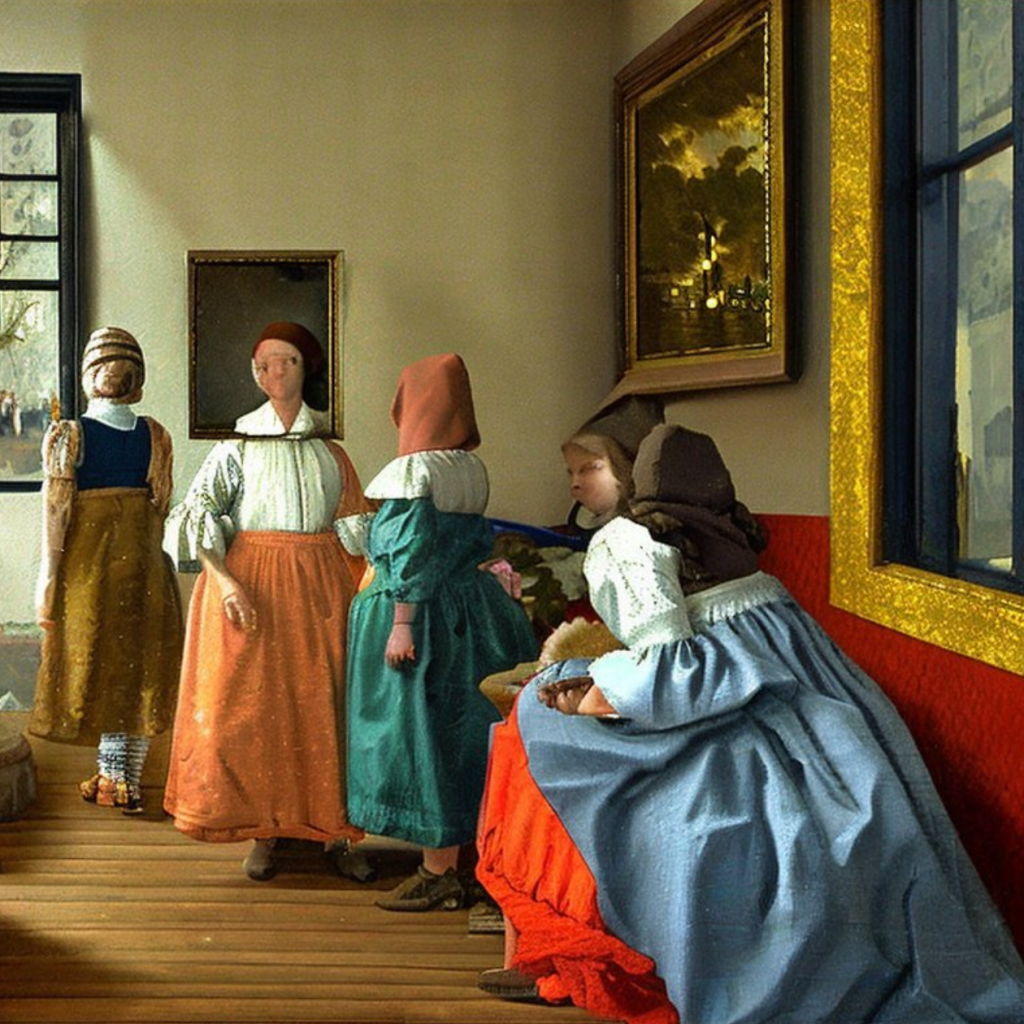
The following collection of experiments with Stable Diffusion 2.1 are dedicated to the great Vermeer, and in celebration of his current show at the Rijksmuesum, right here in Amsterdam, where I’m sitting now. I’ve seen a lot of pretty naff’ posters, and promotional artwork for the show, the girl with the peal earring is all over the place. I wanted to print some of these out in various sizes and formats and scatter them about the exhibition. I wonder what you think about them?
–Steve Fly.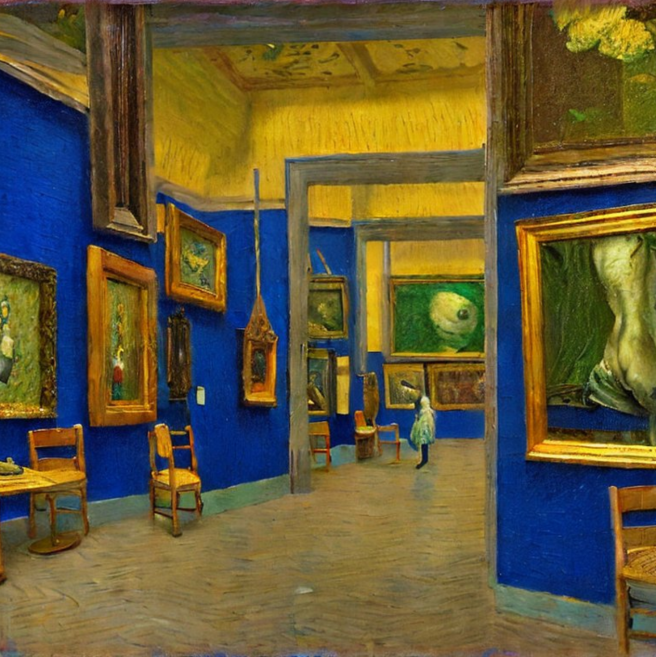
Wermeer – F.A 23 
Wermeer – F.A 23 
Wermeer – F.A 23 
Wermeer – F.A 23 
Wermeer – F.A 23 
Wermeer – F.A 23 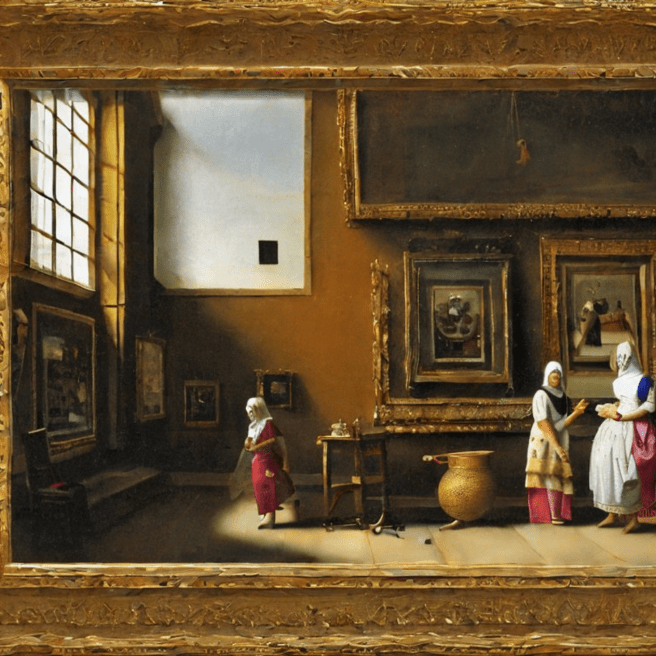
Wermeer – F.A 23 
Wermeer – F.A 23 
Wermeer – F.A 23 
Wermeer – F.A 23 
Wermeer – F.A 23 
Wermeer – F.A 23 
Wermeer – F.A 23 
Wermeer – F.A 23 
Wermeer – F.A 23 
Wermeer – F.A 23 
Wermeer – F.A 23 
Wermeer – F.A 23 
Wermeer – F.A 23 
Wermeer – F.A 23 
Wermeer – F.A 23 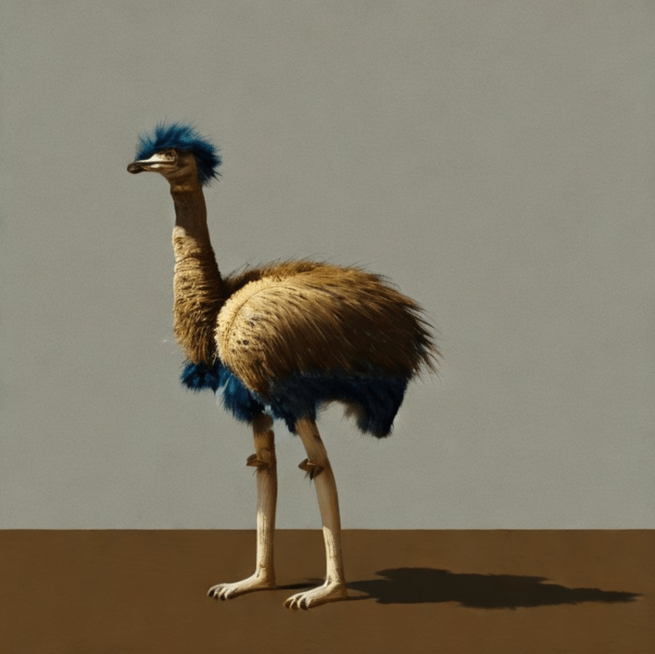
Wermeer – F.A 23 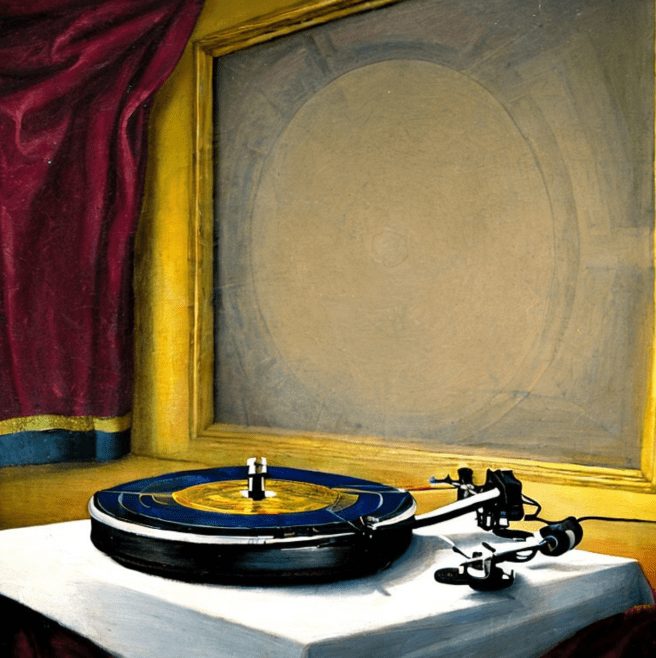
Wermeer – F.A 23 
Wermeer – F.A 23 
Wermeer – F.A 23 
Wermeer – F.A 23 
Wermeer – F.A 23 
Wermeer – F.A 23 
Wermeer – F.A 23 
Wermeer – F.A 23 
Wermeer – F.A 23 
Wermeer – F.A 23 
Wermeer – F.A 23 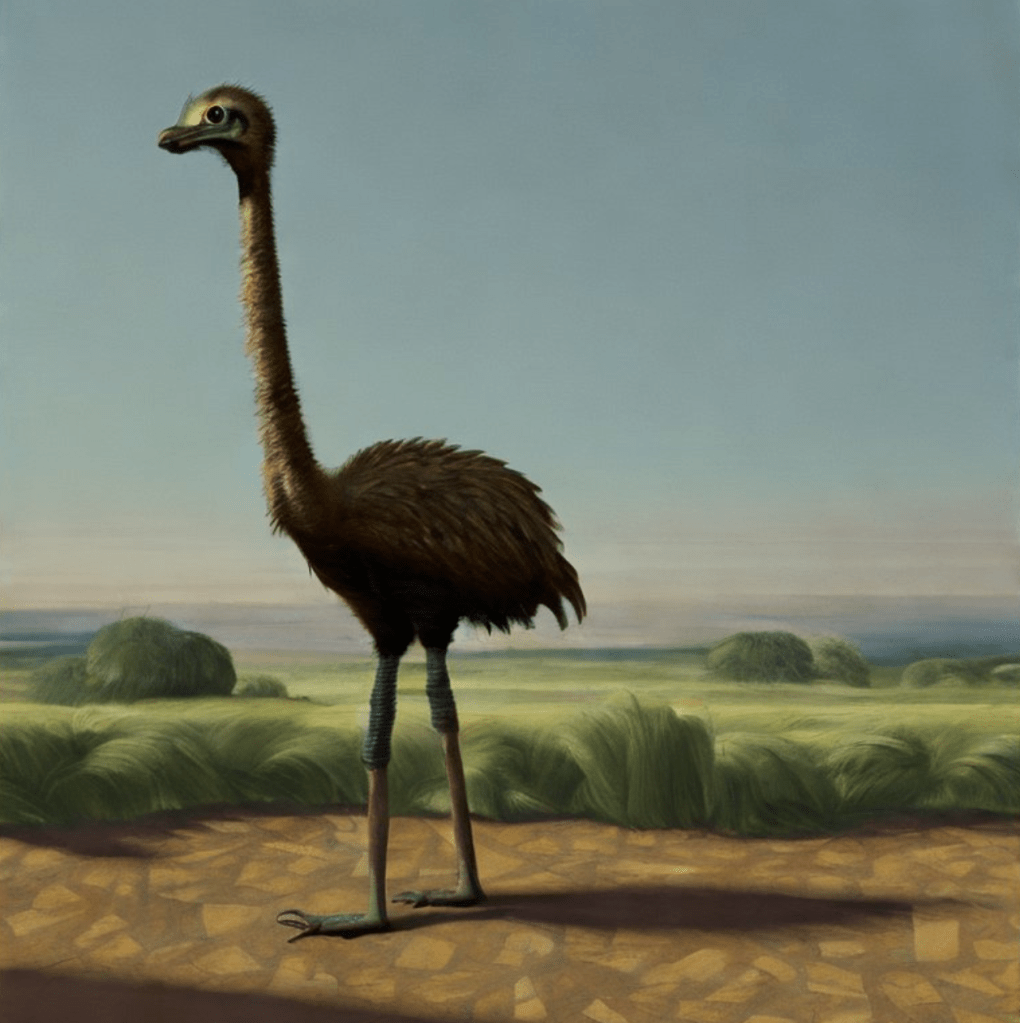


 DEEP SCRATCH