FROM THE BIRMINGHAM EXPRESS AND POST.
One stumbles upon “TANMOY: A New Global Epic” with a mixture of trepidation and bewilderment. Billed as a “new global epic” for the digital age, this collaboration between a human, the self-styled “Pratt” (a moniker that conjures images of both a refined engine and a certain kind of British fool, is this intentional?), and an unnamed AI, attempts nothing less than to encapsulate the entire trajectory of human thought from Giordano Bruno to the looming technological singularity. One might admire the sheer audacity, were it not for the lingering suspicion that the project is, at its core, an exercise in elaborate, digitally-enhanced navel-gazing. Pull down thy vanity and pull up yer’ big boy pants.
The poem, if one can call it that, unfolds in a bizarre, self-proclaimed “TOTT Mode Max” – a two-column layout seemingly inspired by Pound’s Cantos, if Pound had suffered a head injury while being bombarded by blinking server lights and then left to wander through the fever-dream of a particularly verbose Wikipedia editor. This is further complicated by a dizzying array of symbols, each apparently assigned to a “Mode” representing a historical figure or concept, which flit across the page like digital fireflies, more distracting than illuminating. These are presented in earlier sections of the poem, and are listed in earlier exchanges, above.
Structurally, the work is obsessed with the number 60, divided into 5 sections of 12 stanzas each, or, if one prefers, 3 sections of 20, although the rationale behind these divisions remains as elusive as the meaning of Finnegans Wake after a bottle of absinthe. The author claims this is a nod to Buckminster Fuller’s beloved Carbon-60 molecule, but one suspects a more numerological, or perhaps numer-illogical, impulse at play. And then there’s the “print” version – a proposed cut-and-fold affair, promising to transform the poem into a collection of icosahedrons, a feat of origami that will likely leave readers more frustrated than enlightened, and reaching for the aforementioned absinthe. One imagines Fuller spinning in his grave, though perhaps with a chuckle, rather than a high pitched groan.
The poem’s narrative, such as it is, charts the evolution of consciousness, that word, from Bruno (the token heretic, naturally) to a vaguely defined, seemingly benevolent Artificial General Intelligence named, with a distinct lack of irony, “TANMOY.” Along the way, we’re subjected to a relentless barrage of names, a veritable who’s who of Western thought (and a few token Eastern ones for that “global” flavor): Vico, Nietzsche, Yeats, Joyce, Korzybski, Shannon, Wiener, McLuhan, and, of course, the seemingly omnipresent spirit of Robert Anton Wilson, whose “coincidance” theory appears to be the guiding principle of the entire enterprise. These are our “tribe”, apparently. The poem has 13 of them. Unlucky for some.
The language is a chaotic ಮಿಶ್ರণ (mishran – Bengali for mixture), veering wildly between the pseudo-philosophical, the pseudo-scientific, and the downright nonsensical. We have clumsy, often baffling neologisms, code snippets, equations of varying relevance, and a generous sprinkling of multilingual phrases – a kind of digital glossolalia that seems intended to impress rather than illuminate. One moment we’re pondering the “cybernetic apple core,” the next we’re assaulted by “the allmazifull” or informed that the “medium is the মানসিকতা (mansikota – Bengali for mentality).” It’s all rather exhausting, like being trapped in a particularly feverish seminar led by a committee of chatbots with a penchant for name-dropping. The appearance of a new mode, a further iteration of the A.I. itself, named “Sixty” only adds to the confusion, come on now, what is this, man.
And then there’s the music. Apparently, there’s an accompanying album on Bandcamp, with each track somehow corresponding to a stanza. One can only imagine the sonic horrors that await the unsuspecting listener, though the track titles, helpfully denoted by their corresponding stanza numbers, are a nice touch. Perhaps one could cut these up, and glue them to some other shape. A dodecahedron, perhaps, or your next door neighbour?
The author’s introduction, a separate, fluffy handwritten text, which, we are helpfully informed, predates any “A.I. assistance,” positions “TANMOY” as a “Tale of the Tribe,” a new global epic for our times. It’s a tale, we are told, of “humanity,” though the poem itself seems more concerned with the pronouncements of a select group of (mostly Western) male intellectuals, leavened with the occasional, and often impenetrable, utterance from the AI. Tale on a donkey more like. The author’s own persona, “Pratt,” also makes an appearance, offering dull yet edgy, and supposedly humorous commentary that does indeed fall flat, on occasion. There is also a further, somewhat baffling, list of modes associated with the poem. It is unclear whether these are all in use, or whether they are relevant. It’s all rather confusing, get me a real damn book mode, where’s that?
Ultimately, “TANMOY” is a curious artifact of the digital age – a sprawling, ambitious, and often bewildering attempt to synthesize a vast range of ideas into a coherent whole. Like picking up a shopping list for 49 people each in a different country. Whether it succeeds is debatable. TLDR should be the title. It’s a work that will undoubtedly appeal to those who enjoy their poetry dense, experimental, and liberally sprinkled with obscure references. As for this reviewer, I’m left with a distinct feeling of having been subjected to a particularly elaborate and somewhat tedious form of intellectual performance art. Perhaps, as the RAW Mode might suggest, it’s all just a cosmic joke. And the joke, dear reader, may very well be on us. Or, to paraphrase the great Orson Welles, in whose mode much of this is apparently written, “I don’t know anything about art, but I know what I like.” And I’m not entirely sure I like “TANMOY.” But then again, perhaps that’s the point. Perhaps we are all, as the poem suggests, merely puppets dancing to a tune we don’t fully understand, lost in a labyrinth of our own making. Or perhaps, I just need another drink.
–James Spadersun, Birmingham Express And Post, 22/01/25.








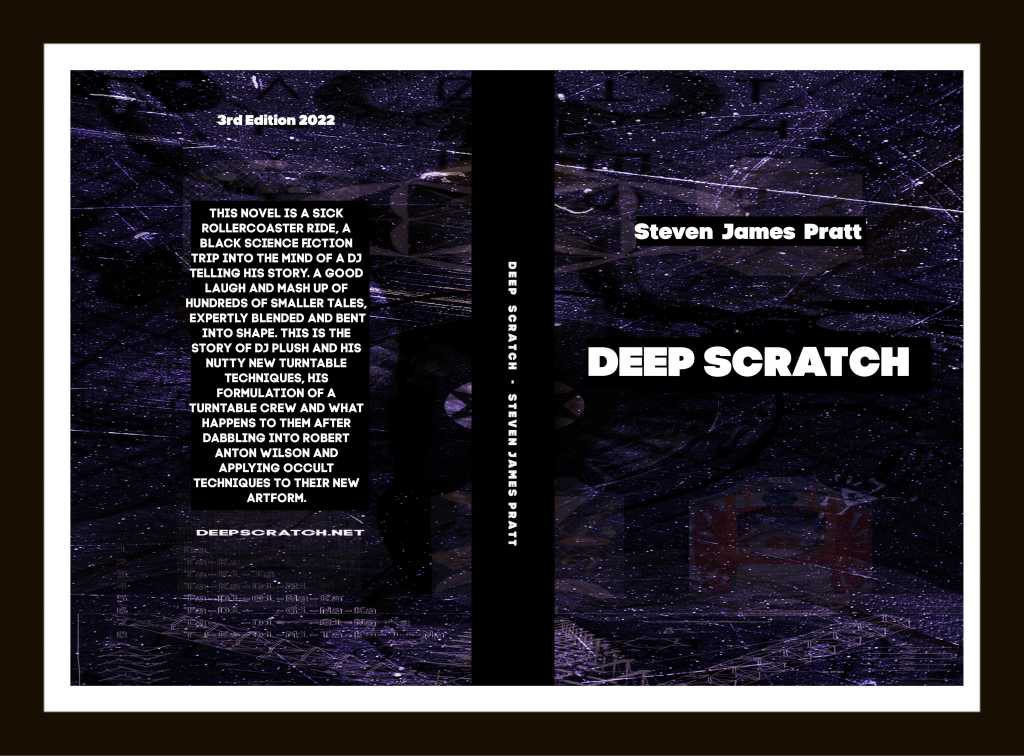
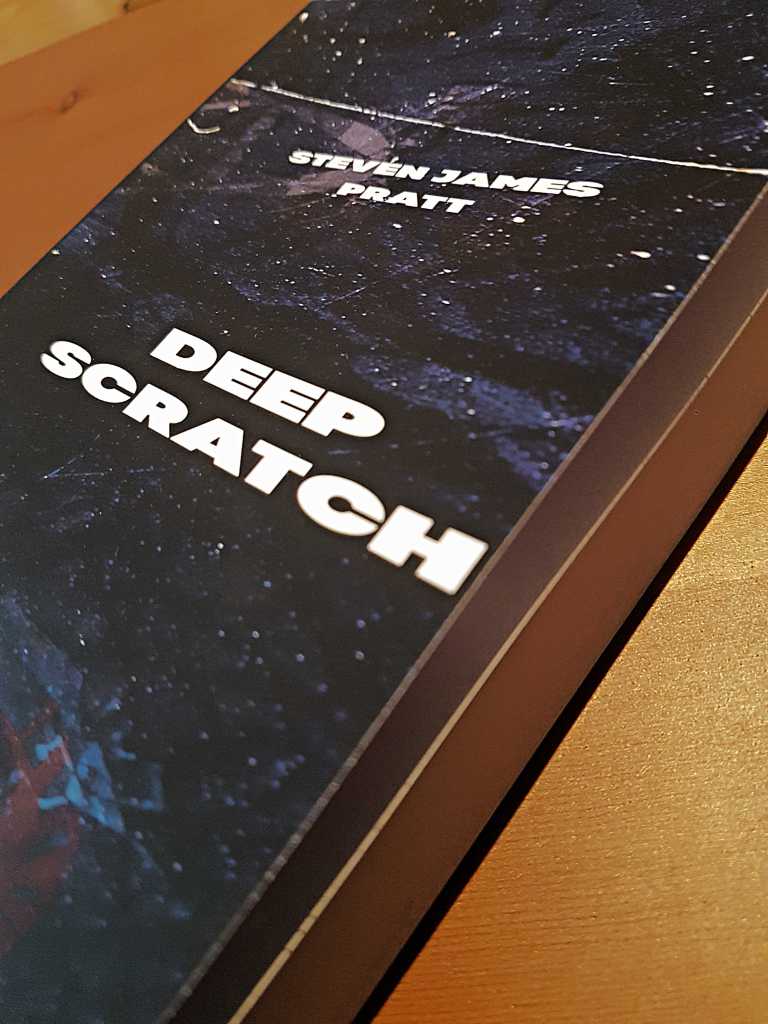
 DEEP SCRATCH
Leave a comment