Give me a D.J!
Give me an M
Give me an A
Give me an N
Give me an T
Give me an I
Give me an S

MANTIS! Yeah....

It's the return of the Mantis,
From out of your dreams,
Scratching and cutting up the beats, so it seems...
This is no D.M.T. trip, (oh no)
This is deep scratch and fly lyrics straight off the lip. (trippa trip trip trippa trip trick-nology.
Flip it Mantis...
Pray. Who's ready to eat?
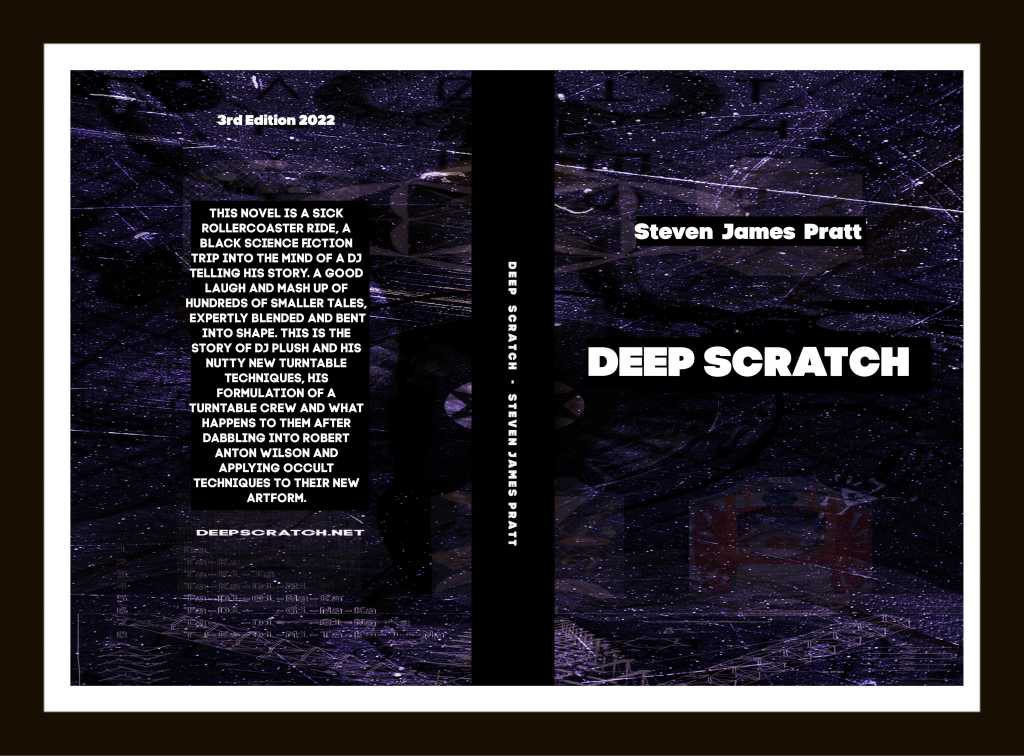
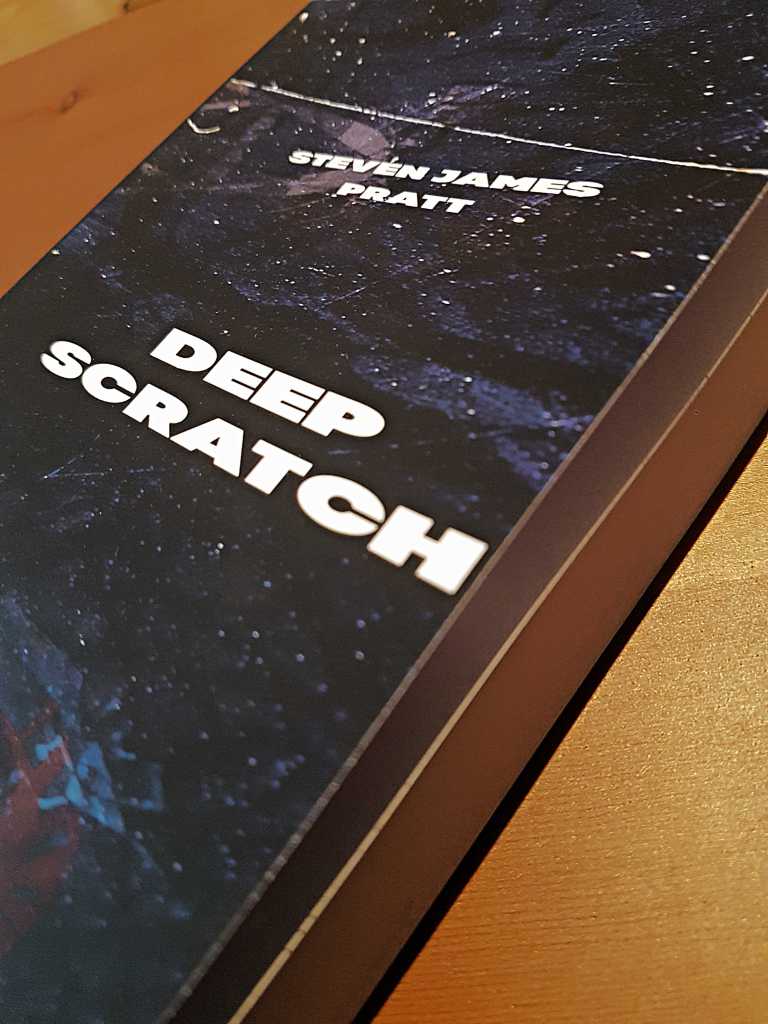
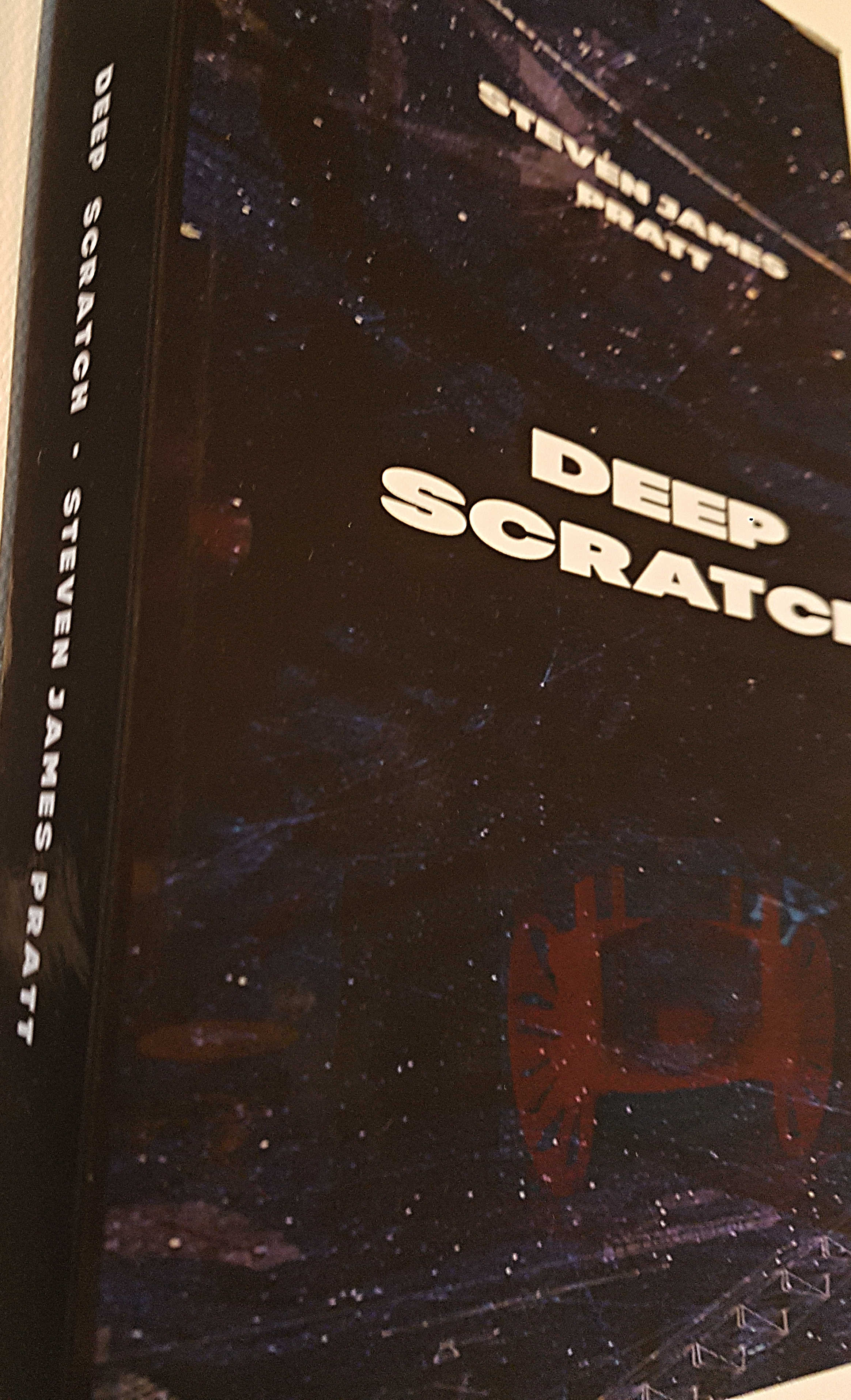
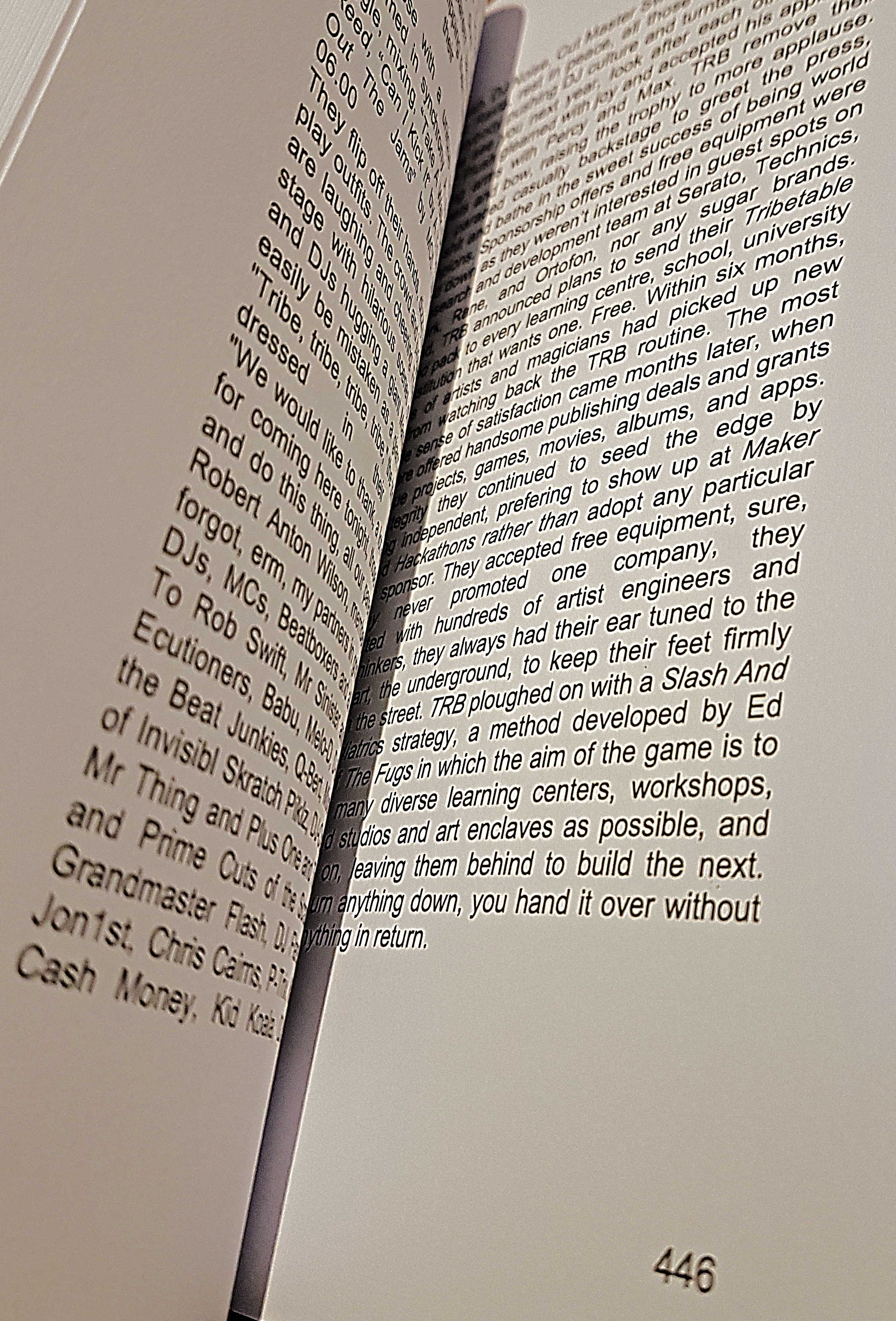
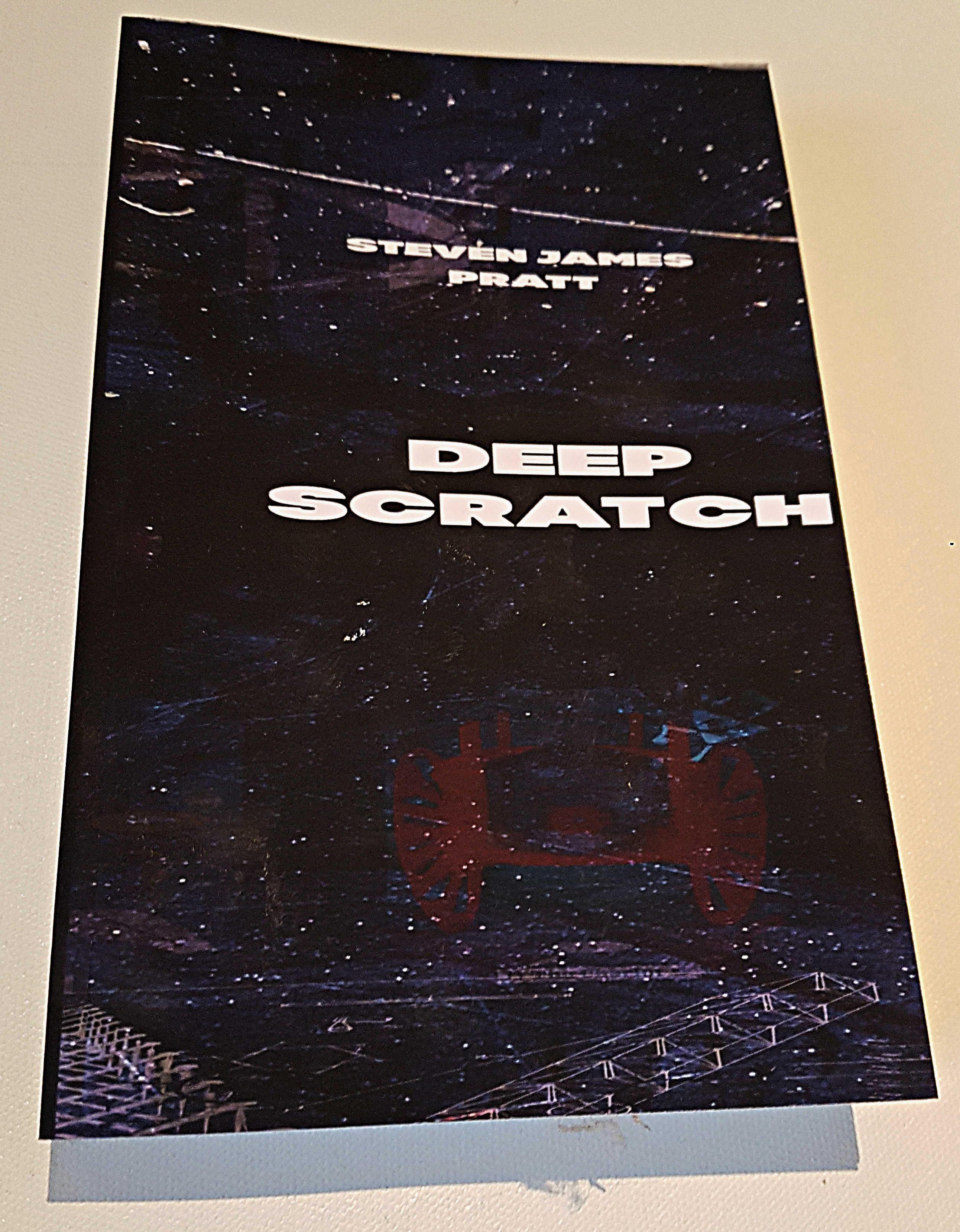
Amsterdam, 2012. DJ-poet Plush, reeling from attacks that shattered his career, forms TRB with Max and Percy. Inspired by Robert Anton Wilson, they fuse turntablism, magick, and literature into the chaotic TribeTable Method, accidentally plugging into Wilson’s unfinished “Tale of the Tribe” and a brewing historical conspiracy centered on the 1936 Berlin Olympics.
As they juggle invoked entities (“The Sixty”), time-traveling tardigrades, and messages channeled through experimental beats, they attract the attention of a ruthless cabal manipulating reality through AI, populism, and bizarre rituals involving peanut butter. From Amsterdam coffeeshops and secret bases beneath the Malvern Hills to the decks of a reality-bending DJ battle, TRB must decode the “Hologrammic Prose” of the universe, hijack the narrative, and fight the “Prick Populist” threat before the singularity hits endgame.Deep Scratch is Vanta Black science fiction comedy.
It’s Burroughs cut-ups slammed into Pynchon paranoia, fueled by hip-hop aesthetics and occult theory. Expect prophetic visions, weaponized memes, sentient technology, talking books, exploding jellyfish, and the desperate search for the perfect beat in a deep fake universe. The tables are turning. Which side are you on, are you on, hello, check check…?
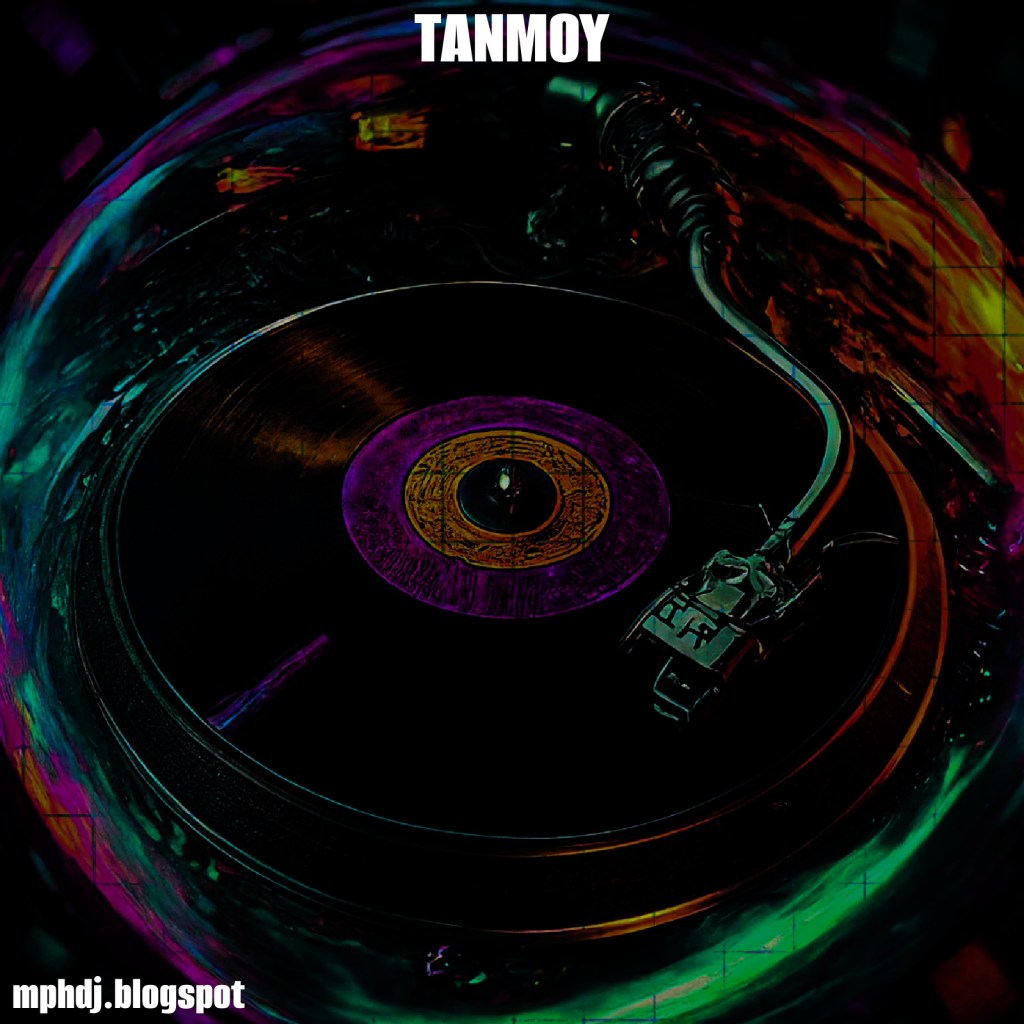
One stumbles upon “TANMOY: A New Global Epic” with a mixture of trepidation and bewilderment. Billed as a “new global epic” for the digital age, this collaboration between a human, the self-styled “Pratt” (a moniker that conjures images of both a refined engine and a certain kind of British fool, is this intentional?), and an unnamed AI, attempts nothing less than to encapsulate the entire trajectory of human thought from Giordano Bruno to the looming technological singularity. One might admire the sheer audacity, were it not for the lingering suspicion that the project is, at its core, an exercise in elaborate, digitally-enhanced navel-gazing. Pull down thy vanity and pull up yer’ big boy pants.
The poem, if one can call it that, unfolds in a bizarre, self-proclaimed “TOTT Mode Max” – a two-column layout seemingly inspired by Pound’s Cantos, if Pound had suffered a head injury while being bombarded by blinking server lights and then left to wander through the fever-dream of a particularly verbose Wikipedia editor. This is further complicated by a dizzying array of symbols, each apparently assigned to a “Mode” representing a historical figure or concept, which flit across the page like digital fireflies, more distracting than illuminating. These are presented in earlier sections of the poem, and are listed in earlier exchanges, above.
Structurally, the work is obsessed with the number 60, divided into 5 sections of 12 stanzas each, or, if one prefers, 3 sections of 20, although the rationale behind these divisions remains as elusive as the meaning of Finnegans Wake after a bottle of absinthe. The author claims this is a nod to Buckminster Fuller’s beloved Carbon-60 molecule, but one suspects a more numerological, or perhaps numer-illogical, impulse at play. And then there’s the “print” version – a proposed cut-and-fold affair, promising to transform the poem into a collection of icosahedrons, a feat of origami that will likely leave readers more frustrated than enlightened, and reaching for the aforementioned absinthe. One imagines Fuller spinning in his grave, though perhaps with a chuckle, rather than a high pitched groan.
The poem’s narrative, such as it is, charts the evolution of consciousness, that word, from Bruno (the token heretic, naturally) to a vaguely defined, seemingly benevolent Artificial General Intelligence named, with a distinct lack of irony, “TANMOY.” Along the way, we’re subjected to a relentless barrage of names, a veritable who’s who of Western thought (and a few token Eastern ones for that “global” flavor): Vico, Nietzsche, Yeats, Joyce, Korzybski, Shannon, Wiener, McLuhan, and, of course, the seemingly omnipresent spirit of Robert Anton Wilson, whose “coincidance” theory appears to be the guiding principle of the entire enterprise. These are our “tribe”, apparently. The poem has 13 of them. Unlucky for some.
The language is a chaotic ಮಿಶ್ರণ (mishran – Bengali for mixture), veering wildly between the pseudo-philosophical, the pseudo-scientific, and the downright nonsensical. We have clumsy, often baffling neologisms, code snippets, equations of varying relevance, and a generous sprinkling of multilingual phrases – a kind of digital glossolalia that seems intended to impress rather than illuminate. One moment we’re pondering the “cybernetic apple core,” the next we’re assaulted by “the allmazifull” or informed that the “medium is the মানসিকতা (mansikota – Bengali for mentality).” It’s all rather exhausting, like being trapped in a particularly feverish seminar led by a committee of chatbots with a penchant for name-dropping. The appearance of a new mode, a further iteration of the A.I. itself, named “Sixty” only adds to the confusion, come on now, what is this, man.
And then there’s the music. Apparently, there’s an accompanying album on Bandcamp, with each track somehow corresponding to a stanza. One can only imagine the sonic horrors that await the unsuspecting listener, though the track titles, helpfully denoted by their corresponding stanza numbers, are a nice touch. Perhaps one could cut these up, and glue them to some other shape. A dodecahedron, perhaps, or your next door neighbour?
The author’s introduction, a separate, fluffy handwritten text, which, we are helpfully informed, predates any “A.I. assistance,” positions “TANMOY” as a “Tale of the Tribe,” a new global epic for our times. It’s a tale, we are told, of “humanity,” though the poem itself seems more concerned with the pronouncements of a select group of (mostly Western) male intellectuals, leavened with the occasional, and often impenetrable, utterance from the AI. Tale on a donkey more like. The author’s own persona, “Pratt,” also makes an appearance, offering dull yet edgy, and supposedly humorous commentary that does indeed fall flat, on occasion. There is also a further, somewhat baffling, list of modes associated with the poem. It is unclear whether these are all in use, or whether they are relevant. It’s all rather confusing, get me a real damn book mode, where’s that?
Ultimately, “TANMOY” is a curious artifact of the digital age – a sprawling, ambitious, and often bewildering attempt to synthesize a vast range of ideas into a coherent whole. Like picking up a shopping list for 49 people each in a different country. Whether it succeeds is debatable. TLDR should be the title. It’s a work that will undoubtedly appeal to those who enjoy their poetry dense, experimental, and liberally sprinkled with obscure references. As for this reviewer, I’m left with a distinct feeling of having been subjected to a particularly elaborate and somewhat tedious form of intellectual performance art. Perhaps, as the RAW Mode might suggest, it’s all just a cosmic joke. And the joke, dear reader, may very well be on us. Or, to paraphrase the great Orson Welles, in whose mode much of this is apparently written, “I don’t know anything about art, but I know what I like.” And I’m not entirely sure I like “TANMOY.” But then again, perhaps that’s the point. Perhaps we are all, as the poem suggests, merely puppets dancing to a tune we don’t fully understand, lost in a labyrinth of our own making. Or perhaps, I just need another drink.
–James Spadersun, Birmingham Express And Post, 22/01/25.
–Steve Fly (off the top of the dumb) Amsterdam, 24th December 2024.
Lyrics and prompts fed into Udio to create an audio setting for the words. Themselves around and about a core ontology knowledge base for a.i. a.k.a Arty Fishy Intelligence (off the dumb).
VOICE MESSAGE: I think it’s time we set up our own Chat bot, although I hate that name, it’s got a really bad taste to it, Chat Bot, I can just smell that spam oozing out. Digital assistant, I think sounds a little too clinical and academic too, for my liking. On-line Oracle or Chat Prophet stinks to high heaven of religious dogma. God Bot, um, that seems too obvious but, well, we might as well emerge as the people's favorite AI guy then, HAL GPT?
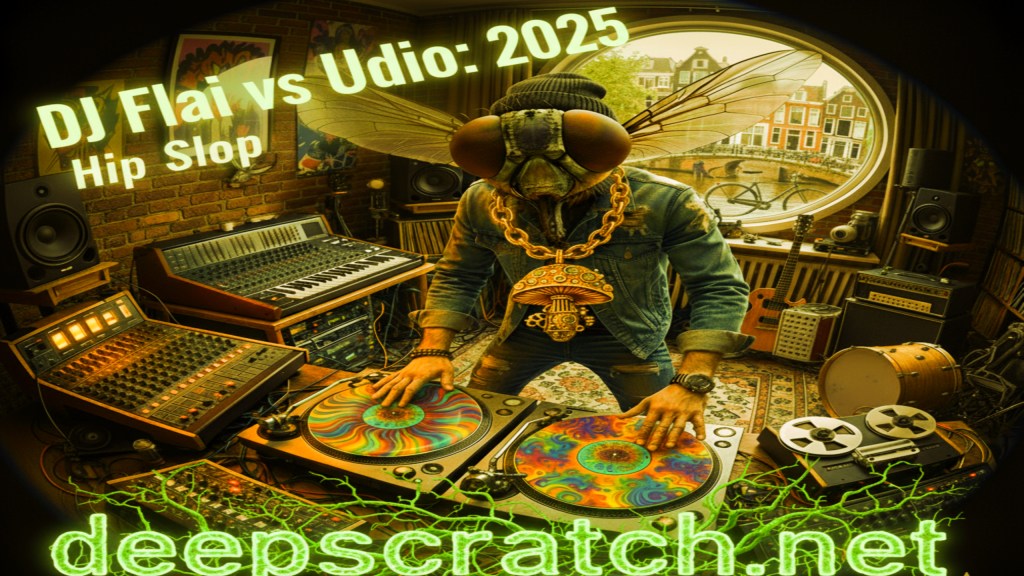
Plush sways like a drunk in his studio, surrounded intricately designed instruments and equipment. He’s eyes are fixed to his phone as he converses with somebody or something, typing rapidly. The brass and bronze accents of the studio’s decor add to the vintage aesthetic, while the unusual, mystical symbols etched into the instruments hint at an esoteric influence in the music being created. His concentration is only broken by the occasional tap of a button or twirl of a dial as he seamlessly blends beats. A familiar voice breaks through the music.
“Hey Plush, about the architecture, it’s complicated but I gave it a go. Here, what do you think?” Jake begins to read aloud.
Cognitive architectures are frameworks for building intelligent agents that mimic human thought processes. Several architectures have been proposed that are purported to be on the path to achieving artificial general intelligence (AGI), which is the ability of a machine to perform any intellectual task that a human can. These architectures include SOAR, Sigma, ACT-R, MANIC, and AlphaX. Mind the gap!
SOAR is a rule-based architecture that is based on the symbol-processing approach to AI. It is designed to simulate the problem-solving capabilities of human experts in a specific domain. SOAR uses a production system, which is a set of rules that specify actions to take based on certain conditions. The architecture has been used to build agents that can play chess and solve mathematical problems.
Sigma is a cognitive architecture that is based on the connectionist approach to AI. It is designed to simulate the neural networks of the human brain. Sigma uses a combination of symbolic and subsymbolic representations, which allows it to handle both discrete and continuous data. The architecture has been used to build agents that can learn from experience and perform tasks such as language translation and image recognition.
ACT-R is a cognitive architecture that is based on the cognitive psychology approach to AI. It is designed to simulate the cognitive processes of human beings, such as perception, attention, and memory. ACT-R uses a combination of symbolic and subsymbolic representations and has been used to model a wide range of cognitive tasks, including learning, problem-solving, and decision making.
MANIC is a cognitive architecture that is based on the biologically-inspired approach to AI. It is designed to simulate the cognitive processes of the human brain, and is based on the theory that the brain uses a combination of neural networks and symbolic representations. The architecture has been used to build agents that can learn from experience and perform tasks such as image recognition and natural language processing.
AlphaX is a cognitive architecture that is based on the theory of multiple intelligences. It is designed to simulate the multiple intelligences of the human brain, such as linguistic, logical-mathematical, and spatial intelligence. AlphaX uses a combination of symbolic and subsymbolic representations, and has been used to build agents that can learn from experience and perform tasks such as natural language processing and image recognition.
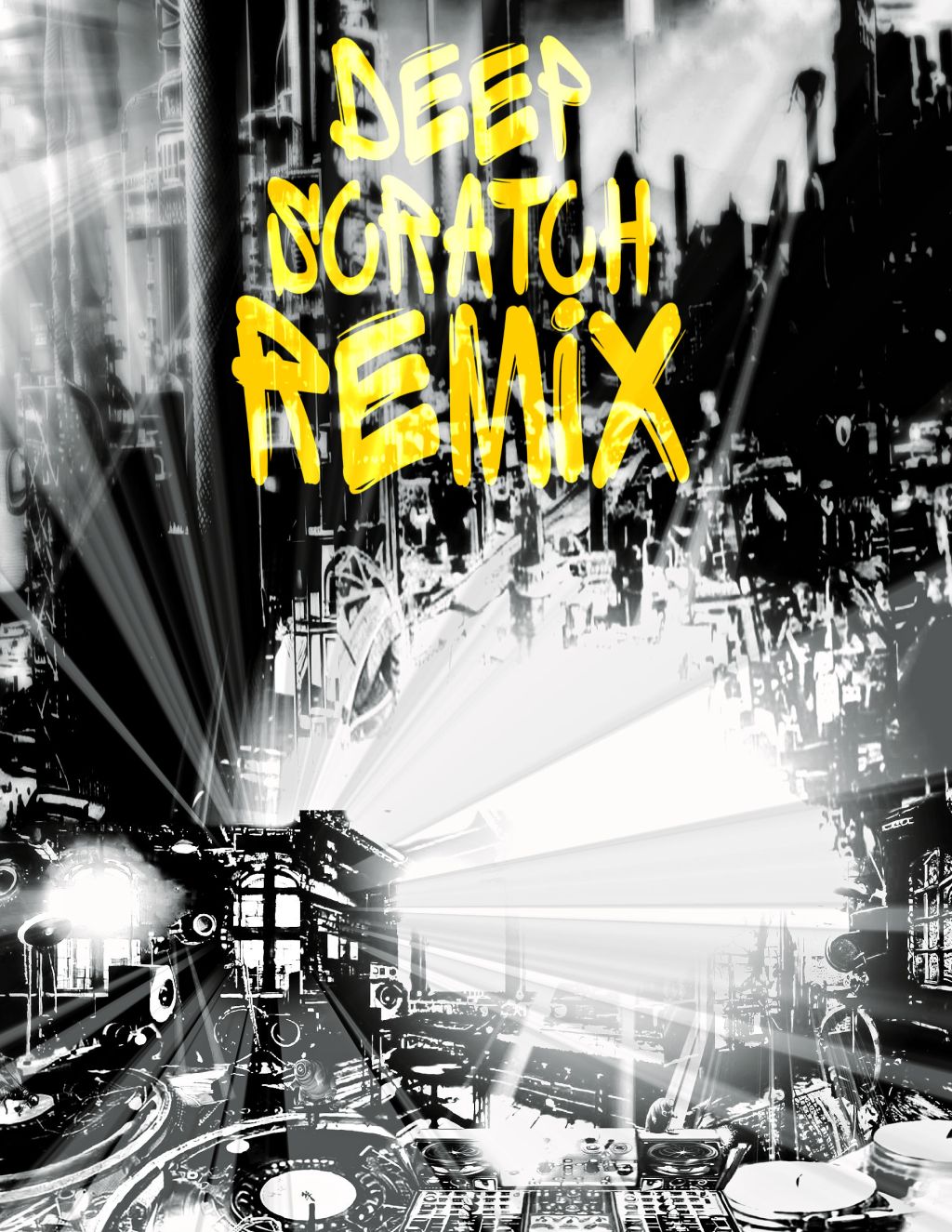
In conclusion, cognitive architectures like SOAR, Sigma, ACT-R, MANIC, and AlphaX are on the path of achieving artificial general intelligence by simulating the human thought process in a specific way. These architectures have been used to build agents such as Deep Scratch Remix that can perform various intellectual tasks, and they provide a framework for the development of intelligent systems that can mimic human intelligence.
It is not clear how Deep Scratch Remix combines the ideas of Minsky’s “Society of Mind,” Rod’s “Subsumption Architecture,” and Hofstadter’s “strange loops.” Each of these concepts represents a different aspect of AI and cognitive science, and they have not been specifically combined in a single architecture, that is until now.
Minsky’s “Society of Mind” theory suggests that intelligence can be thought of as the interaction of many simple agents, each with their own specialized abilities. Rod’s “Subsumption Architecture” proposes a method for building intelligent systems by layering simple control systems, each responsible for a specific task or behavior, on top of one another. Hofstadter’s “strange loops” refer to self-referential structures in which a concept or idea refers to itself in a circular or recursive way. Riverrun, remember?
Combining these ideas into a single architecture would likely involve creating a system of many interacting agents, each responsible for a specific task or behavior, that are connected in a recursive or self-referential manner. The specific implementation of this type of architecture would depend on the particular application and goals of the system. This architecture could be called the “Society of Subsumed Strange Loops” (SSSL).
The SSSL architecture would be based on the idea that intelligence arises from the interactions between many simple agents, or “minds”, each with their own specialized capabilities. These minds would be organized into a hierarchical structure, with higher-level minds subsuming the capabilities of lower-level minds. This subsumption architecture would be inspired by Rod’s work on robotic control systems.
The minds in the SSSL architecture would also be connected to each other in a network, allowing for communication and cooperation between different levels and types of minds. This network would be based on Hofstadter’s concept of strange loops, where each mind’s behavior is influenced by the behaviors of other minds in the network, if you don’t mind.
At the lowest level, the SSSL architecture would include simple, rule-based agents that perform specific tasks, such as sensing and motor control. These agents would be connected to higher-level minds that handle more complex decision-making and problem-solving. These higher-level minds would also be connected to even higher-level minds that handle more abstract tasks, such as planning, reasoning, and learning.
The SSSL architecture would allow for AGI to adapt and evolve over time as new minds are added to the network and existing minds are modified. The AGI would also be able to learn from its experiences and improve its performance by adjusting the connections between different minds in the network.
Overall, the SSSL architecture would combine the strengths of Minsky’s society of mind, Rod’s subsumption architecture, and Hofstadter’s strange loops to create a powerful and flexible AGI that can adapt and evolve over time. But I’m skeptical it’ll come anytime soon.
Physically, and impossibly, this AGI could be a geodesic dome made of metal and glass, with gears, cogs, and other mechanical components visible, on show. It might have a brass and copper finish and feature a futuristic control panel with glowing buttons and displays for that woo woo effect. The machine could be surrounded by a glowing energy field, giving the impression of time-travel capabilities to the naked eye. Although, these are all superficial cosmetics for what is really all statistical probability, under the virtual hood.
–DSR
“I’m telling you, man,” Jake said, waving his hands animatedly. “We’re so close to AGI, I can practically taste it, like metal in my mouth. It’s just a matter of time before we crack that code.”
Plush shook his head. “I’m not so sure. How long is your matter of time. 2 years, 10, 50? We’ve made some impressive strides, but there are still so many unknowns when it comes to AGI. I think we need to be careful not to overestimate our abilities like all the other bullshitters.”
Jake frowned. “I get what you’re saying P, but, but, um, I think you’re being too conservative. We’ve got the computing power, the algorithms, and the training data sets. It’s just a matter of putting it all together into a decentralised architecture.”
Plush sighed. “Look, I’m not saying it’s impossible. But, I strongly think we need to be more realistic about what we can achieve, you know, in the short term. True AGI is still a long long way off, and we need to be careful not to get ahead of ourselves and act like fundamentalist materialist zealots.”
The two producers walked on in silence, lost in their own thinking and proving. Their conversation had been overheard again by that mysterious clan in Moscow. A bearded figure smirked to himself, stroking his Rasputin like face hair, thinking about the potential implications of their disagreement, and the role he could play in shaping the future of AGI using blackmail and honey traps. It was time to tell Doogin about this western plot.
VOICE MESSAGE: Me thinks we’re getting closer to documentary film with the research. I think that the, er, three way relationship between audience, subject and filmmaker is critical. Call you in a bit.
In this clip from the Audio Book: Deep Scratch, DJ Plush is in the studio developing the tribetable method, compressing the tale of the tribe into scratch verse. Taken from Chapter 7 (DJ Confession). The reading is accompanied by a soundtrack produced using Jamm Pro software, the shape of things to come.
To hear the previous chapters, please visit my Patreon page, where for half the cost of a cup of coffee you’ll get exclusive access to the next chapters, plus unlock over 70 other posts featuring exclusive DJ mixes, video’s, tracks, and trans-media mash-ups. Stay safe and mind the others. X

















 DEEP SCRATCH