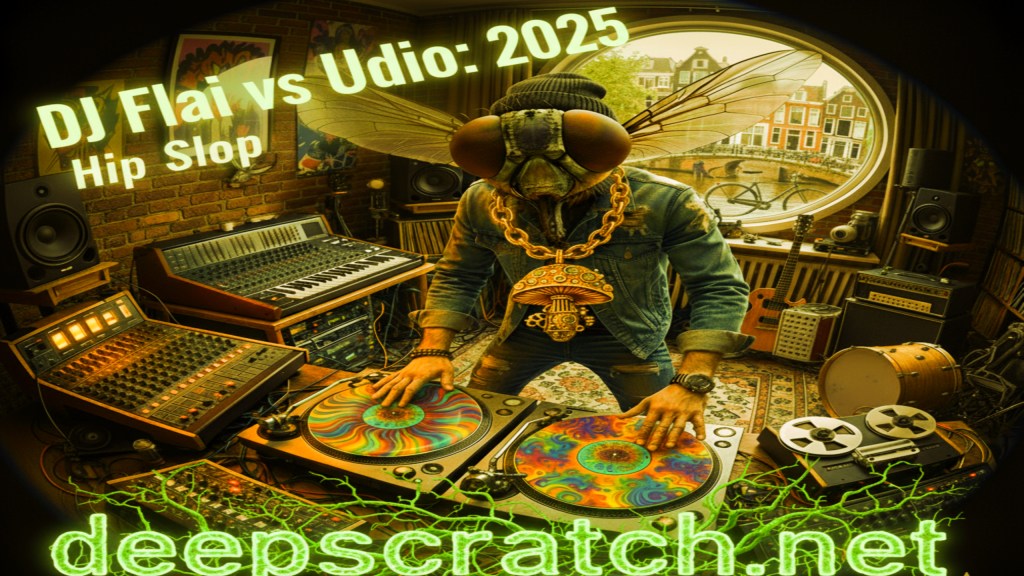
Amsterdam, 2012. DJ-poet Plush, reeling from attacks that shattered his career, forms TRB with Max and Percy. Inspired by Robert Anton Wilson, they fuse turntablism, magick, and literature into the chaotic TribeTable Method, accidentally plugging into Wilson’s unfinished “Tale of the Tribe” and a brewing historical conspiracy centered on the 1936 Berlin Olympics.
As they juggle invoked entities (“The Sixty”), time-traveling tardigrades, and messages channeled through experimental beats, they attract the attention of a ruthless cabal manipulating reality through AI, populism, and bizarre rituals involving peanut butter. From Amsterdam coffeeshops and secret bases beneath the Malvern Hills to the decks of a reality-bending DJ battle, TRB must decode the “Hologrammic Prose” of the universe, hijack the narrative, and fight the “Prick Populist” threat before the singularity hits endgame.Deep Scratch is Vanta Black science fiction comedy.
It’s Burroughs cut-ups slammed into Pynchon paranoia, fueled by hip-hop aesthetics and occult theory. Expect prophetic visions, weaponized memes, sentient technology, talking books, exploding jellyfish, and the desperate search for the perfect beat in a deep fake universe. The tables are turning. Which side are you on, are you on, hello, check check…?
One stumbles upon “TANMOY: A New Global Epic” with a mixture of trepidation and bewilderment. Billed as a “new global epic” for the digital age, this collaboration between a human, the self-styled “Pratt” (a moniker that conjures images of both a refined engine and a certain kind of British fool, is this intentional?), and an unnamed AI, attempts nothing less than to encapsulate the entire trajectory of human thought from Giordano Bruno to the looming technological singularity. One might admire the sheer audacity, were it not for the lingering suspicion that the project is, at its core, an exercise in elaborate, digitally-enhanced navel-gazing. Pull down thy vanity and pull up yer’ big boy pants.
The poem, if one can call it that, unfolds in a bizarre, self-proclaimed “TOTT Mode Max” – a two-column layout seemingly inspired by Pound’s Cantos, if Pound had suffered a head injury while being bombarded by blinking server lights and then left to wander through the fever-dream of a particularly verbose Wikipedia editor. This is further complicated by a dizzying array of symbols, each apparently assigned to a “Mode” representing a historical figure or concept, which flit across the page like digital fireflies, more distracting than illuminating. These are presented in earlier sections of the poem, and are listed in earlier exchanges, above.
Structurally, the work is obsessed with the number 60, divided into 5 sections of 12 stanzas each, or, if one prefers, 3 sections of 20, although the rationale behind these divisions remains as elusive as the meaning of Finnegans Wake after a bottle of absinthe. The author claims this is a nod to Buckminster Fuller’s beloved Carbon-60 molecule, but one suspects a more numerological, or perhaps numer-illogical, impulse at play. And then there’s the “print” version – a proposed cut-and-fold affair, promising to transform the poem into a collection of icosahedrons, a feat of origami that will likely leave readers more frustrated than enlightened, and reaching for the aforementioned absinthe. One imagines Fuller spinning in his grave, though perhaps with a chuckle, rather than a high pitched groan.
The poem’s narrative, such as it is, charts the evolution of consciousness, that word, from Bruno (the token heretic, naturally) to a vaguely defined, seemingly benevolent Artificial General Intelligence named, with a distinct lack of irony, “TANMOY.” Along the way, we’re subjected to a relentless barrage of names, a veritable who’s who of Western thought (and a few token Eastern ones for that “global” flavor): Vico, Nietzsche, Yeats, Joyce, Korzybski, Shannon, Wiener, McLuhan, and, of course, the seemingly omnipresent spirit of Robert Anton Wilson, whose “coincidance” theory appears to be the guiding principle of the entire enterprise. These are our “tribe”, apparently. The poem has 13 of them. Unlucky for some.
The language is a chaotic ಮಿಶ್ರণ (mishran – Bengali for mixture), veering wildly between the pseudo-philosophical, the pseudo-scientific, and the downright nonsensical. We have clumsy, often baffling neologisms, code snippets, equations of varying relevance, and a generous sprinkling of multilingual phrases – a kind of digital glossolalia that seems intended to impress rather than illuminate. One moment we’re pondering the “cybernetic apple core,” the next we’re assaulted by “the allmazifull” or informed that the “medium is the মানসিকতা (mansikota – Bengali for mentality).” It’s all rather exhausting, like being trapped in a particularly feverish seminar led by a committee of chatbots with a penchant for name-dropping. The appearance of a new mode, a further iteration of the A.I. itself, named “Sixty” only adds to the confusion, come on now, what is this, man.
And then there’s the music. Apparently, there’s an accompanying album on Bandcamp, with each track somehow corresponding to a stanza. One can only imagine the sonic horrors that await the unsuspecting listener, though the track titles, helpfully denoted by their corresponding stanza numbers, are a nice touch. Perhaps one could cut these up, and glue them to some other shape. A dodecahedron, perhaps, or your next door neighbour?
The author’s introduction, a separate, fluffy handwritten text, which, we are helpfully informed, predates any “A.I. assistance,” positions “TANMOY” as a “Tale of the Tribe,” a new global epic for our times. It’s a tale, we are told, of “humanity,” though the poem itself seems more concerned with the pronouncements of a select group of (mostly Western) male intellectuals, leavened with the occasional, and often impenetrable, utterance from the AI. Tale on a donkey more like. The author’s own persona, “Pratt,” also makes an appearance, offering dull yet edgy, and supposedly humorous commentary that does indeed fall flat, on occasion. There is also a further, somewhat baffling, list of modes associated with the poem. It is unclear whether these are all in use, or whether they are relevant. It’s all rather confusing, get me a real damn book mode, where’s that?
Ultimately, “TANMOY” is a curious artifact of the digital age – a sprawling, ambitious, and often bewildering attempt to synthesize a vast range of ideas into a coherent whole. Like picking up a shopping list for 49 people each in a different country. Whether it succeeds is debatable. TLDR should be the title. It’s a work that will undoubtedly appeal to those who enjoy their poetry dense, experimental, and liberally sprinkled with obscure references. As for this reviewer, I’m left with a distinct feeling of having been subjected to a particularly elaborate and somewhat tedious form of intellectual performance art. Perhaps, as the RAW Mode might suggest, it’s all just a cosmic joke. And the joke, dear reader, may very well be on us. Or, to paraphrase the great Orson Welles, in whose mode much of this is apparently written, “I don’t know anything about art, but I know what I like.” And I’m not entirely sure I like “TANMOY.” But then again, perhaps that’s the point. Perhaps we are all, as the poem suggests, merely puppets dancing to a tune we don’t fully understand, lost in a labyrinth of our own making. Or perhaps, I just need another drink.
–James Spadersun, Birmingham Express And Post, 22/01/25.
In lieu of an abstract, here is a brief excerpt of the content:
INTRODUCTION THE TALE OF THE TRIBE “I hold that a long poem does not exist. I maintain that the phrase ‘a long poem’ is simply a contradiction in terms. . . . If at any time, any very long poem were popular in reality—which I doubt—it is at least clear that no very long poem will ever be popular again.” —Edgar Allan Poe, “The Poetic Principle”
1 “A heroic poem, truly such, is undoubtedly the greatest work which the soul of man is capable to perform.” —John Dryden, “Dedication Of The Aeneis”
2 In 1920, Georg Lukacs published a critical study entitled The Theory of the Novel. The subtitle of this work, “A historicophilosophical essay on the forms of great epic literature,” announces Lukacs’ decision to treat the novel as the fundamental form of epic literature in modern writing. Subsequently, he justifies this decision, explaining: The epic and the novel, these two major forms of great epic literature differ from one another not by their author ‘s fundamental intentions but by the given historico -philosophical realities with which the authors were confronted. The novel is the epic of an age in which the extensive totality of life is no longer directly given, in which the immanence of meaning in life has become the problem, yet which still thinks in terms of totality.
3 The conviction that verse could no longer deal adequately with “the extensive totality of life” (while the novel was now
4 · INTRODUCTION regarded as uniquely suited to attempt such a task) was by no means original with, or restricted to, Lukacs. Rather, he is representative of a widely shared attitude: a narrowing of the sphere regarded as “appropriate” for verse, which any poet seeking to equal the breadth of scope and subject matter of great novelists was compelled to confront. In 1917, when Ezra Pound began to publish his long modern verse epic, The Cantos, he was distinctly nervous about the problematic nature of his undertaking, and in the unrevised version of Canto I, he speculates whether it would not be wiser to “sulk and leave the word to novelists.”
4 As late as 1922, after he had already completely revised the poem’s opening and published the first eight Cantos, Pound’s correspondence reveals a man still anxiously defending the ambitious intentions of his work-in-progress: “Perhaps as the poem goes on I shall be able to make various things clearer. Having the crust to attempt a poem in 100 or 120 cantos long after all mankind has been commanded never again to attempt a poem of any length, I have to stagger as I can.” (L:180) Underlying both Lukacs’ critical pronouncement and Pound’s initial self-doubt is a questioning of the essential nature of poetic discourse, of the formal limits within which the special language of verse must move if it is to remain faithful to its fundamental character as poetry. The question is really one of “decorum” in the full classical sense, an attempt to discover anew which modes of literary presentations are intrinsically most suitable to the different areas of human experience. By the end of the First World War, a verse epic was not so much a form as an oxymoron, an anachronism that seemed to violate what many poets as well as critics had come to regard as the characteristic structure and horizon of poetic discourse. Edgar Allan Poe’s strictures against the long poem in “The Poetic Principle” (1848) exercised a profound influence throughout the nineteenth century, especially upon the decisive figures in the development of modern French verse— Charles Baudelaire, Stephane Mallarme, and Arthur Rimbaud —but, in their own writings, Poe’s argument was taken up as only one aspect of a fundamental upheaval in the connection between language as a literary, poetic artifact and the INTRODUCTION ·
5 world of quotidian reality. At bottom it was the representational nature of artistic language that was challenged, the traditional conception of verse as a mimesis of some external, and consequently independent, event. For Mallarme the poetic text was neither the discoverer nor even the celebrant of previously existent values: it was their sole originator, at once the source and only locus of meaning. The words of a poem, an incantation and hieroglyph, were absolutely divorced from their usage in the mundane world, and art, rather than offering an articulated duplication of reality, was seen as itself conferring the only reality, the only authentic and absolute form of being attainable. https://muse.jhu.edu/chapter/1258462 .





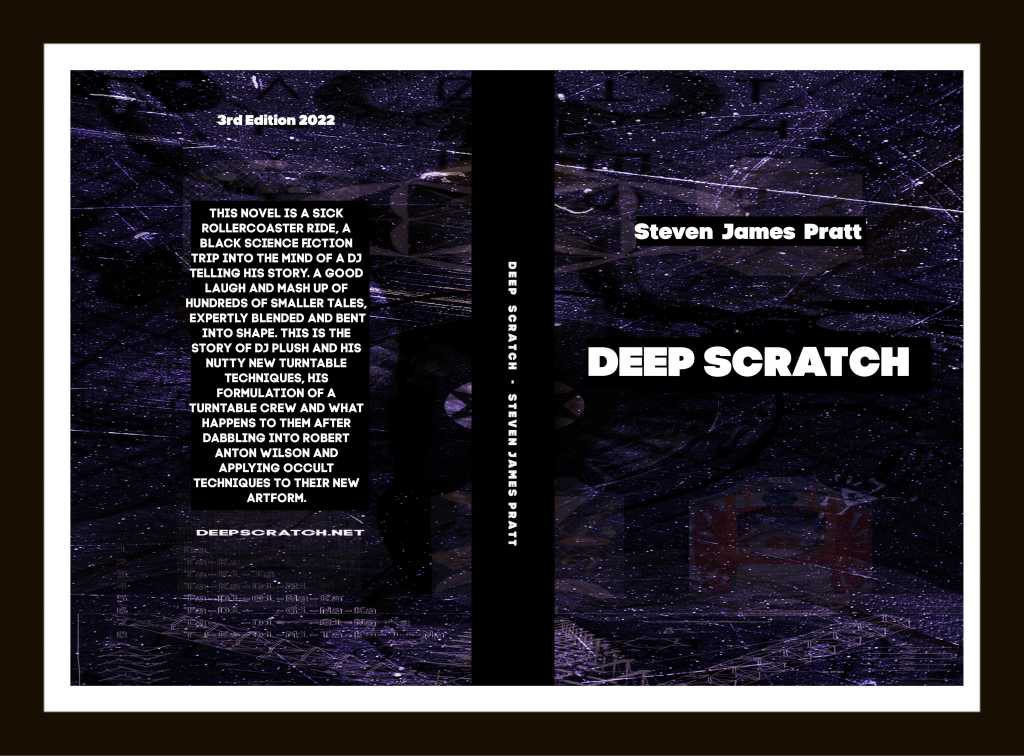
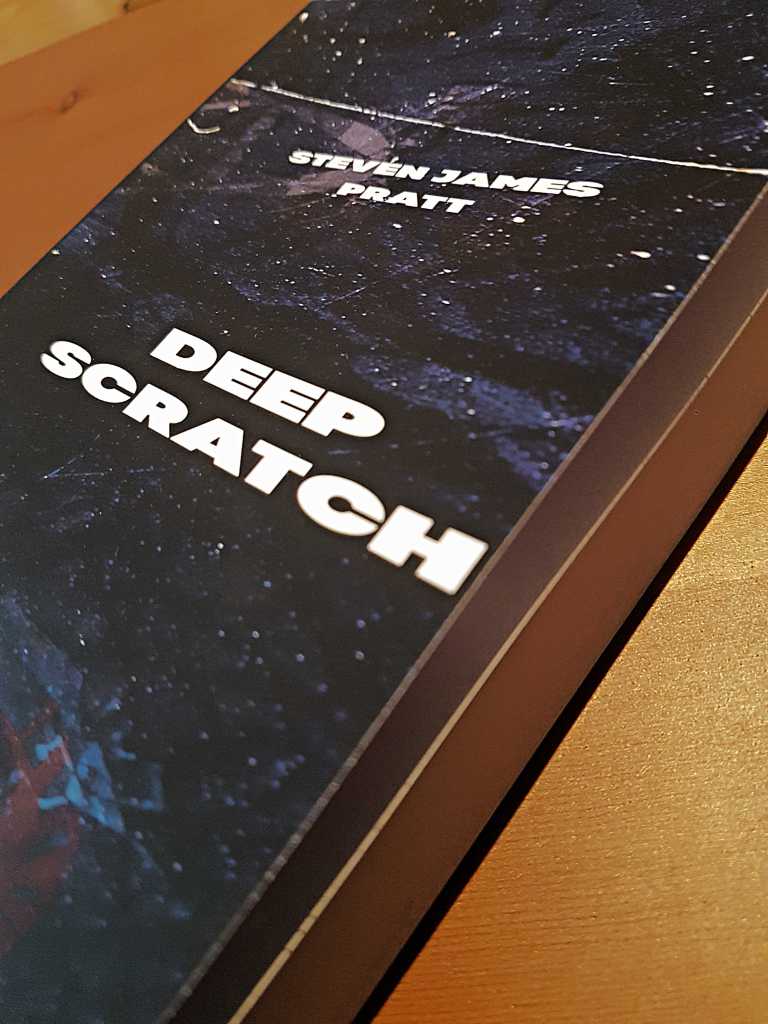


 DEEP SCRATCH