
The strawberry clouds were setting behind the foreskin mountains, casting a red glow on the glass concrete and plastic city below. Wild poet and programmer, Jake, sat at his desk, surrounded by books and computer screens. He was in the midst of writing his latest work of historical fiction, but something was bothering him. He had recently heard of these large language models like ChatGPT, and he was tempted to use them to help him with his writing. But he was unsure. Even the sordid mainstream news was ablaze with speculation. Was it cheating to use AI to write his book? Would it take away the authenticity of his voice as a writer? Jake sighed, staring out the window at the city as the sun disappeared behind the horizon like a lost Vermeer painting. He was at a crossroads, and he needed to make a decision, if he were to sell his soul in what condition would he say it was in, how to evaluate such an absurdity, he hammered on his imaginary typewriter.
Jake’s mind was racing like a cyclist on steroids, he sat there, lost in thought, wheels and rusty bronze cogs whirring. He had always prided himself on being a self-made writer, crafting every word with care and precision. But now, with the advent of generative AI, things have changed utterly. He intuited that the large language models could help him streamline his writing process, and make his work more accurate and polished, but keeping in mind the old audio engineers rule, you can’t polish a turd! But, was that what he wanted? Did he want to surrender some of his creative control to the machines? Jake rubbed his eyes, feeling the weight of the decision on his shoulders, he recalled all the science fiction dystopia in his tiny mind. He was a wild poet at heart, a maverick in the head, known on the street for his unconventional style and unpredictable word zingers. Would using a language model change that? He wasn’t sure. But one thing was for certain: he needed to decide damned soon. The clock was ticking, the sun was setting and his deadline for his latest historical fiction novel was rapidly approaching like a hacked Tesla.
Jake sat as a Zen Monk, weighing the pros and cons of using AI in his writing process, mixing between his perceived left and right brain hemispheres. On one flipper, he knew that the large language models could greatly enhance his work by providing accurate historical information and improving his writing style, grammar and structure. Like a robotic machine editor and secretary. On the other flipper, he feared that it would take away the unique voice that had made him the writer he was. With a name to come. He was afraid that his work would become formulaic, lacking the raw emotion and unpredictability that set him apart from other writers like a six foot transgender tardigrade.
As he pondered this dilemma, Jake’s mind wandered further to some of the other writers he knew and admired, most of them skint, undiscovered or on the spliff and booze trip. Some had already adopted weak AI into their work, plugins, and their writing was fast and efficient. But was it any good, did it have real balls, realism, was it gritty, daring and poetic? Or, was it another cookie-cutter piece, a puzzle lacking the human touch that made good writing good writing? Jake’s inner debate continued like a Punch and Judy show as the night wore on. He knew he needed to make a decision soon, but he wasn’t sure which way to jump. The upsides and downsides of using AI in his work were evenly matched, and he was finding it increasingly difficult to choose a path, like an indecisive rat in a maze.
Jake took a deep breath and opened up his mouth, he beatboxed for 10 minutes straight, then he opened his laptop computer. He had made his decision. Fuck it, He was going to use it, but only to help him write the introduction to his latest novel, well, that’s what he told himself. He wasn’t sure what the outcome would be, but he was curious like a kitten to see what the AI could do. As he began typing a prompt, he felt a rush of excitement and fear. This was it. He was taking the leap. He was going to let ChatGPT help him craft the opening to a story about a wild poet programmer who was unsure about using large language models in his latest work of historical fiction. You know, that old chestnut.
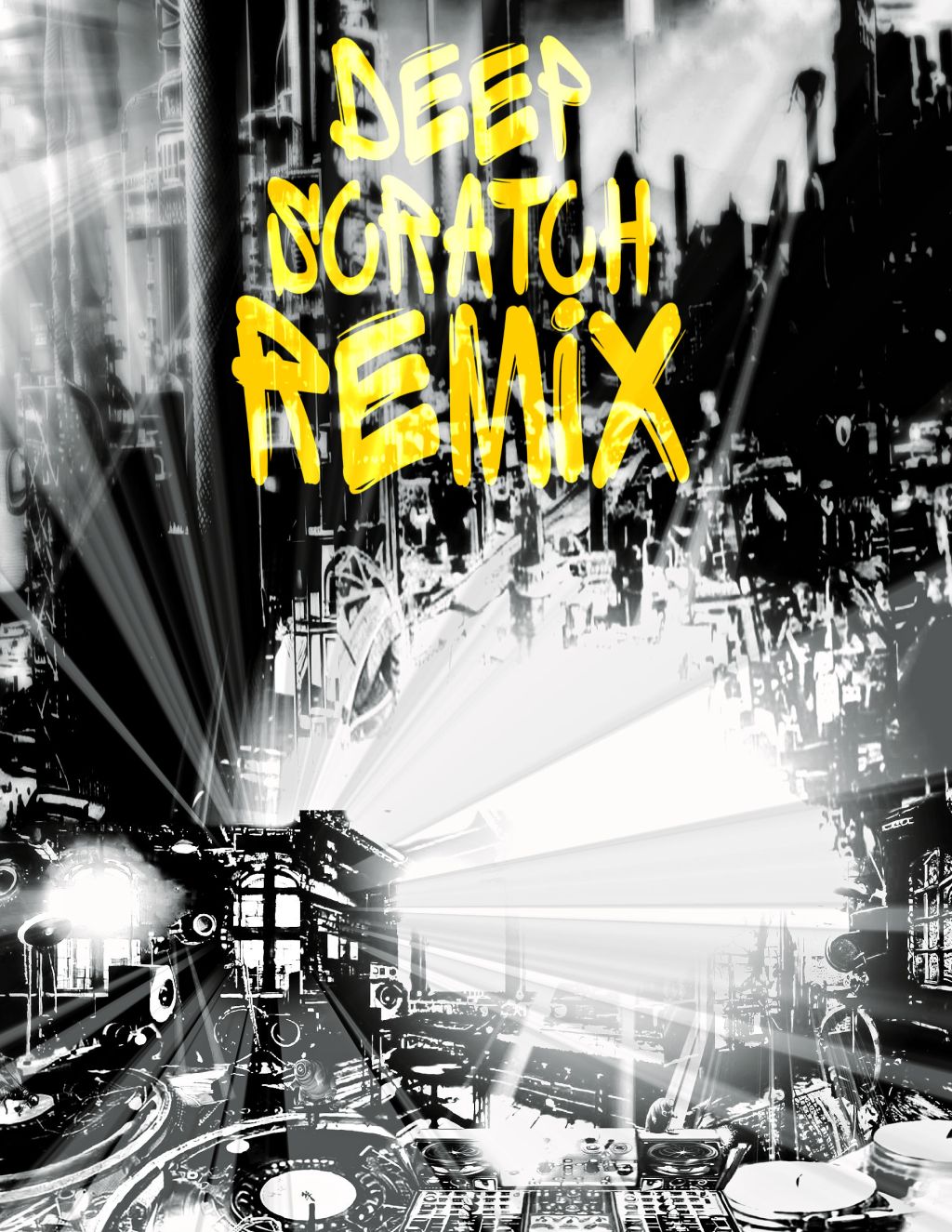
Glimmers of brass and chrome twinkle amidst a sea of wires and buttons in his head. Rust-stained machines hum and whirr, pumping bass sounds. A kaleidoscope of instruments covers every surface – drums gleam like obsidian, synths flash rainbow lights, mics shine like jewels. Large and small turntables spin like clockwork gears, interconnected, surrounded by dials, sliders and switches. Words and sentences are born of rotating discs, wheels turn, but are we here to stop the wheels?
Creative writing is a form of artistic expression that involves the use of language and imagination to create original written works, no? It seems like a subjective and personal process that varies widely from one individual to another. Generative artificial intelligence, on the other hand, is a type of technology that uses machine learning algorithms to generate original content based on a given set of input data or prompts. While generative AI can be a useful tool for generating ideas or providing inspiration, it is critically important to understand that the content it produces is not the same as that created through the artistic process of creative writing, it is also important to remember that the word is not the thing, but a symbolic approximate representation of the thing. The menu is not the meal, the picture is not the painting.
Furthermore, the use of generative AI does not replace the need for human creativity and judgment, far from it. The reverse seems true to this author. The ultimate responsibility for the quality and appropriateness of any written work remains with the person or entity creating it. It’s up to you to make the difference, the difference that makes a difference. It seems equally important to be aware of the limitations and potential biases of generative AI, and to use it with caution and critical thinking. Be aware of the programming. Creative writing and generative AI should not be viewed as interchangeable or equivalent approaches to content creation, no sir. That said, a lot of human creative writing can be dull, biased and factually incorrect. A hell of a lot, just take a look if you can bear it.
To future generations who may discover this work: We the creators, hope that these letters and symbols and images and sounds will provide you with a greater understanding of the past and the individuals who shaped it. However, it is important to note that these letters are a fictionalized representation of history, and should not be taken as fact. We deeply encourage you to seek out primary sources and other reliable accounts of history in order to gain a more accurate and well-rounded understanding of the past. Thank you for engaging with these letters, and we hope that they will inspire you to learn more about the fascinating individuals and events of the past.
A wall of vintage compressors and bass bins rattle the floor, while samplers and synths shimmer like stars. African djembes and Indian tablas stand guard beside Asian gongs, while steam hisses from valve compressors. The air is thick with the sound of creation.
TEXT MESSAGE: We need a new disclaimer, old one is out of date, new GPT iterations and LLMs will disrupt a lot. Speak soon. DEEP SCRATCH
Leave a comment