Author: flyagaric23

  • RAW at the 1986 International Poetry Festival Oslo.

    Robert Anton Wilson dedicates his book “Wilhelm Reich in Hell”,”…to all political prisoners, wherever they may be.”‘ and writes: “I recently had the honor of writing the statement of principles that concluded the 1986 International Poetry Festival in Oslo, Norway, which was signed by all the participating artists and scientists. That statement is printed below, to transmit again a signal of solidarity with all victims of tyranny:

    We, the undersigned participants in the 1986 Oslo International Poetry Festival, hereby deplore all governments which presently hold in prison artists, writers or scientists condemned for no crimes except creative thought. We affirm our solidarity with all these imprisoned sisters and brothers and send them this signal of our concern and love. We call on all governments to grant amnesty to all such persons and we call on all citizens everywhere to join us in protest against the barbarous practise of attempting to cage the mind and strangle the creative spirit.

    http://en.wikipedia.org/wiki/Oslo_International_Poetry_Festival

  • Nature’s God by RAW (feat. Lousy Vikings)

    This is from a reflection in the middle of Nature’s God, a historical novel by Robert Anton Wilson:

    “Historians agree that, when not combing the lice out of his beard or getting drunk, your average Viking preferred to spend his time cracking skulls with axes.
    Incidentally, we know the Vikings spent a lot of time combing lice out of their beards because archaeologists have made careful scientific catalogs of the Danish and Norse artifacts found around Dublin Bay, and lice combs outnumber swords and all other implements of war about a hundred to one. As Sherlock Holmes would tell you, “Observing thousands of lice combs, one deduces the existence of many, many lice.” When the Irish said, “Here come those lousy Vikings again,” they were probably being literal.
    I know the movie people left the lice out of that epic adventure, The Vikings, starring Kirk Douglas and Tony Curtis, but Hollywood has a tendency to glamorize things. “

    Nature’s God
    Volume Three of the Historical Illuminatus Chronicles

    The Wilderness Diary of Sigismundo Celine
    Ohio 1776-78
    A universe without a monacrh or a parliament
    Intellectual passions are more bewitching than love affairs, which is why they last longer. A man can adore a woman until she changes or grows surly, but he can be madly infatuated with a Theory all his life.
    When the Pope sits on the chamber pot to shit, does he believe in his own infallibility? Does not every imposter occasionally recognize his own hairy, homely humanity? Perhaps not; worn long enough, sometimes the Mask of Authority becomes the man. Even looking in a mirror, he will see the sacred Mask and not his own ordinary human face.
    N. B. It is not only the mighty who wear Masks. To be born in Napoli is to form a Neapolitan Mask before age six, I estimate. Similarly, those who grew up in Paris and London never cease to wear the Masks of the Parisian and the Londoner.
    The study of psychology should be a history of the metamorphoses of men and women into their habitual Masks.
    The Catholic wears a Catholic Mask at all times; just look at the Neapolitan whores with crucifixes around their necks. The Protestant also cannot remove the Protestant Mask. Etc. Most comic of all; the Rationalist tries to wear the Mask of Reason even when everybody else can see he is in the grip of a furious passion.
    There is no complete theory of anything. The damnable habit of giving children examinations in which every question has a “true” or “false” answer has conditioned us to think everything in the universe is “true” or “false.” In experience, most things emerge out of Chaos, confuse and muddle us for a while, and vanish into uncertainty again before we know what they were or if they’re coming back. The world is a phalanx of maybes in which a handful of trues and falses can occasionally be found.
    We create our Masks, as God allegedly made the world, out of nothing. In both cases, the nothingness sometimes shows through.
    It is quite easy to make friends with the wolves, contrary to popular lore. Respect their territory, and they will respect yours. It is impossible to negotiate similarly with the fleas: that appears to be a fight to the death.
    Today, suddenly, I encountered a quite large brownish bear in the woods. I was careful not to do anything threatening (I had my rifle, but did not want to be forced to shoot so noble a beast). Some ancient instinct told me not to run away. I pretended to ignore the huge animal, as if I had more important affairs on my mind. Then I saw out of the corner of my eye that the bear was doing exactly the same pantomime: he was using identical body signals – the same body “language,” I might even say – to signify that I was not of any concern to a bear of his royal stature. We moved off, in opposite directions, all the time signaling that we were too busy to be bothered with lesser creatures. I would call this a case of Mask as body language.
    Only later did I realize that I have seen dogs use that body language when they do not wish to fight. The implications of this simple experience are so staggering that I can scarcely formulate my own thoughts clearly. What it seems to suggest is that if dogs, bears, humans, and some other creatures have a common preverbal “language,” then we also have a common ancestor.
    The thought of the unity of life will not leave me. The wolves have a “king,” just like the Neapolitans or French, etc., and His Lupine Majesty wears the Mask of authority in all that he does. I communicate well enough with the wolves that they come around more and more often to beg food. I communicated very eloquently with that bear, and he with me. All those statues I saw in North Africa of men or gods with animal heads suggest that some people have had this insight long before me – the human in the animal, the animal in the human. Buffon toys with this thought in this Natural History, and speaks of the possible evolution of life from a common source, but then he dismisses the idea as improbable. Did his great analytic mind really reject such a stupendous concept so myopically or did he just remember two unscientific facts: (a) the Inquisitors would read his words later and (b) he was not fireproof?
    There is no governor anywhere and we are all relatives. Whenever I smoke the medicine herbs with Miskasquamic I can communicate with trees and that is not “hallucination.” Animal and vegetable are cousins! Take off the Mask of humanity, as St. Francis did, and even rodents and roses talk to you, and you to them, in a language older than words.
    Am I on the edge of a great discovery or am I going cracked from living alone too long? At times like this it is best to forget philosophy for a while and turn my mind back to music. Logic claims to know – it is the bastard son of priestcraft – but art, thank God, only aspires to share an experience.
    Melody, harmony, counterpoint: I do not regret the years I spent learning these disciplines, but they are fundamentally irrelevant. If music ceases to be wonderful nonsense, it will not console the tormented heart.
    The function of law and theology are the same: to keep the poor from taking back by violence what the rich have stolen by cunning.
    The longer one is alone, the easier it is to hear the song of the earth. Yes, yes, yes: I am not going cracked, I am merely leaving human Masks behind. The wilderness is where truth is naked and hypocrisy has not been invented.
  • FLY BY NIGHT WITH STEVE THE FLY 04

    Fly By Night with Steve The Fly 04

    Fly By Night with Steve The Fly 04

    The Fly is finishing up the night at the Café Belgique with music by Art Blakey, Otis Rush, Tribe, Shuggie Otis, Lee Perry & Adrian Sherwood, Slayer, Junior Wells, Otis Rush, Miles Davis, John Sinclair & Ed Moss, Magic Sam, and Brother Jack McDuff.
    The John Sinclair Foundation Presents

    FLY BY NIGHT WITH STEVE THE FLY 04
    Café Belgique, Amsterdam, January 20, 2012 [FA-0004]
    [01] Art Blakey: Oscalypso
    [02] Otis Rush: Working Man
    [03] Tribe: A New Day
    [04] Shuggie Otis: Freedom Flight
    [05] Lee Perry & Adrian Sherwood: Wake Up Call
    [06] Slayer: Reigning Blood
    [07] Junior Wells: Early In The Morning
    [08] Otis Rush: All Your Love
    [09] Miles Davis: Excerpt
    [10] John Sinclair with Ed Moss & the Society Jazz Orchestra: Steps > Spectrum > LUYAH! The Glorious Step
    [12] Magic Sam: Everything Gonna Be Alright
    [13] Closing Music: Brother Jack McDuff: Goodnight, It’s Time To Go
    A JOINT PRODUCTION
    Produced by Steve “Fly” Pratt for Radio Free Amsterdam
    Edited, assembled & annotated by John Sinclair
    Executive Producer: Sidney Daniels
    Sponsored by Ceres Seeds & The Hempshopper, Amsterdam
    © 2012 Steve Pratt & The John Sinclair Foundation

    http://www.radiofreeamsterdam.com/fly-by-night-with-steve-the-fly-04/

  • Jung Pauli Field and RAW psych’ travel

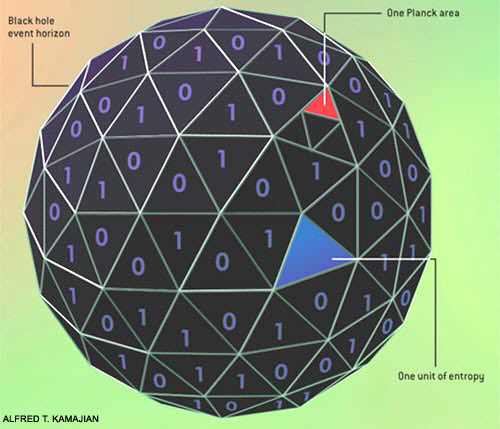
    My paper given at the Star Ship conference has the basic equation for the timescape effect in the Jung-Pauli field. The Jung-Pauli field is the Seth Lloyd hologram computer software at our future de Sitter event horizon “boundary” of our observable universe whose area is the entropy of the interior hologram images that were and every material object are.–Jack Sarfatti, October, 2011.

    As information increases unpredictability increases, some information theorist said in 1989 at the world future society, I just learned from listening to RAW.

    I still listen to Robert Anton Wilson a lot, and for many reasons, one is that it feeds my own natural wonder in a way no other writer does, dead or alive. But, with such a mass of subjects covered by RAW in such a scientific and rational way where does one begin who wants to communicate the feeling of reading RAW? and/or information theory in general, which RAW approximates with his unique species of hologrammic prose. (one might propose influences on this hologrammic Prose as being Pound’s Ideogramic Method, Joyce’s nat language and linguistic relativistic fiction, Alfred Korzybski’s General Semantics, Schroedinger, Einstein and Bohmian equations, and mixed with Sufi stroke cabbalistic stroke Burroughsian styling)


    Needless to say RAW embodies the Hermetic principle, and the general Eastern philosophical leaning toward holism. Both in his writing technique and writing subject matter, and in his life philosophy and way of communicating RAW reflects the very general principle of holism, and so it’s no surprise he himself liked to call his particular writing style hologrammic prose.

    You can simply research all words beginning with the prefix HOL to get an idea of how far this general principle has entered 21st century culture. Holistic health and healing, holographic cosmology, holographic neurology, Holographic data storage remain strong 2012 memes floating around the web-sphere. A careful re-reading and focus upon the ‘holographic’ and ‘holistic’ themes and explicit mentioning in RAW’s work is a research programme I highly recommend and have been pursuing over the last 5 years.

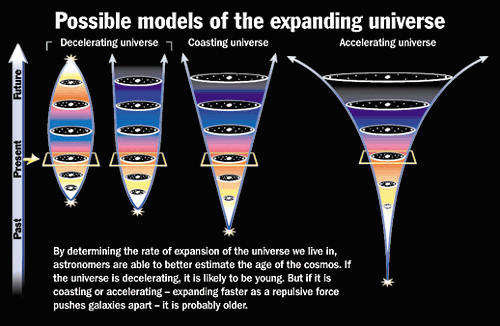
    Over the last week (Feb 14-21) I have come to a new vision of how RAW’s interpretations of Quantum Mechanics and Cosmology, neurology and a special kind of writing (hologrammic prose) reflect some of the latest ideas in the more specific area of cosmological physics. In particular ‘holographic’ models of cosmology, in the tradition of David Bohm, Jack Sarfatti and yes, Giordano Bruno.

    Let me try to explain. And at least give you some mixed media links and source material for you to catch my drift.    

    “Now both men are dead. Physics has undergone great advances with its grand unified theories and its current development of superstring theory. Yet the central question remains: What is the nature of Pauli’s great dream? What is that speculum that lies between the worlds of mind and matter? Will it be possible to develop a new physics and a new psychology which are complementary to each other? This is not simply some intellectual problem or an idle inquiry; rather, it is vital to our very human survival.–F. David Peat.
    http://www.paricenter.com/library/papers/peat26.php

    The third part of a lecture given by Prof. Arthur I. Miller (University College London) on Thursday 10 December 2009 at CERN.

    Since Kepler believed in the famous dictum, “as above so below,” it was natural to assume that the solar system reflected an image of the Trinity and the human mind itself. Such ideas are certainly not far-fetched. David Bohm has told me how, while working on his theory of the plasma state, he felt that the whole plasma was a living thing, a society of electrons, as it were. Over the past decade, Bohm has been lecturing and thinking not only about physics but also about society, religion, and human consciousness. He explores these integrations on many levels without any sense of inner division. This approach would be familiar to Pauli, who pointed out how science and religion have a common origin which, alas, has been forgotten today.–http://www.paricenter.com/library/papers/peat26.php

    “The first four hundred were basis for his research into alchemical symbolism in a modern psyche. In a later collaboration, Pauli supported Jung’s synchronicity principle as scientific, and Jung fostered Pauli’s understanding of the archetypal and collective factors in the psyche. They each explored the interconnections between the energies of psyche and matter, and the possibilities of acausal order and synchronicity. Pauli’s ground-breaking discoveries gave scientific demonstration of alchemical intuitions. Through him, alchemical and archetypal insights entered the discourse of physics. Through Jung, the apprehensions of microphysics entered our psychological language and thought.–http://www.pep-web.org/document.php?id=joap.040.0531a

    “Jung and Pauli were convinced that synchronistic events reveal an underlying unity of mind and matter, subjective and objective realities. Synchronicity was (and continues to be) a prime target for criticism of Jung that for decades bordered on outright dismissal by many in the scientific and academic communities. For example, historian of science Suzanne Gieser writes that she finds Pauli’s interest in Jung “unusual” because “most of those with an academic or scientific background dismiss Jung totally.”5http://www.metanexus.net/essay/wolfgang-pauli-carl-jung-and-acausal-connecting-principle-case-study-transdisciplinarity


    http://www.scientificexploration.org/journal/jse_11_3_atmanspacher.pdf

  • Dialectics of Liberation Preview

    This is a compellation of excerpts from a conference titled:
    “Dialectics of Liberation”
    The conference took place in London in July 1967.
    More videos from the two weeks conference will be published on line soon.

  • James Joyce children’s story The Cats of Copenhagen gets first publication

    I wonder if QUANTUM PHYSICS INFLUENCED JOYCE’S COPENHAGEN INTERPRETATION OF CHILDRENS STORIES.

    I IMAGINE A COPY WILL SHORTLY APPEAR SOMEWHERE ON THE WEB LONG ENOUGH TO BEHOLD JOYCE’S NEWLY EMERGENT WRITINGS..

    James Joyce children’s story The Cats of Copenhagen gets first publication

    Originally written for his grandson, 1936 tale issued in limited edition of 200 copies amid controversy over copyright
    James Joyce 
     

    James Joyce: From Finnegans Wake to Stephen’s bedtime. Photograph: Roger Viollet/AFP/Getty
    A children’s story by James Joyce has been published for the first time ever by a small press in Ireland.

    Joyce’s The Cats of Copenhagen is a “younger twin sister” to his published children’s story The Cat and the Devil, which told of how the devil built a bridge over a French river in one night, said Ithys Press. Publisher Anastasia Herbert called it a “little gem” which she said “reflects Joyce’s lighter side, his sense of humour – which can fairly be called odd or even somewhat absurdist”.

    Like its predecessor, The Cats of Copenhagen was written in a letter to Joyce’s grandchild, Stephen James Joyce, while the author was in Denmark and the four-year-old Stephen was in France. The new tale is “exquisite, surprising, and with a keen, almost anarchic subtext”, said Ithys, which has printed a limited run of 200 illustrated copies, ranging in price from €300 (£250) to €1,200.

    “In early August 1936, Joyce had sent his grandson ‘a little cat filled with sweets’ – a kind of Trojan cat to outwit the grown-ups. A few weeks later, while in Copenhagen and probably after hunting for another fine gift, Joyce penned ‘Cats’, which begins: ‘Alas! I cannot send you a Copenhagen cat because there are no cats in Copenhagen.’ Surely there were cats in Copenhagen! But perhaps not secretly delicious ones. And so the story proceeds to describe a Copenhagen in which things are not what they seem,” said Herbert. “For an adult reader (and no doubt for a very clever child) ‘Cats’ reads as an anti-establishment text, critical of fat-cats and some authority figures, and it champions the exercise of common sense, individuality and free will.”
    The letter in which the story was found, dated 5 September 1936, was donated by Hans Jahnke, son of Giorgio Joyce’s second wife, Asta, to the Zurich James Joyce Foundation. The Foundation has called its publication an “outrage”, stressing that it has not granted permission for the book’s release.

    “We have been completely overlooked and ignored. It’s only common decency to ask the owner,” said the Foundation’s Fritz Senn. “We are outraged. We have had no hand in this unfair thing and feel not just ignored but cheated.”

    Although the published works of Joyce entered the public domain in Europe on 1 January this year, Senn says it has not yet been determined whether the non-published material is now out of copyright as well. “Copyright has been lifted only, we believe, from the published material. All the huge amount of non-published material we believe is still under copyright, so this is, we believe, an infringement of that,” he said, adding that he is concerned the “very belligerent” Joyce estate might sue. “We haven’t heard from them [but] what I’m afraid of is that with the large amount of copyright taken away from them, their remaining territory will be defended even more fiercely.”

    But Anastasia Herbert of Ithys Press believes the unpublished works of Joyce are now in the public domain. “A publication such as that of The Cats of Copenhagen is legal and valid and any attempt to interfere with its free dissemination is both unlawful and morally reprehensible,” she wrote in a statement, in which she went on to say that the “attempt by Mr Fritz Senn of the Zurich Joyce Centre proprietarily to assert some right on this now public-domain document is preposterous”.

    “The book was conceived not as a commercial venture but as a carefully crafted tribute to a rather different Joyce, the family man and grandfather who was a fine storyteller, much like his own father John Stanislaus,” wrote Herbert. Those with a spare €300 will be able to find out.

  • Breathin’ Air with Howard Marks & John Sinclair.mov

    For the first time in front of a live audience, living legends John Sinclair (American political activist, poet & former manager of MC5) and Howard Marks (best-selling author, former international drug trafficker and all round roguish charmer) will be teaming up to share their fascinating and, at times, truly incredible stories with each other.

    The two veteran raconteurs will delve into the haze of their era-shaping pasts, as Howard, a vigorous advocate for the legalisation of recreational drugs interviews John about his own lifelong activism and how he became a figurehead for counterculture the world over. From John’s recent involvement with Meltdown festival curated by Massive Attack and the launch of the Music is Revolution Foundation, to reflecting upon his part in founding the revolutionary White Panther Party, managing the MC5 and sparking the legendary 1971 “John Sinclair Freedom Rally” you’ll see why it’s not just anybody who could have inspired John Lennon to write a song about him!

    This unique opportunity to share the experiences of an outlaw icon who knows what it means to stand up for what you believe in will reveal just what life is like campaigning for social justice and speaking out against an oppressive establishment and the price at which that comes.

    Breathin’ Air with Howard Marks and John Sinclair will be a trip you won’t forget!

  • Hearst shows heart after 71 years, black and dry like a stone.

    Hearst family forgive Orson Welles for Citizen Kane after 71 years

    Screening of Welles’ masterpiece at former home of William Randolph Hearst will lay to rest long-running feud
    Citizen Kane  
    Orson Welles’ masterpiece Citizen Kane provoked the anger of newspaper baron William Randolph Hearst. Photograph: Allstar/Cinetext/RKO
     

    When Orson Welles’ masterpiece Citizen Kane first hit cinemas in 1941, newspaper magnate William Randolph Hearst was distinctly unimpressed: the similarities between himself and Welles’ creation Charles Foster Kane were too strong to be ignored. The powerful press baron went out of his way to derail the movie. Now, more than 70 years later, it seems that the family of the pre-eminent US media impresario of the early part of the last century has finally forgiven Welles after agreeing to a screening of Citizen Kane at the Hearst Castle visitor centre in California.

    MORE HERE….

  • Cutting a Nietzsche

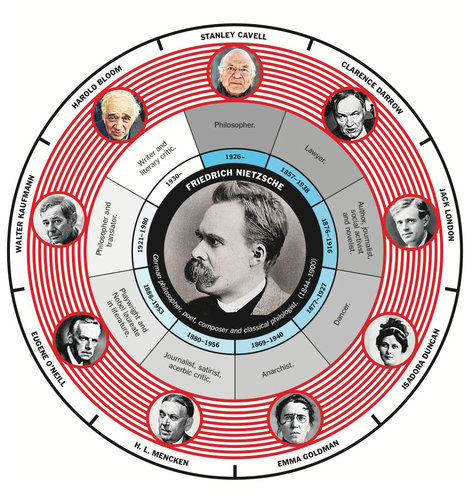
    “Nietzsche’s great champion on this continent was H.L. Mencken, who at the age of 27 wrote the first book on Nietzsche in English. He loved the way his hero “hurled his javelin” at the authority of God and that he “broke from the crowd” of thinkers. After becoming the most famous American intellectual of the 1920s, Mencken admitted that his ideas were based on Nietzsche. “Without him, I’d never have come to them.”
    http://arts.nationalpost.com/2012/01/24/fulford-carving-a-nietzche/

    “In 1889, when Friedrich Nietzsche suffered the mental collapse that ended his career, he was virtually unknown. Yet by the time of his death in 1900 at the age of 55, he had become the philosophical celebrity of his age. From Russia to America, admirers echoed his estimation of himself as a titanic figure who could alter the course of history: “I am by far the most terrible human being that has existed so far; this does not preclude the possibility that I shall be the most beneficial.”  —http://www.nytimes.com/2012/01/15/books/review/american-nietzsche-by-jennifer-ratner-rosenhagen-book-review.html

  • Bohm Dome Doodles

    Thoughts on the Universe…
    x fly