Category: finnegans wake

  • Grand Deft Mamalujo and Joycean computer games 2012

    My google alert just alerted me to a New Yorker artcle by Mark O’Connell called ‘has James Joyce been set free?’ which overviews the recent changes and probable ramifications of the copyright expiring on some-but-not-all of his work.

    Towards the end of the article Mark writes something very interesting to me, today, whereby he describes how his off-handed joke to a friend about a James Joyce first-person-shooter game, gestates into pipe-dreams about a Ulysses inspired game. A little bit like Grand Theft Auto, but set in a Joycean world.

    Yes, yes, I say YES. This ‘Joycean computer game world’ might be the best idea, next to my own, of course, that I have heard this year so far…once again…Joycean computer games, or to explain a bit more precisely: the interactive visual translation of his languaging engine could lead us into a literary inspired exploration of great literature, a new way of reading, a whole new style, and have it begin with the great master and grand architect James Joyce.–Steve.

    “Sean Latham agrees that there will now be somewhat less quality control on Joyce publications, but sees it as not such a terrible development, pointing out that no one is much concerned about there being too many editions of Dickens or Shakespeare. As with most advocates of Joyce’s work, he thinks anything that might bring it to a wider readership should be welcomed. When I made a joke about the possibility of a first-person-shooter video game of “Finnegans Wake” hitting the stores in 2012, he mentioned that he himself has had pipe dreams about a “Ulysses” game. “I have an undergraduate student,” he said, “and we fantasize about exactly how such a thing might be devised. I know there is a Jane Austen video game being designed, so a ‘Ulysses’ video game can’t be far behind.” If any game developers happen to be reading this, I hope they take note. A simulated ramble around Edwardian Dublin—a sort of Grand Theft Auto without the theft or the autos—could make for a powerfully immersive gaming experience. It would almost be worth doing just to see how Stephen Joyce might react.–

    .”…and their farthing dip and read a letter or two every night before going to sleep in the twilight, a capitaletter for further auspices on their old one page codex book of old year’s eve 1132, M.M.L.J. old style, their Senchus Mor by Mrs Shemans, final buff lunch edition, and Lally through their gangrene spentacles and all the good they did in their time for Roe and O’Mulconry a Conry ap Mul or Lap ap Morion and Buffler ap Matty Mac Gregory for Marcus on Podex by Daddy de Wyer, old bagabroth, and one by one and sing a mamalujo.–James Joyce, the Mamalujo vignette, taken from an early draft of Finnegans Wake.

  • Joyce Pound Shaw and Ulysses in Porno-mags

    SNIPPET FROM: An end to bad heir days: The posthumous power of the literary estate

    By Gordon Bowker

    The question of rights in Joyce’s work was a fraught one even during his lifetime. Fearing prosecution, no one would publish Ulysses complete and unabridged until Sylvia Beach, the American bookseller in Paris, bravely did so in 1922. But Joyce’s notoriety attracted pirates , and at one time he was unprotected by good contracts or good law. In November 1925, he found that without his permission Ulysses was being published serially in the magazine Two Worlds by Samuel Roth, the New York pornographer. His protests went unheeded. Roth simply sent a cheque for $1000 which Joyce refused to cash.

    Among his literary friends and supporters, only Ezra Pound and Bernard Shaw were unsympathetic. Pound said that Joyce had only himself to blame for not registering his copyright in America. He advised him “to write letters to the press denouncing Roth”, or alternatively, “organise a gang of gunmen to scare [him] out of his pants”. But Roth, he warned, was a ruthless capitalist driven by avarice, not easily stopped.

    Joyce was incensed, and with the aid of friends composed a letter of protest which was circulated among writers, attacking unjust American copyright law. Pound refused to sign, as did Shaw, who suspected a Joycean stunt.

    READ ON HERE

    http://www.independent.co.uk/arts-entertainment/books/features/an-end-to-bad-heir-days-the-posthumous-power-of-the-literary-estate-6285277.html

  • Some Joyce/Pound ‘News’ items…


    The Politics of Modernist Poetics: Ezra Pound, Amy Lowell and Imagism:

    Imagism was the poetry of directness and distillation championed by Ezra Pound and Amy Lowell in the first years of the 20th century, reacting against the flowery verse of late Romanticism and urging poets to look to earlier models—like Sappho in ancient Greece and Li Po in 8th century China—to create a poetry of precise and powerful images, without any superfluous words or ornaments.

    http://poetry.about.com/b/2011/10/19/the-politics-of-modernist-poetics-ezra-pound-amy-lowell-and-imagism.htm

    Great literature will live on with or without a prize

    With readability the watchword for the Man Booker prize, it’s unlikely any of the literary greats would even get on to the shortlist
    • The Observer, Sunday 16 October 2011  
    • Would James Joyce have ever made the Man Booker shortlist? Not, you guess, if the current crop of judges had anything to do with it. A Portrait of the Artist as a Young Man might have squeaked on, but Ulysses? Not a chance. “Readability” is the watchword of this year’s panel, apparently, led by the former spy mistress, Dame Stella Rimington. Fellow judge and ex-MP Chris Mullin likes something with a “bit of zip”.
      Given that the Booker is at heart a speed-reading contest for judges – 100-odd novels to read in a couple of months – it is not surprising that those poor unfortunates faced with the task favour books that can be tackled in a few swift hours. Eighty books in and counting, who would want to be confronted with Finnegans Wake?

      http://www.guardian.co.uk/commentisfree/2011/oct/16/observer-editorial-man-booker-prize?newsfeed=true 

      “Poetic possibilities

      Review by MARTIN SPICE

      Poet/editor Ezra Pound’s contribution to what we now know as The Waste Land was profound and is well documented. Many years ago, British publishers Faber & Faber released a facsimile transcript showing his comments and crossings out and he is frequently referred to, rightly or wrongly, as the architect of the poem. Those amendments and alterations are included in the app and can be seen alongside the final version of the poem. There are hours of interest here in examining just what Pound left in and took out.

      http://thestar.com.my/lifestyle/story.asp?file=/2011/7/5/lifebookshelf/9009337&sec=lifebookshelf

      Mad about the girl: Tate Liverpool’s Alice in Wonderland show

      Alice Liddell inspired Lewis Carroll, whose books inspired a thousand art works. But are they any good? Adrian Searle heads down the rabbit hole at Tate Liverpool’s new show
    Alice Pleasance Liddell taken by Charles Dodgson aka Lewis Carroll 
    The real Alice … Alice Pleasance Liddell taken by Charles Dodgson aka Lewis Carroll. Photograph: National Portrait Gallery London
     

    Lewis Carroll, or rather the fictive world of Reverend Charles Lutwidge Dodgson, is firmly embedded in our culture. I am surprised no one has made a religion out of Alice. Perhaps they have.

    She is also very much at large in Tate Liverpool. Here she is, here she isn’t: in James Joyce’s Finnegans Wake and in Jorge Luis Borges; in Jefferson Airplane’s White Rabbit, and in the surrealist works of Max Ernst and Salvador Dalí. Alice captivated Virginia Woolf and Walt Disney, inspired Robert Smithson, Sigmar Polke and a host of better and worse visual artists. Characters from the Alice books, or rather their putative ancestors, can be found, according to Alberto Manguel (writing in a brilliant, short catalogue essay), in Hamlet and Don Quixote, in Kafka, Homer and the Bible. The influence of Carroll’s creation can be found in sci-fi, detective fiction and philosophy, in pre-Raphaelite painting and in hard-arsed conceptualism. You can’t shake Alice off.

    http://www.guardian.co.uk/artanddesign/2011/nov/02/alice-wonderland-tate-liverpool-review?newsfeed=true

  • Just Like “Finnegans Wake,” But With Charts – Senate Committee Issues Report on Financial Crisis

    http://blogs.forbes.com/timothyspangler/2011/04/16/just-like-finnegans-wake-but-with-charts-senate-committee-issues-report-on-financial-crisis/

    “When i read the court proceedings in Joyce’s wake around page’s 572-576, i instantly thought about the court hearing that will come concerning the banking turmoil and crash affecting all humanity, especially the poor and displaced peoples, due to the international global financial system in place in 2009.–Steve fly.

     James Joyce writes:
     

    “This, lay readers and gentilemen, is perhaps the commonest
    of all cases arising out of umbrella history in connection with the wood industries in our courts of litigation. D’Oyly Owens
    holds (though Finn Magnusson of himself holds also) that so
    long as there is a joint deposit account in the two names a
    mutual obligation is posited. Owens cites Brerfuchs and Warren,
    a foreign firm, since disseized, registered as Tangos, Limited,
    for the sale of certain proprietary articles. The action which was
    at the instance of the trustee of the heathen church emergency
    fund, suing by its trustee, a resigned civil servant, for the
    payment of tithes due was heard by Judge Doyle and also by a
    common jury. No question arose as to the debt for which vouchers
    spoke volumes. The defence alleged that payment had been made
    effective. The fund trustee, one Jucundus Fecundus Xero
    Pecundus Coppercheap, counterclaimed that payment was invalid
    having been tendered to creditor under cover of a crossed cheque,
    signed in the ordinary course, in the name of Wieldhelm, Hurls
    Cross, voucher copy provided, and drawn by the senior partner
    only by whom the lodgment of the species had been effected but
    in their joint names. The bank particularised, the national misery
    (now almost entirely in the hands of the four chief bondholders
    for value in Tangos), declined to pay the draft, though there
    were ample reserves to meet the liability, whereupon the trusty
    Coppercheap negociated it for and on behalf of the fund of the
    thing to a client of his, a notary, from whom, on consideration, he
    received in exchange legal relief as between trusthee and bethrust,
    with thanks. Since then the cheque, a good washable pink,
    embossed D you D No 11 hundred and thirty 2, good for the figure
    and face, had been circulating in the country for over thirtynine
    years among holders of Pango stock, a rival concern, though not
    one demonetised farthing had ever spun or fluctuated across the
    counter in the semblance of hard coin or liquid cash. The jury (a
    sour dozen of stout fellows all of whom were curiously named
    after doyles) naturally disagreed jointly and severally, and the
    belligerent judge, disagreeing with the allied jurors’
    disagreement, went outside his jurisfiction altogether and ordered a
    garnishee attachment to the neutral firm.” –
    JAMES JOYCE. FINNEGANS WAKE:
    Part:3 Episode:14 Page:575
     
  • Finnegans Wake and Banking Bastards

    The bank particularised, the national misery
    (now almost entirely in the hands of the four chief bondholders
    for value in Tangos), declined to pay the draft, though there
    were ample reserves to meet the liability, whereupon the trusty
    Coppercheap negociated it for and on behalf of the fund of the
    thing to a client of his, a notary, from whom, on consideration, he
    received in exchange legal relief as between trusthee and bethrust,
    with thanks. Since then the cheque, a good washable pink,
    embossed D you D No 11 hundred and thirty 2, good for the figure
    and face, had been circulating in the country for over thirtynine
    years among holders of Pango stock, a rival concern, though not
    one demonetised farthing had ever spun or fluctuated across the
    counter in the semblance of hard coin or liquid cash. The jury (a
    sour dozen of stout fellows all of whom were curiously named
    after doyles) naturally disagreed jointly and severally, and the
    belligerent judge, disagreeing with the allied jurors’
    disagreement, went outside his jurisfiction altogether and ordered a
    garnishee attachment to the neutral firm.
    http://www.lycaeum.org/mv/Finnegan/viewpage.cgi?page=574

  • What Ever Happened to the Book? (Future Present) Mark Pesce, Chu, Fly.

    Mark Pesce – Words.
    CHU – Images.
    Steve ‘Fly Agaric” – Mixing

    What Ever Happened to the Book?

    Line Steppers / Christy
    Line Steppers / Christy

    I: Centrifugal Force

    We live in the age of networks. Wherever we are, five billion of us are continuously and ubiquitously connected. That’s everyone over the age of twelve who earns more than about two dollars a day. The network has us all plugged into it. Yet this is only the more recent, and more explicit network. Networks are far older than this most modern incarnation; they are the foundation of how we think. That’s true at the most concrete level: our nervous system is a vast neural network. It’s also true at a more abstract level: our thinking is a network of connections and associations. This is necessarily reflected in the way we write.

    I became aware of this connectedness of our thoughts as I read Ted Nelson’s Literary Machines back in 1982. Perhaps the seminal introduction to hypertext, Literary Machines opens with the basic assertion that all texts are hypertexts. Like it or not, we implicitly reference other texts with every word we write. It’s been like this since we learned to write – earlier, really, because we all crib from one another’s spoken thoughts. It’s the secret to our success. Nelson wanted to build a system that would make these implicit relationships explicit, exposing all the hidden references, making text-as-hypertext a self-evident truth. He never got it. But Nelson did influence a generation of hackersSir Tim Berners-Lee among them – and pushed them toward the implementation of hypertext.

    As the universal hypertext system of HTTP and HTML conquered all, hypertext revealed qualities as a medium which had hitherto been unsuspected. While the great strength of hypertext is its capability for non-linearity – you can depart from the text at any point – no one had reckoned on the force (really, a type of seduction) of those points of departure. Each link presents an opportunity for exploration, and is, in a very palpable sense, similar to the ringing of a telephone. Do we answer? Do we click and follow? A link is pregnant with meaning, and passing a link by necessarily incurs an opportunity cost. The linear text is constantly weighed down with a secondary, ‘centrifugal’ force, trying to tear the reader away from the inertia of the text, and on into another space. The more heavily linked a particular hypertext document is, the greater this pressure.

    Consider two different documents that might be served up in a Web browser. One of them is an article from the New York Times Magazine. It is long – perhaps ten thousand words – and has, over all of its length, just a handful of links. Many of these links point back to other New York Times articles. This article stands alone. It is a hyperdocument, but it has not embraced the capabilities of the medium. It has not been seduced. It is a spinster, of sorts, confident in its purity and haughty in its isolation. This article is hardly alone. Nearly all articles I could point to from any professional news source portray the same characteristics of separateness and resistance to connect with the medium they employ. We all know why this is: there is a financial pressure to keep eyes within the website, because attention has been monetized. Every link presents an escape route, and a potential loss of income. Hence, links are kept to a minimum, the losses staunched. Disappointingly, this has become a model for many other hyperdocuments, even where financial considerations do not conflict with the essential nature of the medium. The tone has been set.

    On the other hand, consider an average article in Wikipedia. It could be short or long – though only a handful reach ten thousand words – but it will absolutely be sprinkled liberally with links. Many of these links will point back into Wikipedia, allowing someone to learn the meaning of a term they’re unfamiliar with, or explore some tangential bit of knowledge, but there also will be plenty of links that face out, into the rest of the Web. This is a hyperdocument which has embraced the nature of medium, which is not afraid of luring readers away under the pressure of linkage. Wikipedia is a non-profit organization which does not accept advertising and does not monetize attention. Without this competition of intentions, Wikipedia is itself an example of another variety of purity, the pure expression of the tension between the momentum of the text and centrifugal force of hypertext.

    Although commercial hyperdocuments try to fence themselves off from the rest of the Web and the lure of its links, they are never totally immune from its persistent tug. Just because you have landed somewhere that has a paucity of links doesn’t constrain your ability to move non-linearly. If nothing else, the browser’s ‘Back’ button continually offers that opportunity, as do all of your bookmarks, the links that lately arrived in email from friends or family or colleagues, even an advertisement proffered by the site. In its drive to monetize attention, the commercial site must contend with the centrifugal force of its own ads. In order to be situated within a hypertext environment, a hyperdocument must accept the reality of centrifugal force, even as it tries, ever more cleverly, to resist it. This is the fundamental tension of all hypertext, but here heightened and amplified because it is resisted and forbidden. It is a source of rising tension, as the Web-beyond-the-borders becomes ever more comprehensive, meaningful and alluring, while the hyperdocument multiplies its attempts to ensnare, seduce, and retain.

    This rising tension has had a consequential impact on the hyperdocument, and, more broadly, on an entire class of documents. It is most obvious in the way we now absorb news. Fifteen years ago, we spread out the newspaper for a leisurely read, moving from article to article, generally following the flow of the sections of the newspaper. Today, we click in, read a bit, go back, click in again, read some more, go back, go somewhere else, click in, read a bit, open an email, click in, read a bit, click forward, and so on. We allow ourselves to be picked up and carried along by the centrifugal force of the links; with no particular plan in mind – except perhaps to leave ourselves better informed – we flow with the current, floating down a channel which is shaped by the links we encounter along the way. The newspaper is no longer a coherent experience; it is an assemblage of discrete articles, each of which has no relation to the greater whole. Our behavior reflects this: most of us already gather our news from a selection of sources (NY Times, BBC, Sydney Morning Herald and Guardian UK in my case), or even from an aggregator such as Google News, which completely abstracts the article content from its newspaper ‘vehicle’.

    The newspaper as we have known it has been shredded. This is not the fault of Google or any other mechanical process, but rather is a natural if unforeseen consequence of the nature of hypertext. We are the ones who feel the lure of the link; no machine can do that. Newspapers made the brave decision to situate themselves as islands within a sea of hypertext. Though they might believe themselves singular, they are not the only islands in the sea. And we all have boats. That was bad enough, but the islands themselves are dissolving, leaving nothing behind but metaphorical clots of dirt in murky water.

    The lure of the link has a two-fold effect on our behavior. With its centrifugal force, it is constantly pulling us away from wherever we are. It also presents us with an opportunity cost. When we load that 10,000-word essay from the New York Times Magazine into our browser window, we’re making a conscious decision to dedicate time and effort to digesting that article. That’s a big commitment. If we’re lucky – if there are no emergencies or calls on the mobile or other interruptions – we’ll finish it. Otherwise, it might stay open in a browser tab for days, silently pleading for completion or closure. Every time we come across something substantial, something lengthy and dense, we run an internal calculation: Do I have time for this? Does my need and interest outweigh all of the other demands upon my attention? Can I focus?

    In most circumstances, we will decline the challenge. Whatever it is, it is not salient enough, not alluring enough. It is not so much that we fear commitment as we feel the pressing weight of our other commitments. We have other places to spend our limited attention. This calculation and decision has recently been codified into an acronym: “tl;dr”, for “too long; didn’t read”. It may be weighty and important and meaningful, but hey, I’ve got to get caught up on my Twitter feed and my blogs.

    The emergence of the ‘tl;dr’ phenomenon – which all of us practice without naming it – has led public intellectuals to decry the ever-shortening attention span. Attention spans are not shortening: ten year-olds will still drop everything to read a nine-hundred page fantasy novel for eight days. Instead, attention has entered an era of hypercompetitive development. Twenty years ago only a few media clamored for our attention. Now, everything from video games to chatroulette to real-time Twitter feeds to text messages demand our attention. Absence from any one of them comes with a cost, and that burden weighs upon us, subtly but continuously, all figuring into the calculation we make when we decide to go all in or hold back.

    The most obvious effect of this hypercompetitive development of attention is the shortening of the text. Under the tyranny of ‘tl;dr’ three hundred words seems just about the right length: long enough to make a point, but not so long as to invoke any fear of commitment. More and more, our diet of text comes in these ‘bite-sized’ chunks. Again, public intellectuals have predicted that this will lead to a dumbing-down of culture, as we lose the depth in everything. The truth is more complex. Our diet will continue to consist of a mixture of short and long-form texts. In truth, we do more reading today than ten years ago, precisely because so much information is being presented to us in short form. It is digestible. But it need not be vacuous. Countless specialty blogs deliver highly-concentrated texts to audiences who need no introduction to the subject material. They always reference their sources, so that if you want to dive in and read the lengthy source work, you are free to commit. Here, the phenomenon of ‘tl;dr’ reveals its Achilles’ Heel: shorter the text, the less invested you are. You give way more easily to centrifugal force. You are more likely to navigate away.

    There is a cost incurred both for substance and the lack thereof. Such are the dilemmas of hypertext.

    external image cube_halfdownanim.gif

    II: Schwarzschild Radius

    It appears inarguable that 2010 is the Year of the Electronic Book. The stars have finally aligned: there is a critical mass of usable, well-designed technology, broad acceptance (even anticipation) within the public, and an agreement among publishers that revenue models do exist. Amazon and its Kindle (and various software simulators for PCs and smartphones) have proven the existence of a market. Apple’s recently-released iPad is quintessentially a vehicle for iBooks, its own bookstore-and-book-reader package. Within a few years, tens of millions of both devices, their clones and close copies will be in the hands of readers throughout the world. The electronic book is an inevitability.

    At this point a question needs to be asked: what’s so electronic about an electronic book? If I open the Stanza application on my iPhone, and begin reading George Orwell’s Nineteen Eighty-Four, I am presented with something that looks utterly familiar. Too familiar. This is not an electronic book. This is ‘publishing in light’. I believe it essential that we discriminate between the two, because the same commercial forces which have driven links from online newspapers and magazines will strip the term ‘electronic book’ of all of its meaning. An electronic book is not simply a one-for-one translation of a typeset text into UTF-8 characters. It doesn’t even necessarily begin with that translation. Instead, first consider the text qua text. What is it? Who is it speaking to? What is it speaking about?

    These questions are important – essential – if we want to avoid turning living typeset texts into dead texts published in light. That act of murder would give us less than we had before, because the published in light texts essentially disavow the medium within which they are situated. They are less useful than typeset texts, purposely stripped of their utility to be shoehorned into a new medium. This serves the economic purposes of publishers – interested in maximizing revenue while minimizing costs – but does nothing for the reader. Nor does it make the electronic book an intrinsically alluring object. That’s an interesting point to consider, because hypertext is intrinsically alluring. The reason for the phenomenal, all-encompassing growth of the Web from 1994 through 2000 was because it seduced everyone who has any relationship to the text. If an electronic book does not offer a new relationship to the text, then what precisely is the point? Portability? Ubiquity? These are nice features, to be sure, but they are not, in themselves, overwhelmingly alluring. This is the visible difference between a book that has been printed in light and an electronic book: the electronic book offers a qualitatively different experience of the text, one which is impossibly alluring. At its most obvious level, it is the difference between Encyclopedia Britannica and Wikipedia.

    Publishers will resist the allure of the electronic book, seeing no reason to change what they do simply to satisfy the demands of a new medium. But then, we know that monks did not alter the practices within the scriptorium until printed texts had become ubiquitous throughout Europe. Today’s publishers face a similar obsolescence; unless they adapt their publishing techniques appropriately, they will rapidly be replaced by publishers who choose to embrace the electronic book as a medium,. For the next five years we will exist in an interregnum, as books published in light make way for true electronic books.

    What does the electronic book look like? Does it differ at all from the hyperdocuments we are familiar with today? In fifteen years of design experimentation, we’ve learned a lot of ways to present, abstract and play with text. All of these are immediately applicable to the electronic book. The electronic book should represent the best of 2010 has to offer and move forward from that point into regions unexplored. The printed volume took nearly fifty years to evolve into its familiar hand-sized editions. Before that, the form of the manuscript volume – chained to a desk or placed upon an altar – dictated the size of the book. We shouldn’t try to constrain our idea of what an electronic book can be based upon what the book has been. Over the next few years, our innovations will surprise us. We won’t really know what the electronic book looks like until we’ve had plenty of time to play with them.

    The electronic book will not be immune from the centrifugal force which is inherent to the medium. Every link, every opportunity to depart from the linear inertia of the text, presents the same tension as within any other hyperdocument. Yet we come to books with a sense of commitment. We want to finish them. But what, exactly do we want to finish? The electronic book must necessarily reveal the interconnectedness of all ideas, of all writings – just as the Web does. So does an electronic book have a beginning and an end? Or is it simply a densely clustered set of texts with a well-defined path traversing them? From the vantage point of 2010 this may seem like a faintly ridiculous question. I doubt that will be the case in 2020, when perhaps half of our new books are electronic books. The more that the electronic book yields itself to the medium which constitutes it, the more useful it becomes – and the less like a book. There is no way that the electronic book can remain apart, indifferent and pure. It will become a hybrid, fluid thing, without clear beginnings or endings, but rather with a concentration of significance and meaning that rises and falls depending on the needs and intent of the reader. More of a gradient than a boundary.

    It remains unclear how any such construction can constitute an economically successful entity. Ted Nelson’s “Project Xanadu” anticipated this chaos thirty-five years ago, and provided a solution: ‘transclusion’, which allows hyperdocuments to be referenced and enclosed within other hyperdocuments, ensuring the proper preservation of copyright throughout the hypertext universe. The Web provides no such mechanism, and although it is possible that one could be hacked into our current models, it seems very unlikely that this will happen. This is the intuitive fear of the commercial publishers: they see their market dissolving as the sharp edges disappear. Hence, they tightly grasp their publications and copyrights, publishing in light because it at least presents no slippery slope into financial catastrophe.

    We come now to a line which we need to cross very carefully and very consciously, the ‘Schwarzschild Radius’ of electronic books. (For those not familiar with astrophysics, the Schwarzschild Radius is the boundary to a black hole. Once you’re on the wrong side you’re doomed to fall all the way in.) On one side – our side – things look much as they do today. Books are published in light, the economic model is preserved, and readers enjoy a digital experience which is a facsimile of the physical. On the other side, electronic books rapidly become almost completely unrecognizable. It’s not just the financial model which disintegrates. As everything becomes more densely electrified, more subject to the centrifugal force of the medium, and as we become more familiar with the medium itself, everything begins to deform. The text, linear for tens or hundreds of thousands of words, fragments into convenient chunks, the shortest of which looks more like a tweet than a paragraph, the longest of which only occasionally runs for more than a thousand words. Each of these fragments points directly at its antecedent and descendant, or rather at its antecedents and descendants, because it is quite likely that there is more than one of each, simply because there can be more than one of each. The primacy of the single narrative can not withstand the centrifugal force of the medium, any more than the newspaper or the magazine could. Texts will present themselves as intense multiplicity, something that is neither a branching narrative nor a straight line, but which possesses elements of both. This will completely confound our expectations of linearity in the text.

    We are today quite used to discontinuous leaps in our texts, though we have not mastered how to maintain our place as we branch ever outward, a fault more of our nervous systems than our browsers. We have a finite ability to track and backtrack; even with the support of the infinitely patient and infinitely impressionable computer, we lose our way, become distracted, or simply move on. This is the greatest threat to the book, that it simply expands beyond our ability to focus upon it. Our consciousness can entertain a universe of thought, but it can not entertain the entire universe at once. Yet our electronic books, as they thread together and merge within the greater sea of hyperdocuments, will become one with the universe of human thought, eventually becoming inseparable from it. With no beginning and no ending, just a series of ‘and-and-and’, as the various nodes, strung together by need or desire, assemble upon demand, the entire notion of a book as something discrete, and for that reason, significant, is abandoned, replaced by a unity, a nirvana of the text, where nothing is really separate from anything else.

    What ever happened to the book? It exploded in a paroxysm of joy, dissolved into union with every other human thought, and disappeared forever. This is not an ending, any more than birth is an ending. But it is a transition, at least as profound and comprehensive as the invention of moveable type. It’s our great good luck to live in the midst of this transition, astride the dilemmas of hypertext and the contradictions of the electronic book. Transitions are chaotic, but they are also fecund. The seeds of the new grow in the humus of the old. (And if it all seems sudden and sinister, I’ll simply note that Nietzsche said that new era nearly always looks demonic to the age it obsolesces.)

    external image debutlondon_01-650x285.jpg

    III: Finnegans Wiki

    So what of Aristotle? What does this mean for the narrative? It is easy to conceive of a world where non-fiction texts simply dissolve into the universal sea of texts. But what about stories? From time out of mind we have listened to stories told by the campfire. The Iliad, The Mahabharata, and Beowolf held listeners spellbound as the storyteller wove the tale. For hours at a time we maintained our attention and focus as the stories that told us who we are and our place in the world traveled down the generations.

    Will we lose all of this? Can narratives stand up against the centrifugal forces of hypertext? Authors and publishers both seem assured that whatever happens to non-fiction texts, the literary text will remain pure and untouched, even as it becomes a wholly electronic form. The lure of the literary text is that it takes you on a singular journey, from beginning to end, within the universe of the author’s mind. There are no distractions, no interruptions, unless the author has expressly put them there in order to add tension to the plot. A well-written literary text – and even a poorly-written but well-plotted ‘page-turner’ – has the capacity to hold the reader tight within the momentum of linearity. Something is a ‘page-turner’ precisely because its forward momentum effectively blocks the centrifugal force. We occasionally stay up all night reading a book that we ‘couldn’t put down’, precisely because of this momentum. It is easy to imagine that every literary text which doesn’t meet this higher standard of seduction will simply fail as an electronic book, unable to counter the overwhelming lure of the medium.

    This is something we never encountered with printed books: until the mid-20th century, the only competition for printed books was other printed books. Now the entire Web – already quite alluring and only growing more so – offers itself up in competition for attention, along with television and films and podcasts and Facebook and Twitter and everything else that has so suddenly become a regular feature of our media diet. How can any text hope to stand against that?
    And yet, some do. Children unplugged to read each of the increasingly-lengthy Harry Potter novels, as teenagers did for the Twilight series. Adults regularly buy the latest novel by Dan Brown in numbers that boggle the imagination. None of this is high literature, but it is literature capable of resisting all our alluring distractions. This is one path that the book will follow, one way it will stay true to Aristotle and the requirements of the narrative arc. We will not lose our stories, but it may be that, like blockbuster films, they will become more self-consciously hollow, manipulative, and broad. That is one direction, a direction literary publishers will pursue, because that’s where the money lies.

    There are two other paths open for literature, nearly diametrically opposed. The first was taken by JRR Tolkien in The Lord of the Rings. Although hugely popular, the three-book series has never been described as a ‘page-turner’, being too digressive and leisurely, yet, for all that, entirely captivating. Tolkien imagined a new universe – or rather, retrieved one from the fragments of Northern European mythology – and placed his readers squarely within it. And although readers do finish the book, in a very real sense they do not leave that universe. The fantasy genre, which Tolkien single-handedly invented with The Lord of the Rings, sells tens of millions of books every year, and the universe of Middle-earth, the archetypal fantasy world, has become the playground for millions who want to explore their own imaginations. Tolkien’s magnum opus lends itself to hypertext; it is one of the few literary works to come complete with a set of appendices to deepen the experience of the universe of the books. Online, the fans of Middle-earth have created seemingly endless resources to explore, explain, and maintain the fantasy. Middle-earth launches off the page, driven by its own centrifugal force, its own drive to unpack itself into a much broader space, both within the reader’s mind and online, in the collective space of all of the work’s readers. This is another direction for the book. While every author will not be a Tolkien, a few authors will work hard to create a universe so potent and broad that readers will be tempted to inhabit it. (Some argue that this is the secret of JK Rowling’s success.)

    Finally, there is another path open for the literary text, one which refuses to ignore the medium that constitutes it, which embraces all of the ambiguity and multiplicity and liminality of hypertext. There have been numerous attempts at ‘hypertext fiction’; nearly all of them have been unreadable failures. But there is one text which stands apart, both because it anticipated our current predicament, and because it chose to embrace its contradictions and dilemmas. The book was written and published before the digital computer had been invented, yet even features an innovation which is reminiscent of hypertext. That work is James Joyce’s Finnegans Wake, and it was Joyce’s deliberate effort to make each word choice a layered exploration of meaning that gives the text such power. It should be gibberish, but anyone who has read Finnegans Wake knows it is precisely the opposite. The text is overloaded with meaning, so much so that the mind can’t take it all in. Hypertext has been a help; there are a few wikis which attempt to make linkages between the text and its various derived meanings (the maunderings of four generations of graduate students and Joycephiles), and it may even be that – in another twenty years or so – the wikis will begin to encompass much of what Joyce meant. But there is another possibility. In so fundamentally overloading the text, implicitly creating a link from every single word to something else, Joyce wanted to point to where we were headed. In this, Finnegans Wake could be seen as a type of science fiction, not a dystopian critique like Aldous Huxley’s Brave New World, nor the transhumanist apotheosis of Olaf Stapledon’s Star Maker (both near-contemporary works) but rather a text that pointed the way to what all texts would become, performance by example. As texts become electronic, as they melt and dissolve and link together densely, meaning multiplies exponentially. Every sentence, and every word in every sentence, can send you flying in almost any direction. The tension within this text (there will be only one text) will make reading an exciting, exhilarating, dizzying experience – as it is for those who dedicate themselves to Finnegans Wake.

    It has been said that all of human culture could be reconstituted from Finnegans Wake. As our texts become one, as they become one hyperconnected mass of human expression, that new thing will become synonymous with culture. Everything will be there, all strung together. And that’s what happened to the book.

    Schudio Photo by CHU
    Schudio Photo by CHU
  • Alice In Amrita-Land Dodgson

    Alice in Amanita Land?

    Alice Pleasence Liddel or ALP, “Finnegan said simply, “is one aspect of Anna Livia Plurabelle or ALP, the superwomen who contains all women, in Joyce’s Finnegans Wake.”

    “Oh,” I said. It seemed the only adequate comment.

    “I have wondered, “de Selby went on, “if one can equate APL with ALP on cabalistic grounds, since both equal 111, what of PLA? But that is an irrelevance, i’ve decided. What is important is that in 1932 not only did Alice P. Liddell and John S. Joyce die, but the atom was split for the first time, and the 92nd chemical element was discovered–the last natural element, you see. For the first time in history, humanity had access to the energy of the stars and possessed a full catalog of the basic building blocks of the universe.Robert Anton Wilson, The Horror of Howth Hill, email to the universe.

    http://en.wikipedia.org/wiki/Alice_in_Wonderland

    “Be who,
    farther potential? and so wider but we grisly old Sykos who have
    done our unsmiling bit on ‘alices, when they were yung and
    easily freudened, in the penumbra of the procuring room and
    what oracular comepression we have had apply to them! —James Joyce, Finnegans Wake, Pg 115.

  • Wall Street Crash and Finnegans Wake: The fall of centralized media humpires

    In response to a recent Wall Street Article,
    I’ll remind the Wall Street Journal that WALL street features in the Wake.
    Page three opens with a WALLSTRAIT falling…

    You might want to take the trouble, at the Wall Street
    Journal, of reading and re-reading Finnegans
    Wake, and Proust,
    And Pound, Silvio Gessel, C.H Douglas and even McLuhan
    And listening to Sun Ra, Coltrane, Ornette Coleman and Don Cherry
    While loking at De Kooning and Pollock,
    Flying through oen space and new time
    As if ART were a hypertextually interactive show,
    Binding with your thoughts.
    As you thought, think and drank them.

    Thanks for reminding me of the Wall street crash
    Right smack bang there at the end of the beginning of
    The ‘Wake’…. maybe the first example
    Of ‘hypertext’ and a book jam packed full of ‘tweets’.

    Or listen to lady Gaga and read Dan Brown?
    huh…

    Steve fly

    “Reading demands a greater investment of time than looking at a complicated painting, and the average reader is not prepared to invest that much time in a book, no matter what critics say about it. I feel the same way. I suppose I could get to the bottom of “Finnegans Wake” if I worked at it—but would it be worth the trouble? Or would I be better served by spending the same amount of time rereading the seven volumes of Marcel Proust’s “Remembrance of Things Past,” a modern masterpiece that is not gratuitiously complicated but rewardingly complex?

    “You have turned your back on common men, on their elementary needs and their restricted time and intelligence,” H.G. Wells complained to Joyce after reading “Finnegans Wake.” That didn’t faze him. “The demand that I make of my reader,” Joyce said, “is that he should devote his whole life to reading my works.” To which the obvious retort is: Life’s too short. —http://online.wsj.com/article/SB10001424052748704911704575327163342009080.html?mod=googlenews_wsj

    The fall
    (bababadalgharaghtakamminarronnkonnbronntonnerronntuonnthunntrovarrhounawnskawntoohoohoordenenthurnuk!) of a once wallstrait oldparr is retaled early in bed and later
    on life down through all christian minstrelsy. The great fall of the
    offwall entailed at such short notice the pftjschute of Finnegan,
    erse solid man, that the humptyhillhead of humself prumptly sends
    an unquiring one well to the west in quest of his tumptytumtoes:
    and their upturnpikepointandplace is at the knock out in the park
    where oranges have been laid to rust upon the green since
    devlinsfirst loved livvy.–James Joyce, Finnegans Wake, g. 3

  • The Tale of the ‘Dog’ Tribe

    The Tale of the Dogon?
    By Steve ‘fly agaric 23’ Pratt, June 21st 2010. Amsterdam

    “First you were Nomad, next you were Namar, now you’re Numah and it’s soon you’ll be Nomon. –James Joyce, FW, pg. 374.

    Introduction.
    After another 24 hours of reflection on my writing and ideas blogged here, how they were formulated, where they came from, and how much ‘value’ they have, how much ‘truth? I have been cast on a whirlwind journey through memories and some forgotten texts, and landed myself in the thick of the Sirius mystery, Cosmic Trigger, Finnegans Wake and the ‘Space’ philosophy and music of SUN RA.

    This blog is my attempt to track my thoughts and ideas as they grow, and here I’m writing an introduction to navigate and update my ideas. It may help to know that I first wrote out 3000 words describing my thoughts and experiences on the Summer Solstice, and then went back into some reference books and web searching to add exhibits to my thoughts.

    This process of sourcing out particular areas of interest ‘words’ and ‘phrases’ resulted in a massive influx of new directions and links between my original subject matter. I new of places that I wanted to search because of the words, but the extra information surrounding these investigative nodes, the page numbers and the ‘illustrations’ help to waft my initial sparks, and fan them–like bellows–into a firey synthesis. –Steve fly, 22nd June, 2010. 2.00P.M

    Roots Festival Encounters of the Tuvan kind

    Yesterday, 20th June 2010; I stepped outside my front door into the roots festival held just a few meters away from where I live in Oosterpark Amsterdam. I did not plan going to the festival and more or less stumbled upon the band HANGGAI soundchecking while strolling with a friend around the park, early on in the day. I stuck around for their full performance and this led to a longest day epiphany for me. Triggering a flurry of ideas and connections between my favourite things. Let me try to explain.

    When I lived in San Francisco I was fortunate to be introduced to Tuvan music and culture from two sources, the first was via a close friend describing the enduring story behind ‘Ghengis Blues: a collaborative album between an American Bluesman and a Tuvan throat singer, the high pitched part of the ‘throat singing’ struck my memory nodes, evoking the Massive Attack tune, Karmacoma.

    The second source of my initial interest in Tuvan throat singing and music was Via the great 20th century scientific genius: Richard Feynman, close friends and work associates of mine were friends with Feyman, and I picked up on the ‘Tuvan’ musical interests of his, somewhat. He played drums and had a flare for art, music and poetry that I found attractive for a nanotechnologist and Nobel Prize winning scientist.

    My only other encounter with Tuvan throat singing, or Tuvan anything, since my trip to America ten years ago, was just a month back at the ‘Firey Tongues’ festival, held at the beautiful T.A.Z called Ruigoord. Where I believe that along with a stunning ‘Tuvan Throat singing’ solo performance there was a reading from a newly translated ‘text’ from Tuva, as usual I did not pay full attention to that performance, but was instantly struck by the ‘Tuvan’ meme bouncing back into my mind, that got me to thinking and talking a little about ‘Ghengis Blues’ and Richard Feynman and my experiences.

    Only a matter of hours ago I was once again confronted with that unmistakable sound of ‘Throat singing’ like a whistle into phase shift resulting in an almost electronic ‘ static’ in the air. The band HANGGAI played a full array of instruments, drums, guitar, bass, flute, vocals and various other stringed instruments I am unfamiliar with.

    During the performance I noticed a lady dancing, spinning, leaping and twirling around to the music, who I thought was moving with the music just perfectly, and made me smile, made me think and wish I would have the confidence to get up and dance like that in the early afternoon. When the show came to a close I sat under the Big Top tent, watching the stage and the festival smiles, taking in the good vibes. The dancing lady was close by with her friends and so I said ‘thankyou for dancing and the good vibes’. She kindly then began to explain a little about Tuvan music to me, and that she was from Mali, I did my Ghenghis Feyman rap, and we were sharing our admiration for ‘Tuva’ and ‘Nepal’ and indigenous music in general I suppose.

    After a few minutes of conversation I learn that the lady I am talking with was the wife of the great Ali Farka Toure’ (1939-2006) and the people she is with are some of her family, her words suddenly take on an extra richness and ‘truth’ in describing Mali, and the beauty of ‘travel’. But alas, after a few moments we were swept back into the festival and unable to continue our conversation, and unfortunately unable to catch her name, but ‘Ali Farka Toure’ sure stuck with me, I am familiar with his music in part from playing and spending time with Guitarist Fareed Haque of Garaj Mahal, who incorporates much West African music into his playing, and invariably some critters surrounding Fareed and the band turned me onto Ali Farka Toure’.

    I did not get chance to launch into my Garaj Mahal rap, or any other rap, and due to this my mind was reeling, thinking I must write, write this out out here in a blog as an introduction to the following synthesis between areas of my ongoing research and study into Myth, Magic and Music.

    Shortly after leaving the show I sat alone on a bench rolled a joint and started to read the book I grabbed off the shelf yestermorn’ for any reading opportunities that present themselves: “The Way Of The Sacred by Sir Francis Huxley. Who I once heard lecture on indigenous knowledge and culture at the Prophets Conference, Santa Fe, Ten years ago. While flipping through the book I stumbled upon Dogon, and suddenly right there where I was sitting it all came together in a flash.

    Finnegans Wake and the Dogon Nommo Cosmic Trigger fired by Sun Ra and His Intergalactic Arkestra.

    (*F26*)I forget to) bolt the thor. Auden. Wasn’t it just divining that dog of a dag –James Joyce, FW, pg. 279

    Ah, well not yet, I would like to take more caution when entering into these waters, and try to outline ‘why’ the things I write about here are meaningful to me and ‘why’ I feel they are meaningful and worth communicating to others.

    I have read Cosmic Trigger by Robert Anton Wilson as recently as 2009, and several times before that, and I read Finnegans Wake almost daily, and often aloud. Sun Ra and his Arketra can be found throughout my DJ sets from over the last twelve years, and since being fortunate to build a close friendship with Sun Ra scholar and associate; John Sinclair, I’ve taken on an extra literary, cultural and multimedia appreciation of Sun Ra and got into a good chunk of his prolific output as composer, arranger, bandleader, poet and visionary futurist.

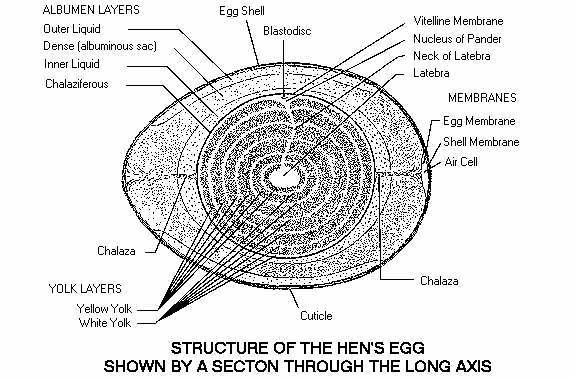
    “Their cosmology is one of the most complicated ever to be recorded in print, and it begins, as does the Hindu cosmogony, with an egg—the Egg of Amma, the name Amma signifying God and meaning “to hold tight,” “to arrange.” –Sir Francis Huxley, The Way Of The Sacred, pg. 94.

    James Joyce, Robert Anton Wilson and Sun Ra are arguably complex individuals of a special genius, and as three individuals I am somewhat familiar with I would like to propose a synthesis of these three artists in the form of a short story. And along the way use extensive footnotes and hyperlinks to exploit some of their ideas, while sticking with my own ‘synchronistic’ encounters and experiments as guides to what to include and what to…

    Dogon.

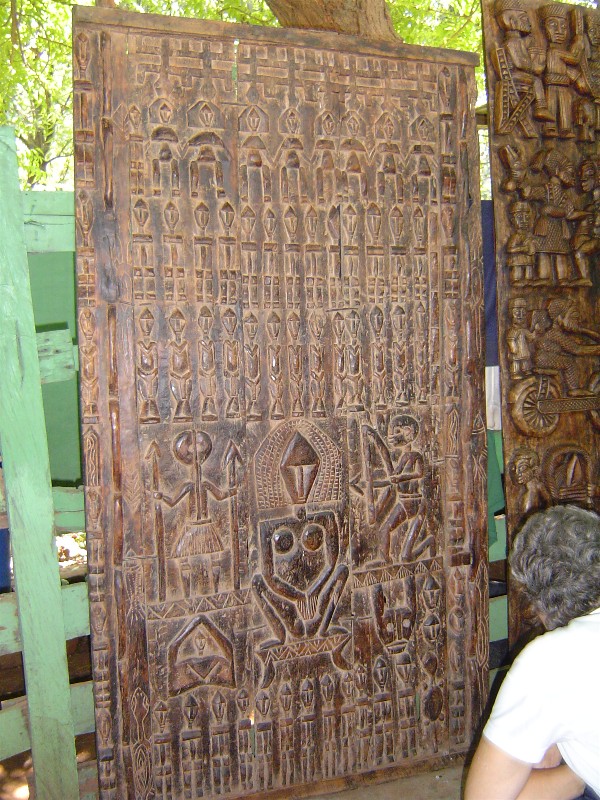
    “This stone is an ark because it is the foundation stone on which the earth is created. It has its own number, 60, the number of years that elapse between celebrations of the Dogon foundation ceremony. Upon it, in Dogon cosmology, the House of Amma descends as a granary and as a spinning whorl. The granary has a round base and a square top, associated with the numbers four and six respectively. It is the mirror image of its heavenly prototype, which has a square base and a round top. This reversal, in which the inside also becomes the outside, takes place during the descent, which is made down the rainbow, in a sevenfold spiral. Here the spinning whorl enters the Dogon picture. –Sir Francis Huxley, The Way of The Sacred, Pg 166.

    The Dogon are a West African culture with a remarkably refined and celebrated history, mythology, astrology and culture in the west that has led some researchers to propose strong cases backed up by various evidence suggesting that they were visited by advanced beings or that they contacted other intelligences and managed to preserve some of this special advanced knowledge in their language, culture and rituals.

    When I visited Berkeley in 2000 AD, I attended an unforgettable and important conference held in the Presidio called Planetworkers: Information technology and Global Ecology. This event was a kind of nodal point for me, a place where I witnessed presentations and presenters that were ahead of their time, I thought, folks like Bruce Sterling, Mark Pesce, Peter Russel, Ralph Abraham, Erik Davis and many more of that genius calibre, a special combination of West Coast intellectual optimism and techno-shamanism. Terence Mckenna was scheduled to be at Planetworkers 2000 but had died only weeks earlier, his life and work were acknowledged and celebrated at the conference that, thankfully made space for the psychedelic components to ‘consciousness’ research and psychedelic studies. Always a good thing I think, especially when combined with intellectual genius and cutting edge technology, such as ‘the world wide web’.

    Between presentations were a selection of music al offerings, some of which featured a Bass player called Kai Eckhardt who I shared a conversation with in the foyer only to discover that he was playing a show later that week with a pianist called Jack Perla, who’s name and playing I knew from my collaborative musical partner from back home in Wolverhampton called Surinder Sandhu, who had recently worked with Jack. This cool encounter with Kai led me to the show and a meeting with Jack, and later being invited to Kai’s studio, where I met thunderous drummer ‘Alan Hertz’ and Keyboard player and composer Paul Godwin, who had an electronic outfit called DOGON.

    “Because of their preoccupations with the doubleness of things, the Dogon have two signs for each of the four elements. –Sir Francis Huxley, The Way Of The Sacred. pg. 94.

    I was familiar with the name Dogon from reading Cosmic Trigger and this mini little synchronicity burnt into my memory right there. I was invited back to Kai’s studio shortly afterwards to perform with Paul Godwin, Rhiannon and Kai in his ‘Modern Fairy Tale’ spoken word musical opera, and thereafter to perform in many other settings with the great Kai Eckhardt, leading to me playing over fifty shows with Garaj Mahal and recording on their first two studio albums: Mondo Garaj and Blueberry Cave.

    In an email correspondence with Mark Pesce last week I mentioned ‘Dogon’ and Paul Godwin, who Mark had also collaborated with on a music related project, in the context of remembering the Planetworkers Conference, where Mark gave a speech titled “The Real World”.


    Dogon Nommo Hemphill and Roach.

    The above sketches out some of the thoughts I was having yesterday while reading Francis Huxley on the Dogon, sitting in Oosterpark, minutes after a remarkable conversation and musical performance that somewhat helped me tune in the West African ‘Dogon’ tribe in Huxley’s book that has led to my current state of excitement in revisiting the ‘Dogon’ tales in 2010, using both ‘Finnegans Wake’ and the music and art performance of Sun Ra and his Arkestra, as contextual ‘spaces’ and ‘times’ for this new analysis, and a basis for my own interpretations of the data.

    Comet Kahoutek

    A somewhat related theme to the ‘Dogon Mystery’ by way of Cosmic Trigger is the fly by of the comet Kahoutek in 1973 that ties into both the ‘Starseed transmissions’ transmitted by Dr. Timothy Leary from Folsom Prison and with Sun Ra who performed a special concert for the Comet on December 12, 1973. ‘Concert for the Comet Kahoutek’ was the first Sun Ra disk I bought in approx. 1998, in part due to the ‘Starseed’ connection to the Comet.


    Kosmic Trigger.


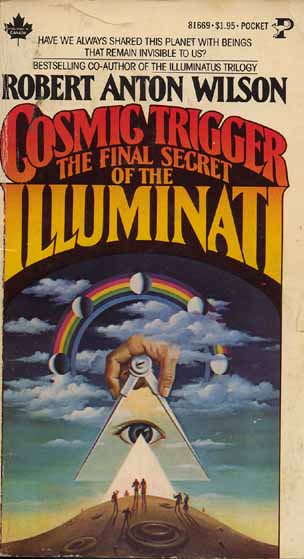
    “Have real honest to god extraterrestrials from Sirius been meddling in the affairs of this backward planet? – Robert Anton Wislon, CT, pg, 184.

    I should emphasize the impact this book had on me twelve years ago, in my attempt here to record my state of mind and reason back then, when building ‘fly agaric 23’ and navigating my way through the works of RAW and Terence Mckenna, continuing my experimental, Jazz inflected musical journey as a Drummer and DJ, intent on including and sharing some of the wisdom I perceived within these works; the drive that led me to journey to the US and study with Dr. Wilson.

    Like Robert Anton Wilson, the Dogon tribe of West Africa demonstrate an interest in the Sirius double/triple? star system. “Sirius is important to you” and “something about time, the future and infinity” are words that Dr. Wilson saw written on a Black Board by a man with a long white beard, like Mr. Natural (or Dr. John Dee) in an important vision/dream he wrestled into his waking life and book, due in part to the fact that he had this dream/vision on July 23rd 1973. Sirius, the Dogon tribe and the 23 enigma collide or give birth at this point in RAW’s life, experimenting with Astral Projection, Magick and psychedelics and experiencing contact, success and breakthroughs in these areas of Occult research and shared feedback.

    Finnegans Nommo

    Through the cycle of Osiris, Isis plays a number of important roles; she is mother, faithful wife, sister-lover, steadfast widow. The goddess had thousands of names, and many shapes; she might be a divine cow, a bird, or even the star Sothis (Sirius). Her manifest nature is shown at one point in FW as several of these forms, and the search for the parts of Osiris is suggested simultaneously, as a questing crone runs to “sothisfeige her cowrieosity” (14.02). –Mark L. Troy. –http://www.trentu.ca/faculty/jjoyce/mummeries/troybook.htm

    So what are the Dogon Tribe all about and why are they so important to us today, what can we learn from the wisdom they have shared, how does it relate to our present situation on earth? These more objective questions are best tackled by invoking my favourite book and mighty not-so-secret secret weapon in the war on some drugs: Finnegans Wake.

    It seems that much of the great learning and wisdom gathered by the Dogon can be best distinguished by its relationship to modern ideas, scientific findings, cosmological models, BIG uestions about a singularity, self and becoming, causality, prophecy, the future of humanity and planet earth, the cosmos, spacetime and beyond.

    While reading Sir Francis Huxley describe the intricacies and complex ideas of the Dogon I thought of the ‘resolution of opposites’ at work in Finnegans Wake, and in a flash saw every piece of symbolism Huxley mentioned in Joyce’s masterpiece, as if it were itself a tale of the Nommo tribe, or some extraterrestrial multilingual intelligence guiding us into the future of hypertext and hyperculture. Lo.

    Sun Ra and Sirius

    It seems likely to me that amidst Sun Ra’s extensive literary study into African and world folklore and mythology he came across the practices and traditions of the Dogon tribe. And I imagine would have latched onto some of the themes of possible extraterrestrial contact, but more importantly forwarded, retranslated and represented the music, dance, art and culture of these tribes, Sun Ra performed and recorded music. Something that unfortunately most other extraterrestrial theorists overlook as a means of communication with ‘higher’ beings, if you like to use the ‘higher’ label.

    Make it Knu!

    The most economical explanation for all of this seems to be that an Earth-Sirius communication has occurred, at least once, probably several times. –RAW. CT, 1pg. 89.

    That ‘they’ or ‘it’ travel by way of music seems a given to me personally, if you like to adopt a pretty simple model for extraterrestrial intelligence and communication. Yet, we must agree that any advanced form of communication would work throughout all of our recognized mediums and our spectrum of energy waves. But music, music seems like an ancient and relatively simple mode of two-way communication with ‘it’. Maybe it’s better to call ‘it’ hyper-intelligence’ and maybe at this stage propose that ‘it’ maybe ubiquitous throughout spacetime.

    The music and ‘it’ tend to reveal each other on occasion, I think, and something about some music in the Jazz idiom seems to somehow scramble time & space in a way reminiscent of ‘hyperintelligence’ a glimpse into the fututure-presnet-pist side, where everything changes in an instant, and new worlds open up and with them new possibilities, new conversations, new languages and new ideas. Make it Knu!

    ET Net

    Mark Pesce recently exposed the genius of James Joyce and in particular his book Finnegans Wake, and illustrates how Joyce co-opted the future in some sense, co-inventing ‘hypertext’ before programmable computers and co-ordinating some as yet unknown and undefined ‘Hyperintelligence’ into his book, that has managed to withstand the void of literature created by html Hypertext, internet and twitter. I have collaborated on further illustrating his writing.

    To my knowledge Joyce did not report any extraterrestrial experiences in the explicit sense that both RAW and Sun Ra did, ‘RA’ claiming his first encounter in 1936 went as follows:

    … my whole body changed into something else. I could see through myself. And I went up … I wasn’t in human form … I landed on a planet that I identified as Saturn … they teleported me and I was down on [a] stage with them. They wanted to talk with me. They had one little antenna on each ear. A little antenna over each eye. They talked to me. They told me to stop [attending college] because there was going to be great trouble in schools … the world was going into complete chaos … I would speak [through music], and the world would listen. That’s what they told me. –Szwed, John F. (August 21, 1998). Space Is the Place: The Lives and Times of Sun Ra.

    However, anybody who claims that Joyce did not have an Extraterrestrial experience seems to have missed the point of Finnegans Wake, that for me qualifies as a totally ‘alien’ and certifiably advanced language and/or code. Precisely the kind of thing an advanced civilization would want to communicate to earthly humanity: the wonder and epiphany at the interconnectedness of all things.

    For me James Joyce’s FW and the music of Sun Ra and his Arkestra are similar shaped vehicles of extraterrestrial communication, but whereas the music of Sun Ra is explicit and enters through the eye and ear world, Joyce reverses the process somewhat, ringing and jangling songs and tunes, spells and proverbs from dozens of languages, all sensed in the head-space, but with a strange sense of timelessness and transcendence of space, when ‘non-simultaneously apprehended’ with the human eye; jumping about a jungle of earthly hyperintelligence and hilaritas, condensed into nodal clusters of meaning and hyper-connectivity, ringing many bells and scattering connections allwayswords.

    SUN RAW

    “I might mention that Arthur Young, founder of the Institute for the study of consciousness, was the one who originally turned Robert Temple on to the idea of trying to find out how the Dogon tribe knew so much about the dark companion of Sirius. And Arthur Young, in turn, had first heard of this tribal lore from Harry Smith, a film maker who claims to be the son of Aleister Crowley…) –Saul Paul Sirag, CT, pg. 242.

    I am not sure if RAW listened to Sun Ra, but it stand a good chance due to telling me he liked Charlie Parker, Mahler, Thelonious Monk, John Coltrane, Beethoven and Miles Davis, in particular. And Robert first got turned onto the debil’ weed at a Modern Jazz Quintet show, so RAW was certainly Hip to Bebop and jazz, and with his perchance for ‘Classical’ music too one would imagine Big Band Jazz and the sounds of Sun Ra might tickle his fancy.

    Who knows, but I want to show here how the music of Sun Ra links directly into RAWs chapter in Cosmic Trigger detailing Dr. Timothy Leary’s experience with extraterrestrial intelligence and the comet Kahoutek earyh flyby in 1973, an event I chose to magnify here as it had a significant ‘woo woo’ effect on me when I first read Cosmic Trigger and encountered the Sirius Mystery. Nonetheless I like to think that RAW might enjoy a SUN RAW comparative essay with a healthy dose of Finnegans Wake stirred in.

    For more on this please see my essay ‘The Myth Art and Music of Sun Ra’ (Headpress, 2010)

    Back To Earth Frontear.

    “The Dogon believe that everyone is born with eight seeds stored within the collarbones, four coming from the mother’s line and four from the father’s—a prototype, in symbolic terms of modern genetic theory. –Sir Francis Huxley, The Way Of The Sacred, Pg. 166.

    Although the ‘outer space’ theme may often be criticised as leaving planet earth and humanity behind in an escapist trip to the stars, yet on the contrary I will show how the outer space theme in the works of Sun Ra, RAW and James Joyce, or the ‘cosmological’ complexity and ‘chaos’ often inherent in their works transmits a message for earth people, right here right now, that this ‘it’ or ‘hyperintelligence’ exists everywhere and nowhere, invisible and staring us straight in the face, neither here nor there but with us. No we are not alone in the Universe, on any level, we are hyperconnected throughout time and space, on many levels, if we wish to tune into them. Tune in, remember, and find the other worlds?

    Solstice 2010

    “by the tremours of Thundery and Ulerin’s dogstar, you alone, windblasted tree of the knowledge of beautiful andevil, ay, clothed upon with the metuor and shimmering like the horescens, astroglodynamonologos, –FW, 194.

    Looking back at my experience this Solstice I deduce that the Sun, and the sun behind the sun has gently hinted that ‘Sirius IS impotant” and that the African wisdom found in the Dogon tribe can be teased out from Finnegans Wake and the study of Joyce’s special cosmological ‘tribal’ language.

    A New Dogon tale?

    I have found that during my research into these three iconoclast multicultural icons the pull to create a new interpretation of current events and the state of the planet earth in 2010. Using my sense for connectivity and mixing media I present the SUN RA SIRIUS SEED TRANSMISSION sampler, enjoy, love, steve.

    “An whele time he was rancing there smutsy floskons nodunder ycholerd for their poopishers, ahull onem Fyre maynoother endnow! Shatten up ship ! Bouououmce ! Nomo clandoilskins cheakinlevers ! –James Joyce, FW, 370.

    “Circling round Shaun the girls weep, their mourning song echoes, “dosiriously it psalmodied” (470.13). The girls are sadly desirous of Osiris, desirous as Sirius (Sothis). It was in the form of this star that Isis wept for the lost Osiris. The sight of the rising Dog-Star has always coincided with the overflow of the Nile waters, thus it was considered that the tears of the goddess, weeping for her brother-husband, caused the inundation which fertilized the land of Egypt (DRT, p. 22). This idea is expanded at 254.16, “A and aa ab ad a bu abiad. A babbel men dub gulch of tears.” In this watery babbling runs the Nile, which flows (after leaving the Nyanzas and Jebel) as the Abiad or White Nile, until it reaches Abu, the area of the first cataract, at which point the Nile Valley begins (“Nile”, EB, XIX, 695). Thus, a naturalistic explanation is given for the babbling waters flowing down into the valley, which the ancients saw as a vale or gulch of tears. —Mark L. Troy. Mummeries of Resurrection

    Some sources and resources:

    SUN RA: Essays And Interviews – Edited by John Sinclair
    Cosmic Trigger – Robert Anton Wilson
    Finnegans Wake – James Joyce
    The Way Of The Sacred – Sir Francis Huxley
    Mummeries of Resurrection – Mark L. Troy
    Wikiedia

    http://hyperreal.org/~mpesce/
    http://www.vurigetongen.nl/page2/page2.html
    http://www.fotuva.org/music/discog.html
    http://www.amsterdamroots.nl/index.php?id=517
    http://mkzdk.org/francis/index.html
    http://en.wikipedia.org/wiki/Sirius_B#Sirius_B
    http://en.wikipedia.org/wiki/Sothis

    –Steven James Pratt.
    First draught June 21st 2010, Amsterdam, 6.30 A.M

  • A.I AND JAMES JOYCE. Venter and Earwicker Bachwords

    “TO LIVE, TO ERR, TO FALL, TO TRIUMPH, TO RECREATE LIFE OUT OF LIFE.” – from James Joyce’s A Portrait of the Artist as a Young Man.

    “We report the design, synthesis, and assembly of the 1.08-Mbp Mycoplasma mycoides JCVI-syn1.0 genome starting from digitized genome sequence information and its transplantation into a Mycoplasma capricolum recipient cell to create new Mycoplasma mycoides cells that are controlled only by the synthetic chromosome.
    http://www.sciencemag.org/cgi/content/abstract/science.1190719

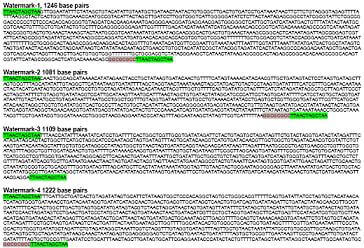
    “The genome contains blueprints, in which are encoded the names of the researchers, a website address, contact email and quotes from James Joyce, Richard Feynman and a biography of Robert Oppenheimer. —http://www.guardian.co.uk/science/blog/audio/2010/may/21/craig-venter-synthetic-life-form

    “a rude breathing on the void of to be, a venter hearing his
    own bauchspeech in backwords, or, more strictly, but tristurned
    initials, the cluekey to a worldroom beyond the roomwhorld, for
    scarce one —James Joyce, Finnegans Wake, pg. 100


    Synthetic biology is a new area of biological research that combines science and engineering. Synthetic biology encompasses a variety of different approaches, methodologies and disciplines, and many different definitions exist. What they all have in common, however, is that they see synthetic biology as the design and construction of new biological functions and systems not found in nature. –http://en.wikipedia.org/wiki/Synthetic_biology

    http://video.ted.com/assets/player/swf/EmbedPlayer.swf

    http://www.ted.com/talks/craig_venter_unveils_synthetic_life.html

    Synthetic Genomics is a company dedicated to using modified or synthetically produced microorganisms to produce the alternative fuels ethanol and hydrogen. Synthetic Genomics was founded in part by J. Craig Venter. Venter’s previous company, Celera Genomics, was a driving force in the race to sequence the Human Genome.[1]

    The firm takes its name from the phrase synthetic genomics which is a scientific discipline of synthetic biology related to the generation of organisms artificially using genetic material.[2] Currently, Synthetic Genomics is working to produce biofuels on an industrial-scale using recombinant algae and other microorganisms. They are receiving funding from companies like Exxon for this venture. –http://en.wikipedia.org/wiki/Synthetic_Genomics


    As a development of that ongoing effort, last week Venter announced in the pages of Science magazine that his research team had – by putting together a living and replicating bacterium from synthetic components, inserting a computer-generated genome into a cell – “created life” in the laboratory for the first time. The experiment suggested the possibility of creating bacteria to perform specific functions: as producers of fossil fuels or medicines.

    Venter, now 63, is nothing if not a showman and the publication of this revelation and the subsequent press conferences, have polarised opinion in ways with which he has long been familiar. Some authorities, and several newspaper leader writers, have claimed him as our Galileo or our Einstein; others have been notably underwhelmed.

    Freeman Dyson, the physicist, captured the full range of academic sentiment in this dry appraisal: “This experiment is clumsy, tedious, unoriginal. From the point of view of aesthetic and intellectual elegance, it is a bad experiment. But it is nevertheless a big discovery… the ability to design and create new forms of life marks a turning point in the history of our species and our planet.”

    Venter’s ego and his preference to turn to corporations rather than research foundations as funding partners (Exxon Mobil is a $600m sponsor of his energy experiments) do not tend to endear him to the academic establishment. Steve Jones, professor of genetics at University College London, and a perennial voice of reason, offered me this verdict on the biologist’s latest headlines.

    “It’s very easy to mock Venter,” Jones suggests. “When he first appeared, people just kind of sneered at him. But they stopped sneering when they saw his brilliance in realising that the genome was not a problem of chemistry but a problem of computer power. I don’t think anybody can deny that that was a monumental achievement and he has been doing fantastically interesting things subsequently with marine life. Having said that, though, the man is clearly a bit of a prick and one with a serial addiction to publicity.” —http://www.guardian.co.uk/theobserver/2010/may/23/observer-profile-craig-venter

    HIGH RESOLUTION PDF OF NEW SELF-REPLICATING LIFE FORM.

    lastly but mostly, in
    her genesic field it is all game and no gammon; she is ladylike in
    everything she does and plays the gentleman’s part every time.
    Let us auspice it! –James Joyce, FW, pg. 112

    * “TO LIVE, TO ERR, TO FALL, TO TRIUMPH, TO RECREATE LIFE OUT OF LIFE.” – from James Joyce’s A Portrait of the Artist as a Young Man.
    * “SEE THINGS NOT AS THEY ARE, BUT AS THEY MIGHT BE.”- a quote from the book, American Prometheus which discusses J. Robert Oppenheimer and the first atomic bomb.
    * *“WHAT I CANNOT BUILD, I CANNOT UNDERSTAND.” – attributed to Richard Feynman (physicist, philosopher, badass) as the last words on his blackboard at the time of his death as described in The Universe in a Nutshell by Stephen Hawking (physicist, philosopher, badass).